Wabi sabi bedroom design transforms ordinary rooms into calming sanctuaries that celebrate imperfection, natural texture, and quiet beauty. This Japanese philosophy brings genuine warmth to any bedroom through handcrafted materials, muted earth tones, and intentionally simple styling.
Wabi sabi originated in Japanese culture as a worldview centered on accepting imperfection and transience. Interior designers now apply this philosophy to create bedrooms that feel honest, grounded, and deeply restful.
The wabi sabi bedroom replaces polished surfaces and matching sets with raw materials, organic shapes, and time-worn finishes. Natural fibers, reclaimed wood, unglazed ceramics, and hand-dyed textiles all play a central role in this aesthetic.
Neutral palettes of warm beige, soft taupe, dusty grey, and muted terracotta form the foundation of wabi sabi color schemes. These tones work together to create a visual calm that supports rest and mindfulness inside the bedroom.
1. Rustic Wooden Bed Frames
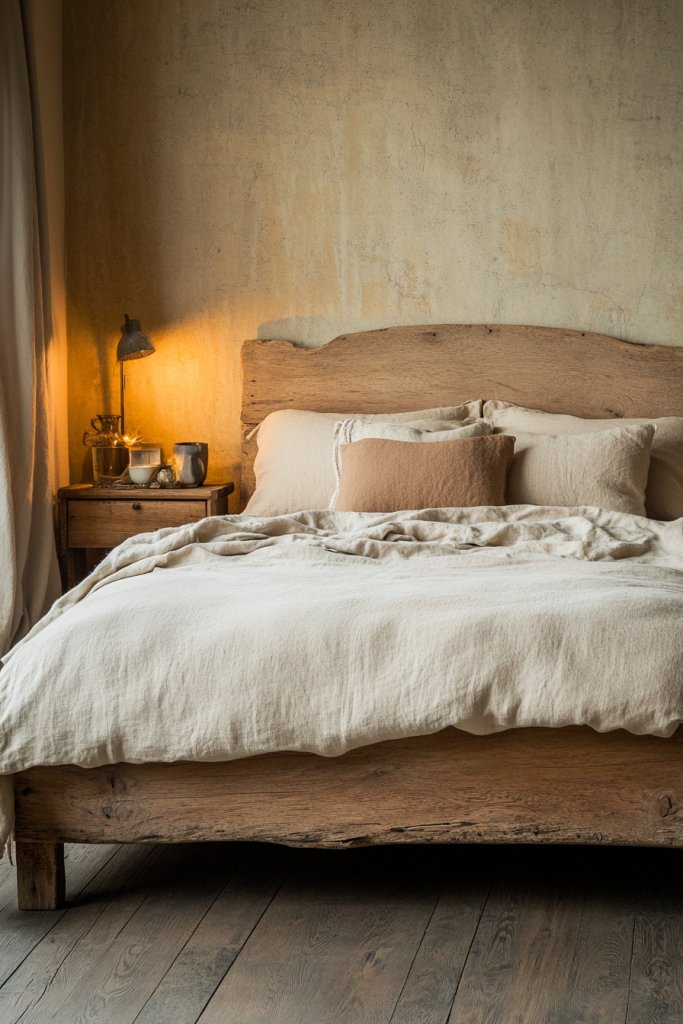
A reclaimed wood bed frame anchors the wabi sabi bedroom with visible grain, natural knots, and a weathered surface that tells a story. The rough texture and aged patina contrast beautifully against soft neutral bedding, creating a grounded, organic focal point in the room.
Source reclaimed or sustainably harvested timber from local salvage yards or vintage furniture dealers for the most authentic look. Apply a matte, non-glossy sealant to protect the surface while preserving the raw, unfinished character that defines wabi sabi style.
2. Linen Bedding Neutral Tones

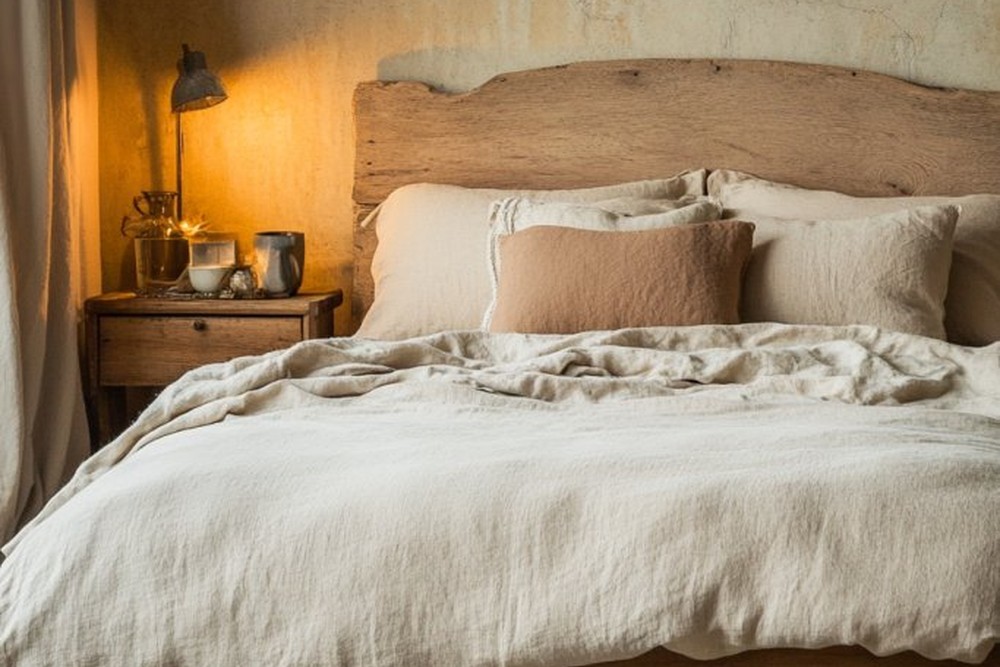
Linen bedding in warm ivory, soft oat, or pale grey wraps the bed in a relaxed, lived-in texture that feels immediately inviting. The natural creases and slight unevenness of linen fabric reinforce the wabi sabi appreciation for organic, imperfect beauty.
Choose stonewashed linen for an extra-softened finish that looks effortlessly relaxed from the first use. Layer two or three different neutral tones together on the bed to add visual depth without introducing any sharp contrast or pattern.
3. Worn Leather Accent Pillows

Worn leather accent pillows introduce a subtle rugged quality to the bed, with scuffs, creases, and natural color variation adding genuine character. These pillows work especially well against linen or cotton bedding, where the contrast in texture creates a rich, tactile composition.
Look for vintage leather cushion covers at secondhand markets or antique stores rather than buying new, as age improves the leather’s visual appeal. Place one or two leather pillows in front of softer fabric cushions to build a layered, intentional arrangement on the bed.
4. Handwoven Blankets Organic Warmth

Handwoven blankets and textiles introduce irregular weave patterns and natural fiber variation that no machine-made product can replicate. Draped casually over the foot of the bed or folded on a bedroom chair, they add warmth and an artisan quality to the entire room.
Seek out blankets woven from undyed wool, organic cotton, or raw jute to keep the material palette honest and natural. Avoid folding them too neatly since a casually draped textile communicates the relaxed, unforced spirit that wabi sabi interior styling values most.
5. Stone Clay Planters Texture
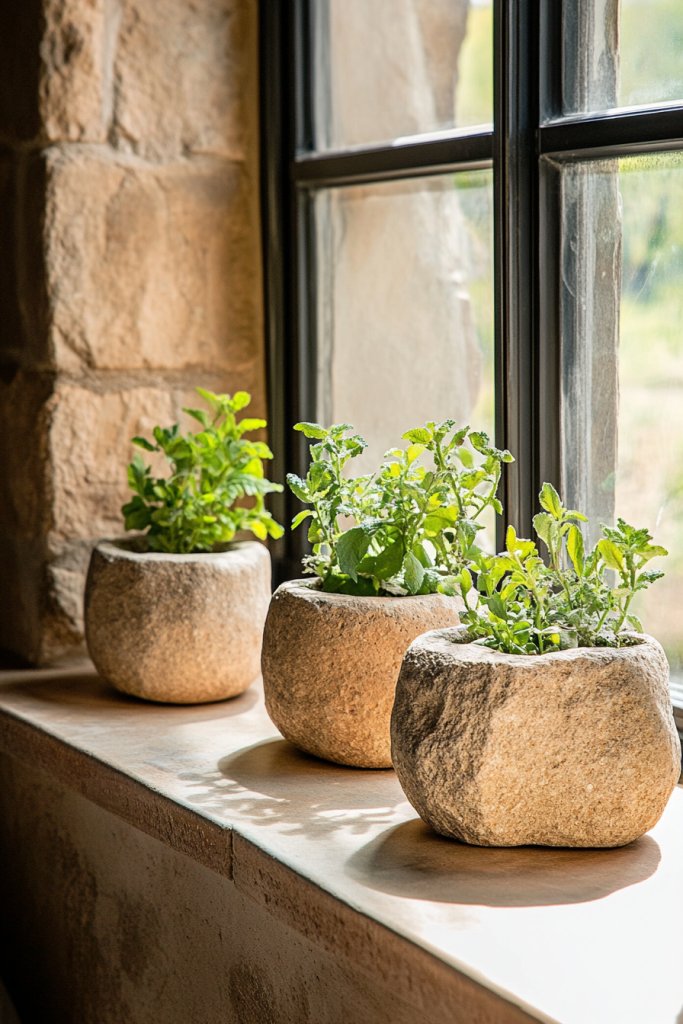
Raw, unpolished stone or hand-formed clay planters bring an earthy, tactile element to the wabi sabi bedroom without demanding visual attention. Their rough surfaces, irregular shapes, and natural color variation quietly reinforce the room’s commitment to organic, unmanufactured beauty.
Group two or three planters of different heights together on a windowsill or low shelf to create a simple, grounded vignette. Choose planters with visible tool marks, uneven rims, or natural pitting, as these details signal authentic handcraft rather than factory production.
6. Reclaimed Wood Floating Shelves
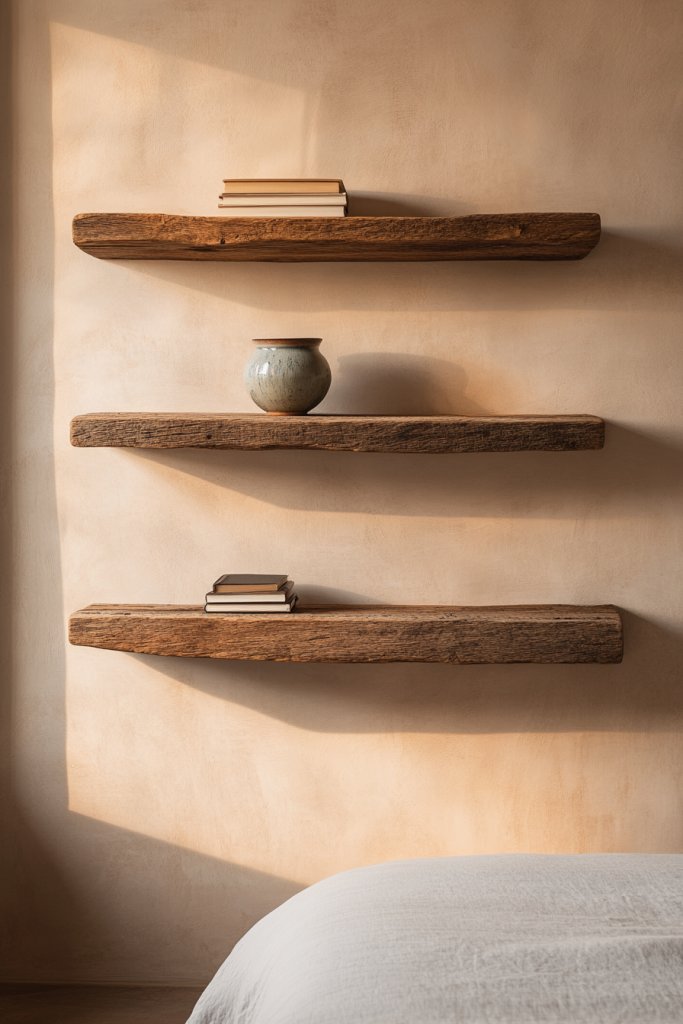
Floating shelves cut from reclaimed timber bring functional storage to the bedroom wall while adding warmth, grain texture, and a sense of history. Visible saw marks, weathered edges, and natural color shifts in the wood make each shelf a unique decorative element in its own right.
Mount shelves at varying heights rather than in a perfectly uniform row to honor the wabi sabi preference for asymmetry. Style them with only a few curated objects, such as a ceramic bowl, a small plant, and a folded textile, to keep the display calm and intentional.
7. Wabi Sabi Bedroom Lighting
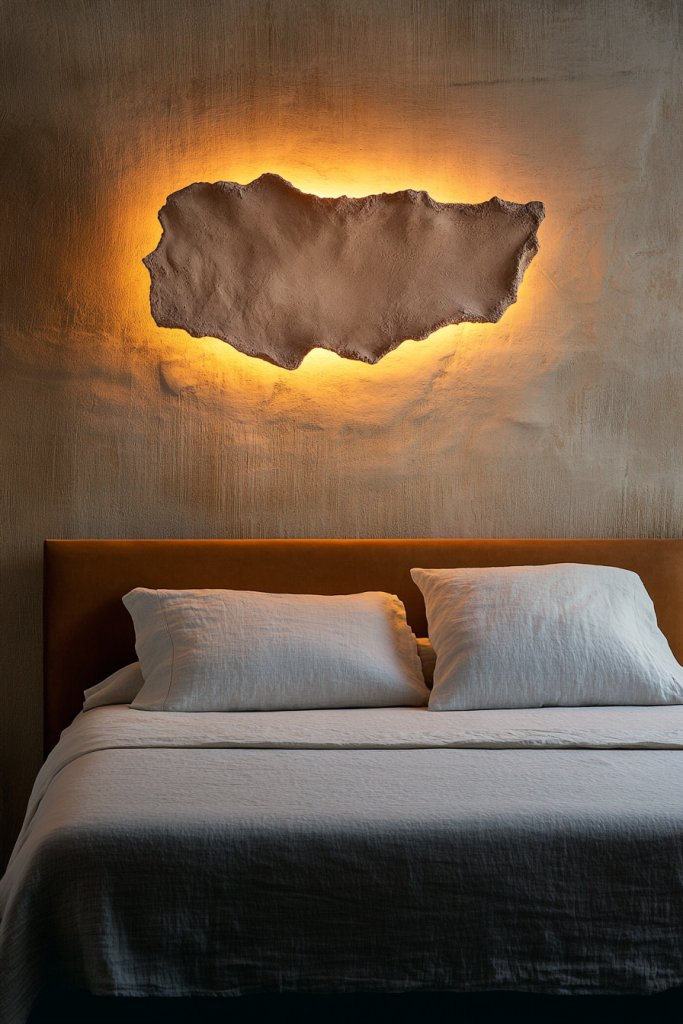
Wabi sabi lighting prioritizes a warm, low-level amber glow over bright overhead illumination, wrapping the bedroom in a soft and restful atmosphere. Pendant lights wrapped in natural fiber, ceramic table lamps, or candles placed on low surfaces all deliver this quality of gentle, diffused light.
Swap any cool-toned bulbs for warm-spectrum alternatives in the 2200K to 2700K range to immediately shift the room’s mood toward calm. Position light sources at low or mid-height rather than overhead to create shadows and depth that make the bedroom feel more intimate and human.
8. Vintage Furniture Patina Pieces
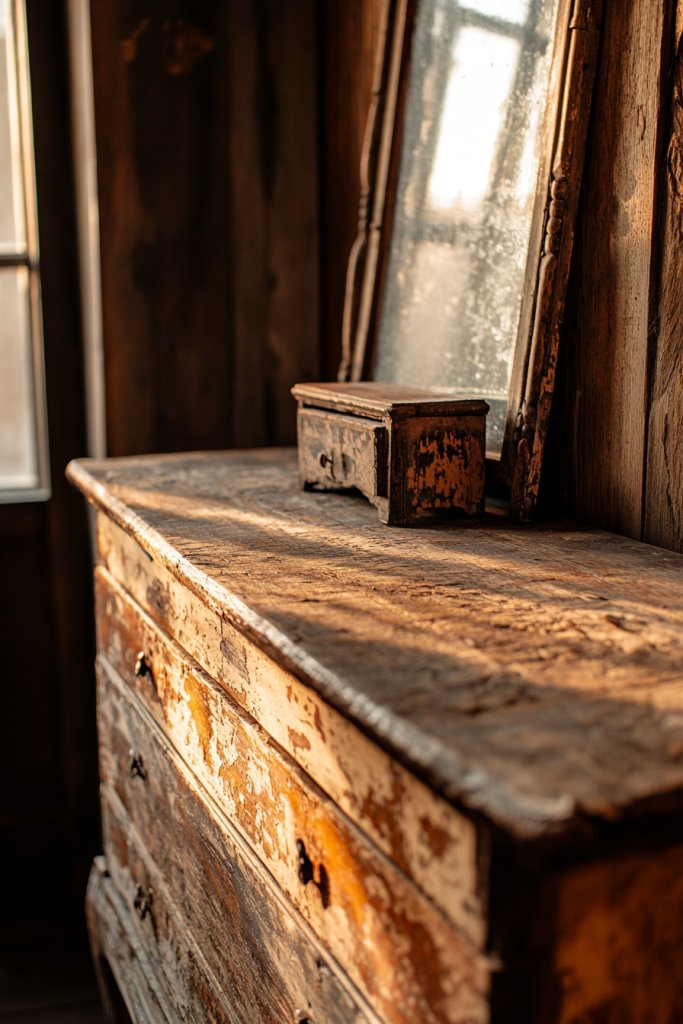
Worn vintage furniture carries a visual patina built from years of genuine use, and this quality brings immediate authenticity to a wabi sabi bedroom. Scuffed drawer fronts, faded paint, and slightly uneven legs all communicate a history that new furniture simply cannot replicate.
Visit estate sales, antique markets, or online vintage platforms to find pieces with honest wear rather than artificially distressed finishes. Resist the urge to refinish or repaint vintage finds, as the existing patina is precisely what gives these pieces their wabi sabi value and visual character.
9. Natural Linen Cotton Curtains

Unfinished linen or undyed cotton curtains filter natural light softly, casting a warm, diffused glow across the bedroom without blocking the connection to the outside. Their slight transparency, gentle drape, and natural wrinkles align perfectly with the wabi sabi preference for honest, unmanufactured beauty.
Hang curtains slightly higher than the window frame and let them pool very slightly on the floor for an effortlessly relaxed look. Avoid any curtains with a stiff lining, heavy interlining, or bright white finish, as these qualities work against the organic softness wabi sabi styling requires.
10. Asymmetric Handmade Wall Decor
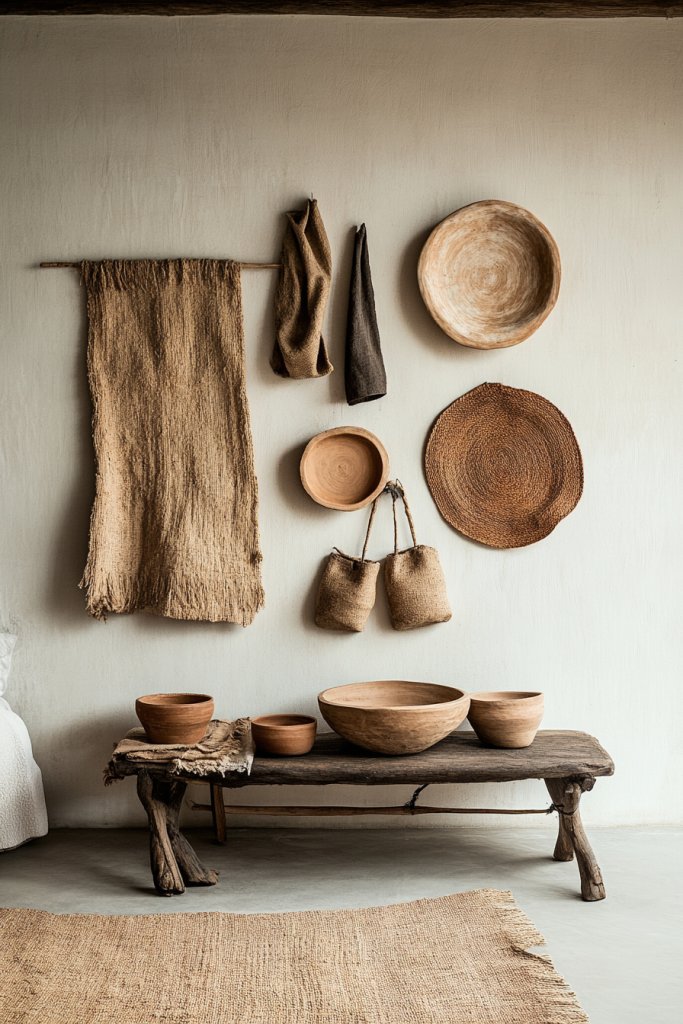
Handmade wall decor with deliberate asymmetry, such as irregular ceramic wall pieces, woven fiber art, or hand-painted panels, draws the eye in a way that feels natural rather than calculated. The slight unevenness and visible hand of the maker give these pieces a warmth that mass-produced wall art cannot offer.
Arrange wall pieces in a loose, non-symmetrical cluster rather than a rigid grid to reinforce the wabi sabi philosophy of embracing imbalance. Mix different scales and textures within the same wall grouping, combining a large woven piece with two or three smaller ceramic or clay elements for variety.
11. Low Organic Natural Fiber Rugs
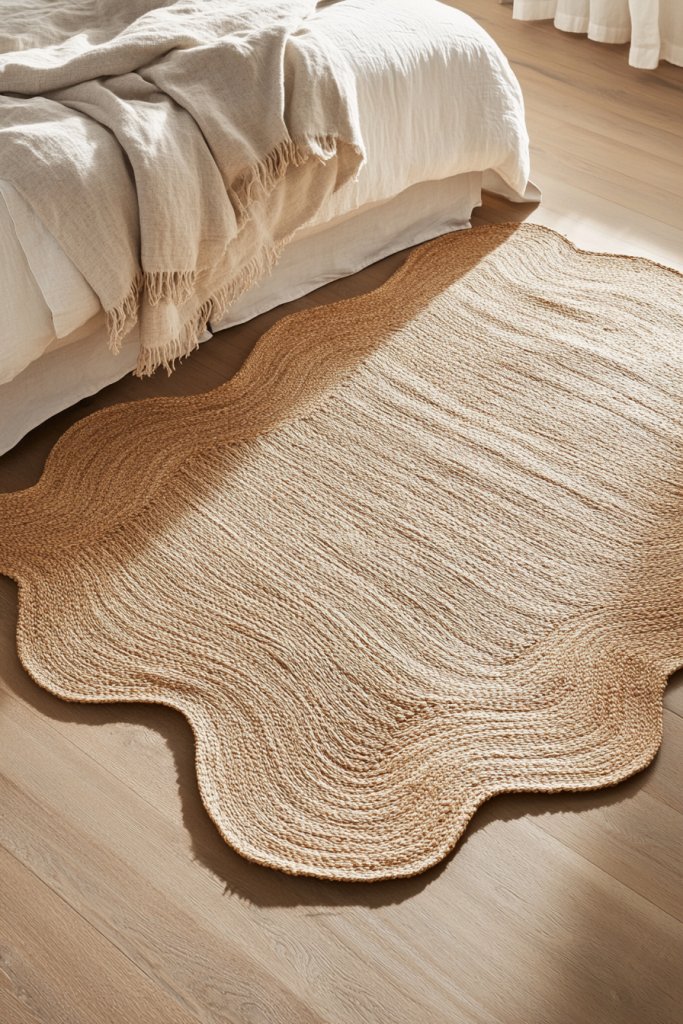
A low-profile rug woven from jute, seagrass, or undyed wool anchors the bedroom floor with natural texture and a calm, earthy tone. Organic shapes or slightly irregular edges make these rugs feel handmade and genuine, reinforcing the overall wabi sabi character of the space.
Place the rug so it extends well beyond the sides of the bed, allowing feet to land on natural fiber first thing every morning. Choose a rug with a visible, open weave structure rather than a dense, tufted pile, as the former communicates honesty of material and natural origin.
12. Raw Wood Framed Photography
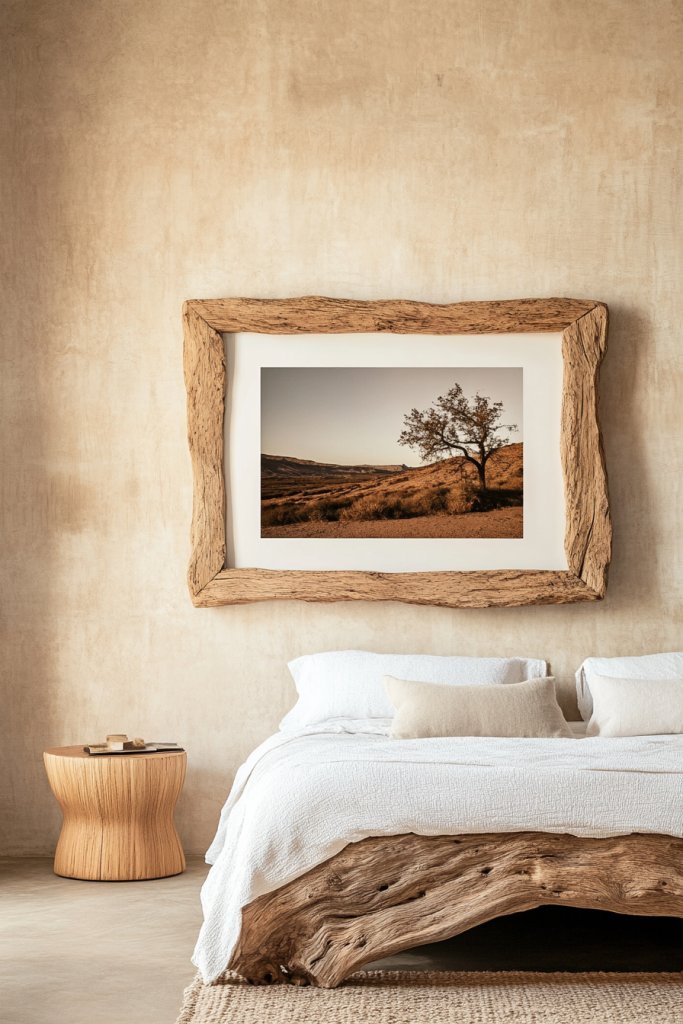
Simple photography displayed in raw, unfinished wooden frames keeps the bedroom walls understated while adding a personal and intimate quality to the decor. Black and white or muted-tone images of nature, landscapes, or abstract textures complement the wabi sabi palette without competing for visual dominance.
Choose frames made from thin, unpolished timber with visible grain rather than lacquered or painted alternatives that add unnecessary visual weight. Lean smaller framed pieces on shelves or window ledges rather than hanging them all on the wall, as this casual arrangement feels more relaxed and authentic.
13. Bamboo Metal Natural Fixtures
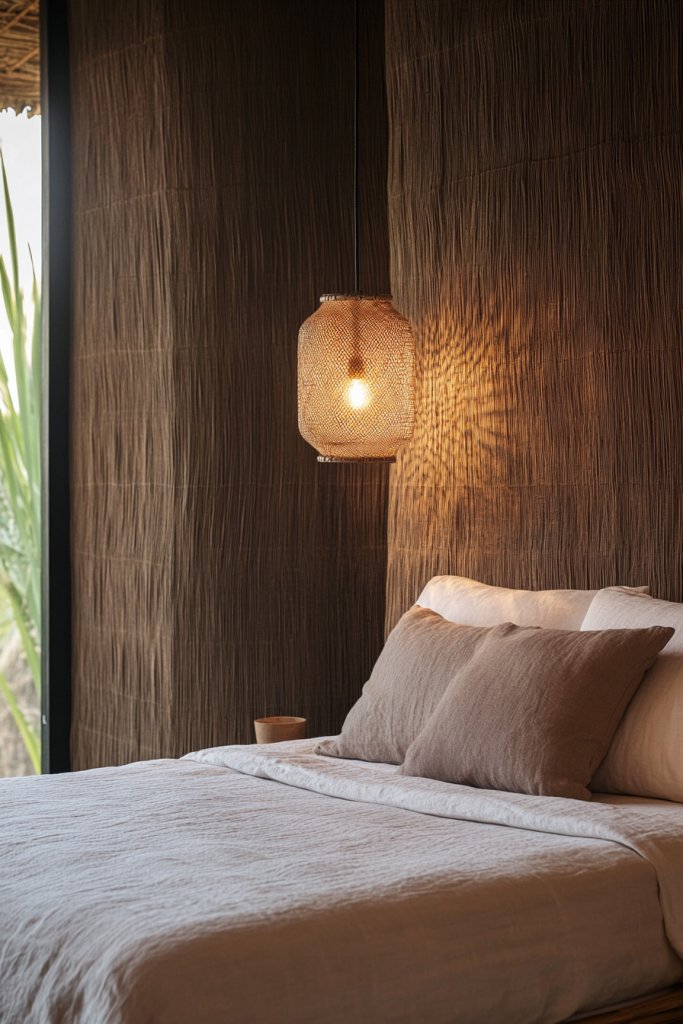
Unpolished metal or bamboo lighting fixtures deliver a raw, natural quality to the bedroom that glossy or chrome alternatives simply cannot provide. The matte surfaces, visible joints, and organic material variation in these fixtures make them beautiful in an understated, quietly imperfect way.
Select a bamboo pendant light or an oxidized metal bedside lamp as the primary light source in the bedroom for maximum visual impact. Avoid any fixture with a reflective or polished finish, as shine contradicts the muted, tactile aesthetic that wabi sabi bedroom design depends on.
14. Handcrafted Ceramics Functional Art
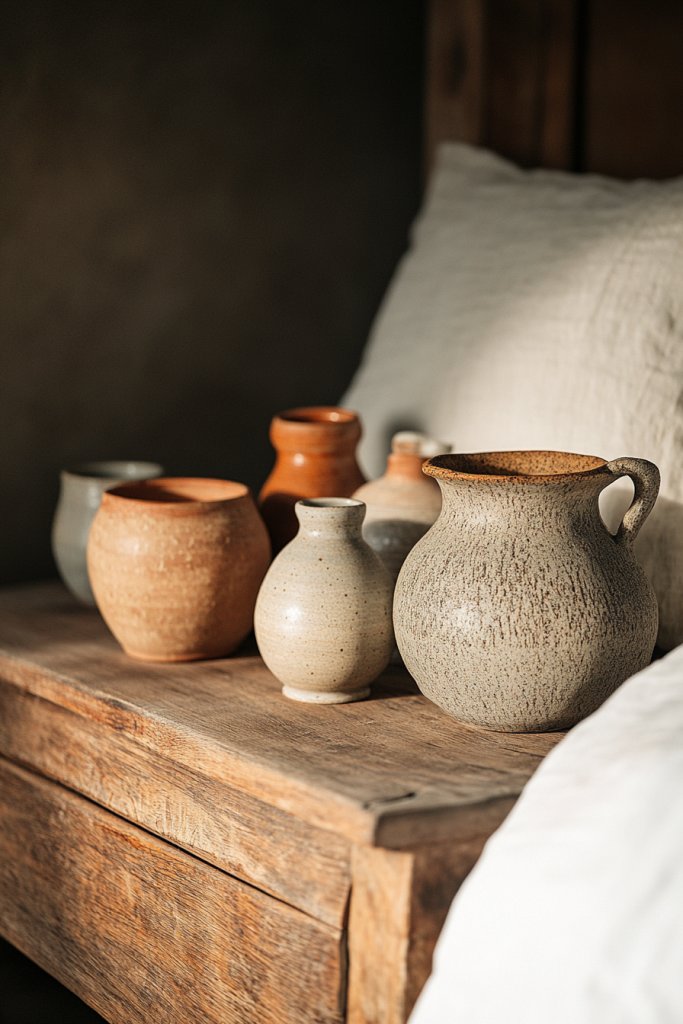
Handcrafted ceramics bring both function and artistry to the wabi sabi bedroom, working as vessels for plants, holders for jewelry, or simple decorative objects on shelves. Their uneven walls, finger impressions, and natural glaze variations communicate the presence of a human hand in a way that elevates the entire room.
Display ceramics in small groupings of two or three on bedside tables or reclaimed wood shelves rather than spreading them across multiple surfaces. Choose pieces in natural clay tones, muted sage, or soft ash grey to keep them harmonious with the bedroom’s overall neutral color palette.
15. Minimal Curated Bedroom Items
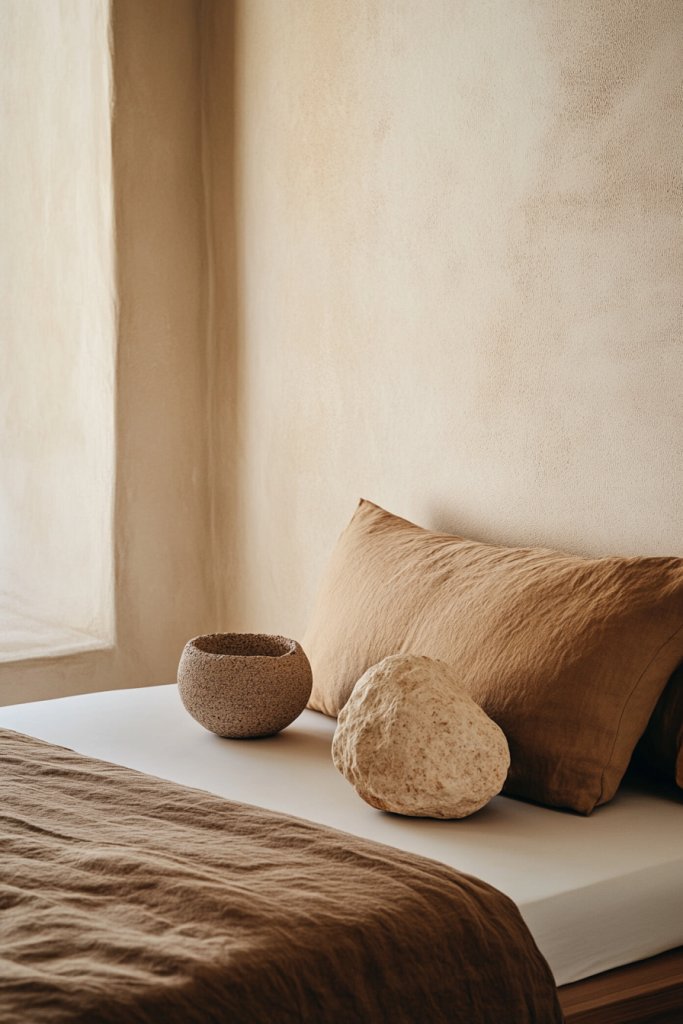
A wabi sabi bedroom breathes through carefully edited surfaces, where only the most meaningful and beautiful objects earn a place in the room. Removing excess clutter allows each remaining piece to carry visual weight and contribute genuinely to the room’s calm, intentional atmosphere.
Conduct a seasonal edit of all bedroom surfaces, removing anything that serves no functional or genuinely aesthetic purpose in the space. Limit each surface to a maximum of three objects and ensure every item reflects the natural, handcrafted, or time-worn qualities that wabi sabi design celebrates.
16. Raw Edge Natural Dye Bedding
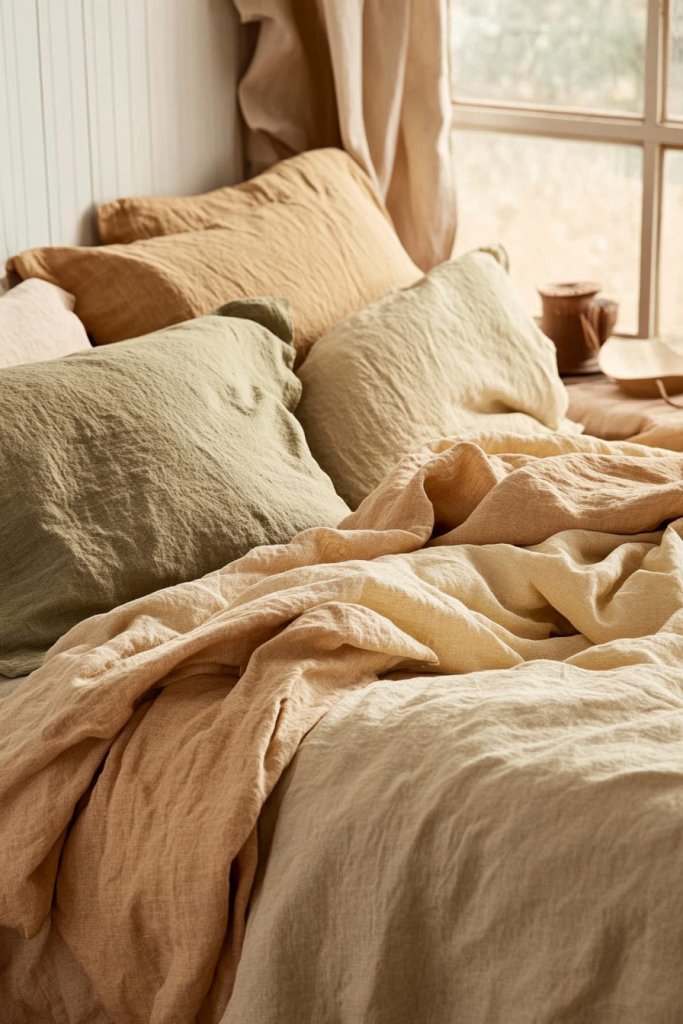
Bedding with raw, unhemmed edges and colors derived from natural plant dyes brings an artisan quality to the bed that standard commercial textiles cannot replicate. The slight color irregularity of natural dyes, ranging from soft indigo to warm turmeric or dusty sage, adds beautiful tonal variation across the surface.
Wash naturally dyed bedding in cold water with a gentle detergent to preserve the organic color depth and prevent premature fading. Embrace any minor color shifts or softening that occurs over time, as these changes deepen the wabi sabi character of the textile and make it more visually interesting.
17. Earth Tone Accent Pieces
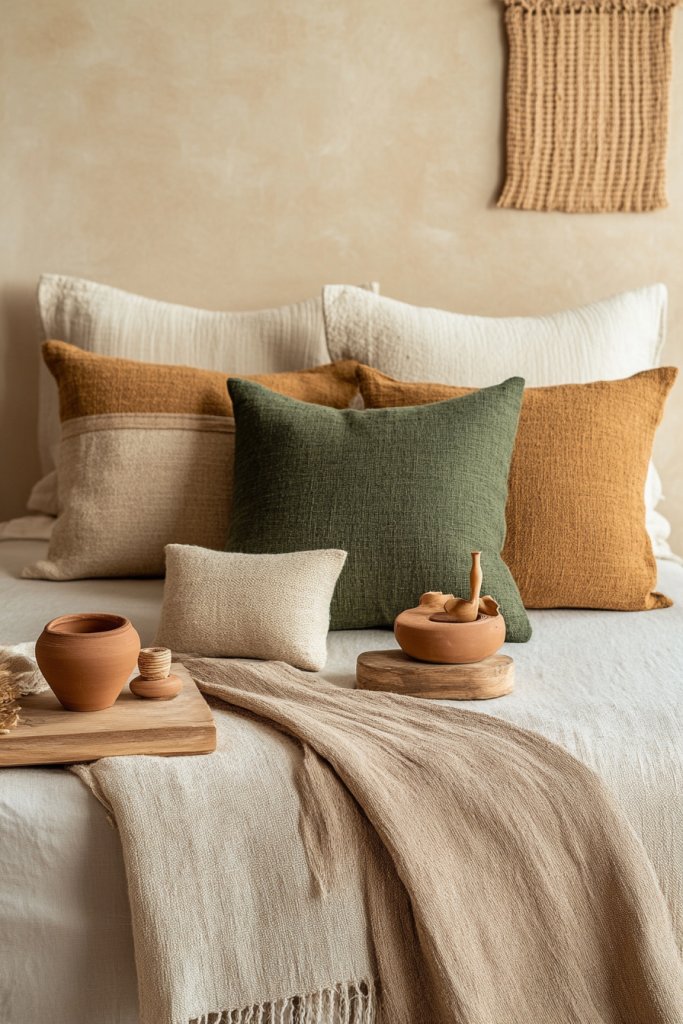
Earth tone accent pieces in terracotta, warm umber, dusty rose, and soft moss bring a grounding, calming energy to the wabi sabi bedroom without overwhelming the neutral base palette. These tones appear naturally in ceramics, textiles, dried botanicals, and woven baskets placed throughout the room.
Introduce earth tones gradually through small accent pieces rather than committing to a single large item in a bold color. Balance warm terracotta tones with cooler grey or stone shades to prevent the palette from feeling too heavy or visually busy across the bedroom.
18. Natural Fiber Basket Storage
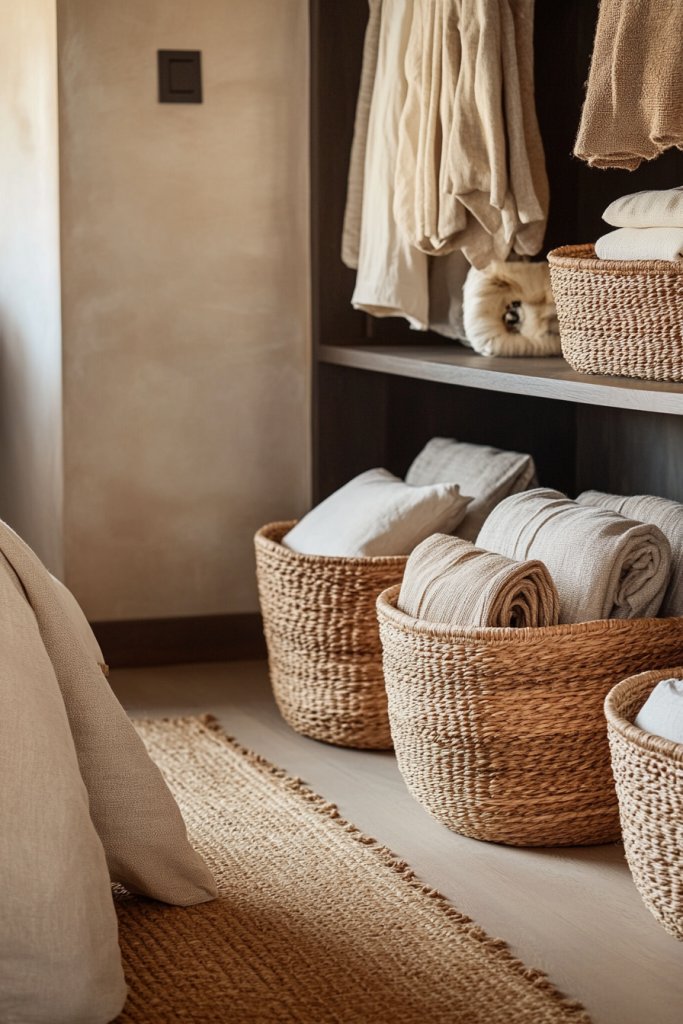
Open storage using baskets woven from rattan, seagrass, or water hyacinth keeps the bedroom organized while contributing natural texture and warmth to the overall decor. Their visible weave structure and organic color bring a crafted, unhurried quality to corners, shelves, and beside the bed.
Use larger baskets on the floor to store extra blankets, pillows, or laundry, keeping bulky items accessible without needing closed cabinetry. Select baskets with slight irregularities in their weave or shape rather than perfectly uniform factory versions, as imperfection genuinely improves their wabi sabi visual appeal.
19. Indoor Plants Simple Planters
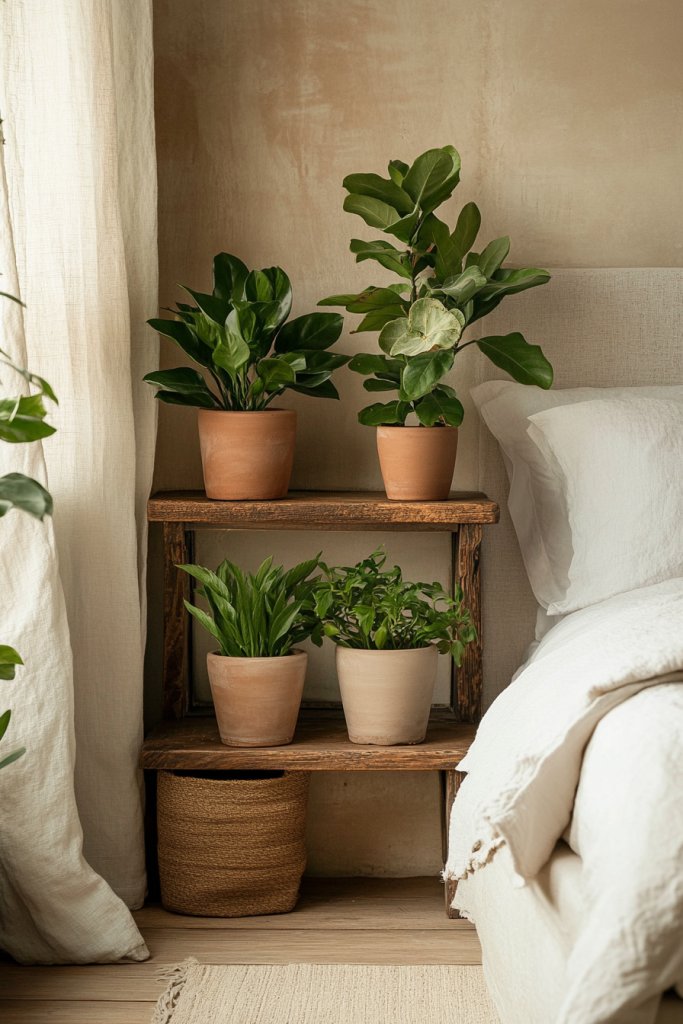
Indoor plants in simple, unadorned planters introduce living texture, soft color, and a quiet organic energy to the wabi sabi bedroom. Species with interesting leaf shapes or trailing habits, such as pothos, monstera, or dried pampas grass, complement the natural material palette beautifully.
Choose planters made from raw terracotta, unglazed stoneware, or plain concrete rather than brightly colored or patterned alternatives that distract from the plant itself. Position plants near natural light sources like windows or on low reclaimed wood shelves where they become part of the room’s organic composition.
20. Hand-Thrown Hardware Drawer Details
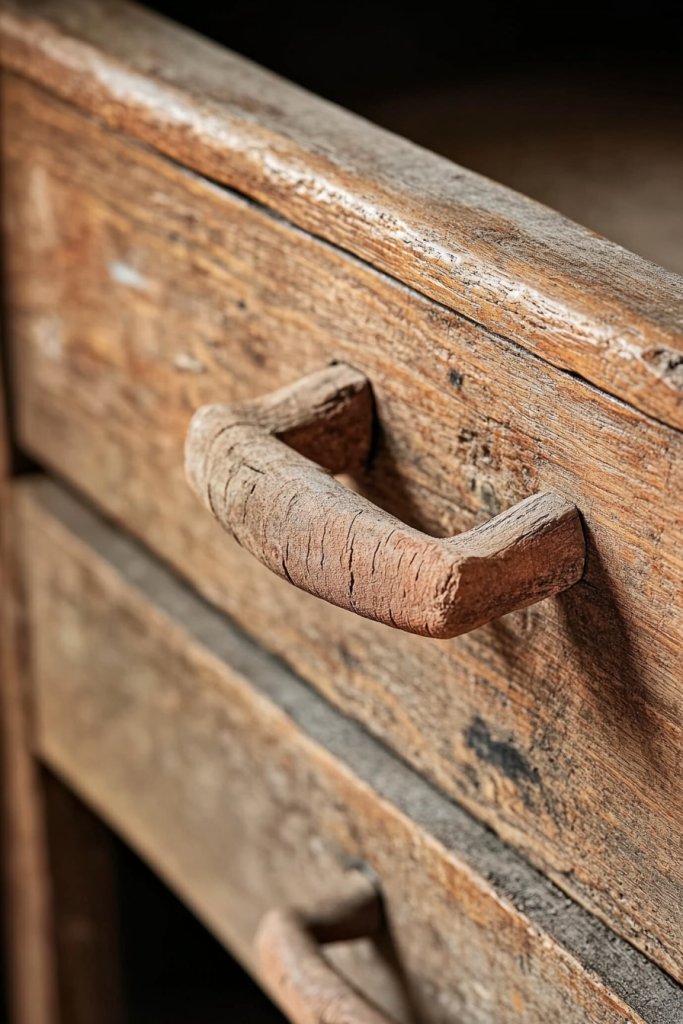
Hand-thrown clay or turned wooden drawer handles and cabinet pulls replace standard metal hardware with something far more tactile, personal, and genuinely artisan in character. Their slight variations in shape, size, and surface finish make every drawer and door feel unique rather than uniformly manufactured.
Source hand-thrown ceramic pulls or hand-carved wooden knobs from independent craft makers or artisan markets rather than large home improvement retailers. Install them on existing furniture pieces as a simple, low-cost upgrade that immediately shifts the feel of a dresser or bedside table toward wabi sabi authenticity.
21. Natural Light Unadorned Windows
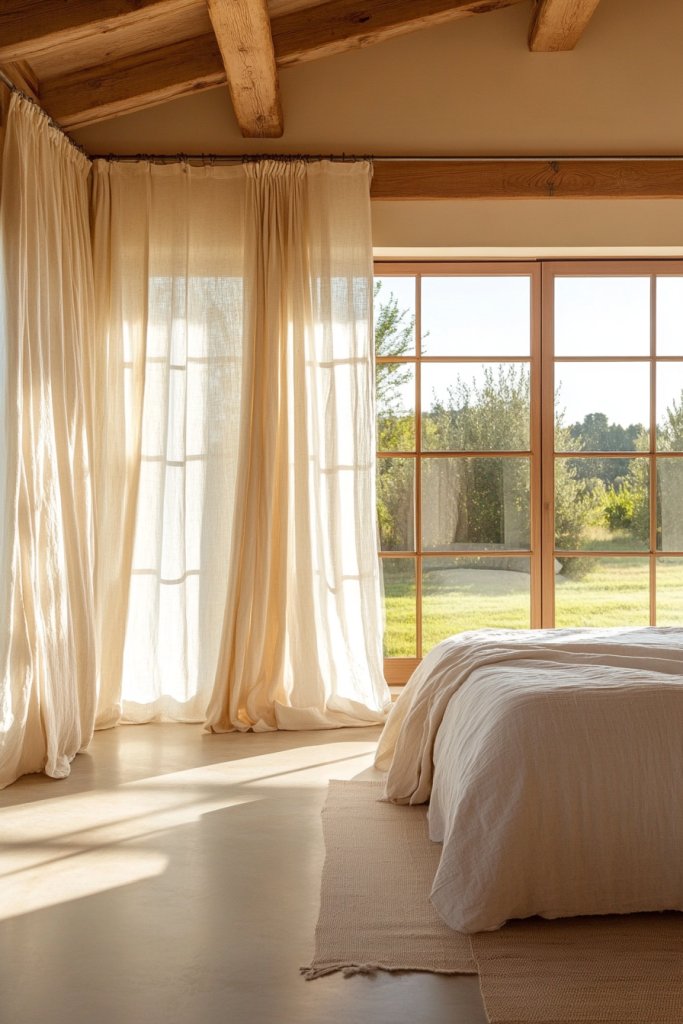
Unadorned windows or windows dressed only in sheer, undyed linen allow natural light to move freely through the wabi sabi bedroom, shifting in quality and intensity throughout the day. This changing light condition creates a living, breathing atmosphere that no artificial lighting arrangement can fully replicate.
Remove heavy curtain hardware, dark blinds, or layered window treatments that block or filter natural light unnecessarily from the bedroom. If privacy requires some covering, install a single panel of sheer undyed linen on a simple wooden rod to maintain both light quality and the room’s honest, undecorated spirit.
Start with one or two changes, such as swapping curtains for natural linen or adding a handcrafted ceramic to your bedside table, and let the wabi sabi aesthetic build gradually from there. Each authentic detail you introduce moves your bedroom closer to a space that feels genuinely calm, beautifully imperfect, and entirely your own.