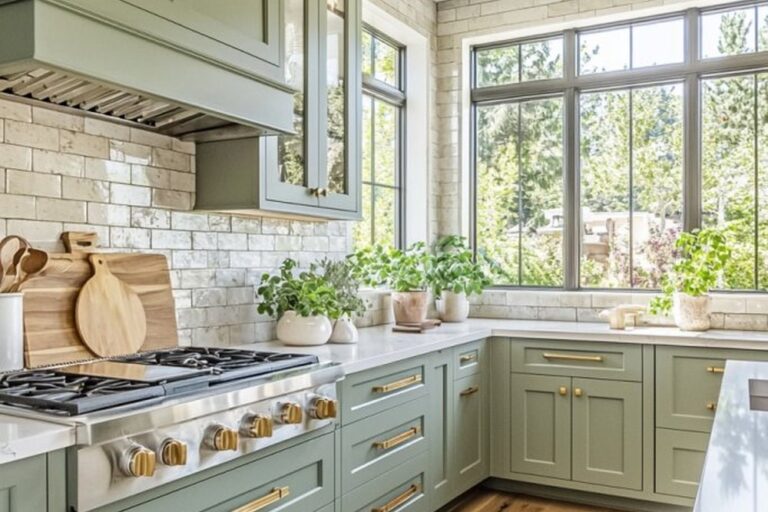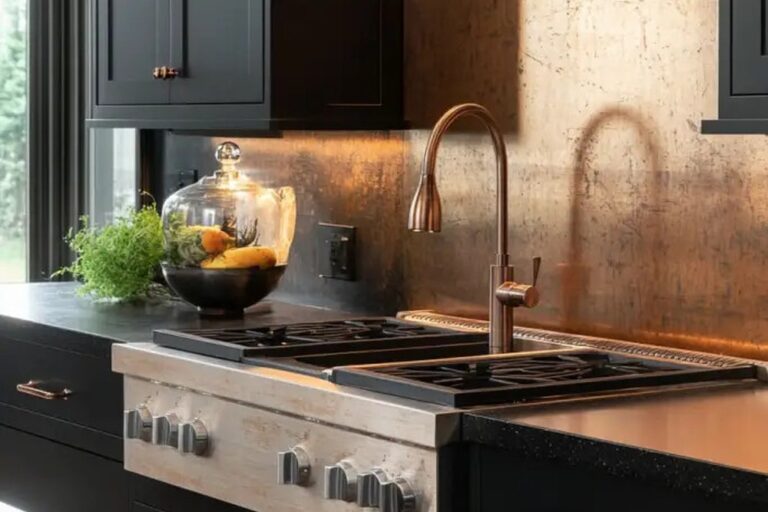

A cottage kitchen wraps every meal in warmth, character, and charm that no other style can match. These 25 ideas will help you build a space that feels like it belongs in a storybook.
Cottage kitchens draw their magic from a careful mix of old and new, where worn wood meets hand-painted pottery and morning light falls across linen curtains. Every detail works together to create a room that feels lived-in, loved, and full of personality.
The best cottage kitchens grow over time, collecting layers of texture, color, and meaning with each passing season. Start with a strong foundation of natural materials and soft color, then build outward from there.
1. Open Shelving Adds Warmth

Open wooden shelves lined with colorful dishes, vintage teacups, and mason jars full of dried herbs give a cottage kitchen its signature storybook character. Each displayed piece adds warmth and tells a small story about the people who cook and gather there.
Arrange shelves by mixing larger platters with smaller bowls to create satisfying visual rhythm across the wall. Add a trailing potted ivy or a small succulent at one end to bring natural life into the display.
2. Vintage Appliances Bring Nostalgia

A rounded retro refrigerator in pale mint or creamy white instantly becomes the most charming focal point in any cottage kitchen. Classic stoves with decorative knobs and smooth enamel finishes carry a warmth that modern stainless steel appliances simply cannot replicate.
Hunt local flea markets and online vintage shops for a patterned kettle or a pastel toaster that complements your color scheme. Even one or two vintage appliances can shift the entire mood of the room toward something cozy and timeless.
3. Pastel Colors Create Calm

Soft pastel walls in delicate mint green, warm blush pink, or pale butter yellow fill a cottage kitchen with a gentle, uplifting light that feels instantly relaxing. These quiet hues work beautifully alongside white cabinetry, making even a compact kitchen feel open and airy.
Carry your pastel palette through textiles and dishware rather than repainting every surface for a cost-effective approach. A set of blush linen tea towels or a sage green ceramic bowl can tie the whole color story together with ease.
4. Farmhouse Sink Anchors Style

A deep apron-front farmhouse sink in classic white ceramic anchors the cottage kitchen aesthetic with its bold, practical silhouette and undeniable vintage appeal. Its generous basin handles large pots and bunches of garden-fresh herbs with equal ease, making it as functional as it is beautiful.
Pair the sink with a simple bridge faucet in brushed nickel or aged brass to complete the period-appropriate look. Position the sink beneath a window so natural light falls across the basin and makes daily tasks feel more pleasant.
5. Beamed Ceilings Add Architecture

Exposed wooden ceiling beams draw the eye upward and give a cottage kitchen a sense of age, craftsmanship, and structural beauty that flat ceilings cannot offer. Dark stained oak beams against a white ceiling create a striking contrast that instantly defines the room’s rustic cottage character.
Install faux beams if your budget or ceiling structure does not allow for authentic timber, as the visual effect reads nearly identically from floor level. Hang small bundles of dried lavender or herbs from the beams to add fragrance and an extra layer of cottage charm.
6. Breakfast Nook Invites Gathering

A built-in breakfast nook tucked into a corner of the cottage kitchen creates a dedicated spot for slow mornings, long conversations, and afternoon tea rituals. Cushioned bench seating in a floral or stripe fabric, paired with a small painted wood table, gives the nook an intimate and welcoming character.
Choose a window-side location for your nook so natural light floods the seating area throughout the morning hours. Layer the bench with mix-and-match throw pillows in complementary cottage colors to make the space feel even more inviting and personal.
7. Handcrafted Wood Cabinets Charm

Handcrafted wooden cabinets with visible grain, subtle imperfections, and hand-painted finishes give a cottage kitchen a bespoke quality that mass-produced cabinetry can never achieve. Soft white, sage green, or powder blue paint colors on cabinet fronts reinforce the gentle, storybook mood of the entire room.
Ask a local carpenter to add small decorative details like beaded edges or simple carved panel insets to standard cabinet doors for an artisan finish. Replace standard hardware with hand-forged iron or ceramic knobs to complete the handcrafted aesthetic without a full renovation.
8. Natural Textures Layer Beautifully

Layering natural materials like raw linen, woven jute, unfinished wood, and hand-thrown ceramic creates a rich tactile environment that makes a cottage kitchen feel grounded and genuinely cozy. Each texture adds visual depth and prevents the space from feeling flat or overly decorated.
Introduce texture through practical objects first, including a jute rug beneath the kitchen table, a linen runner across open shelves, and a wooden bread board on the counter. These functional items do double duty as decorative elements that reinforce the cottage’s natural, honest design language.
9. Decorative Lighting Sets Mood

A woven rattan pendant light above the kitchen island or a row of small lantern-style fixtures over the sink brings warmth, texture, and focused illumination to a cottage kitchen in equal measure. The fixture itself acts as a decorative object, drawing the eye and reinforcing the room’s handcrafted, natural aesthetic.
Layer your lighting with under-cabinet strips and a dimmer switch on the main pendant so you can shift the mood from bright and practical to soft and atmospheric as the evening arrives. Choose warm white bulbs with a low color temperature to keep the glow feeling cozy rather than clinical.
10. Floral Patterns Bring Life

Floral patterns on curtains, cushion covers, wallpaper, or an upholstered chair back introduce a garden-fresh energy into the cottage kitchen that feels lively and deeply traditional at the same time. Small-scale ditsy florals work well on textiles, while larger botanical prints make a strong statement on a single feature wall.
Anchor a bold floral pattern with solid-colored companions in one of the hues drawn from the print to keep the overall look balanced rather than busy. A floral Roman blind above the kitchen sink paired with plain white walls lets the pattern breathe and become a true focal point.
11. Vintage Kitchen Island Style

A kitchen island with a butcher block top, turned wooden legs, and a coat of chalk paint in a contrasting color adds both workspace and visual personality to a cottage kitchen. Its vintage character breaks up the uniformity of built-in cabinetry and gives the room a collected, evolving look.
Source a solid antique table from a salvage yard and convert it into an island by adding casters for mobility and a few open shelves or hooks along its base. This approach costs far less than a custom island while delivering far more charm and individuality.
12. Antique Furniture Stores Smartly

A painted antique dresser, a worn wooden hutch, or a freestanding armoire can store kitchen essentials while contributing far more decorative character than a standard built-in cabinet ever could. These pieces carry history in their scratched surfaces and uneven paint layers, which only deepens the cottage kitchen’s storybook atmosphere.
Use the top surface of an antique dresser to display a curated arrangement of pottery, candles, and a small potted herb to blend storage with styling. Line the interior drawers with vintage-style paper to protect the wood and add a charming detail that guests will notice on closer inspection.
13. Indoor Herb Garden Grows Fresh

A small indoor herb garden arranged along a sunny kitchen windowsill brings fragrance, color, and a connection to nature that makes cooking in a cottage kitchen feel genuinely special. Terra cotta pots planted with rosemary, thyme, basil, and mint line up beautifully and provide fresh ingredients within arm’s reach.
Label each pot with a hand-written ceramic or wooden tag to add a personalized, artisan touch that reinforces the cottage aesthetic. Water the herbs consistently and rotate the pots weekly so every plant receives even light and grows compact and full rather than leggy.
14. Subway Tile Backsplash Endures

Classic white subway tiles arranged in a simple running bond or herringbone pattern create a clean, timeless backsplash that complements every cottage kitchen color palette without competing for attention. Their glossy surface reflects light beautifully and provides a practical, easy-to-clean backdrop behind the stove and sink.
Choose a slightly off-white or cream grout color rather than bright white to soften the overall look and prevent the backsplash from feeling too crisp or contemporary. Extend the tile up to the ceiling behind the range to create a bold feature wall that anchors the cooking zone.
15. Woven Baskets Organize Naturally

Woven baskets in natural seagrass, rattan, or willow provide cottage-perfect storage for everything from fresh produce to folded tea towels, keeping surfaces clear while adding warm organic texture to the kitchen. Stacked on open shelves or tucked beneath a console table, they look as decorative as any styled display.
Label each basket with a small hand-written tag tied on with twine so every family member knows exactly where to find and return each category of item. Mix basket sizes and weave patterns deliberately to create a layered, collected look rather than a uniform matching-set appearance.
16. Charming Pottery Styles Tables

Hand-thrown ceramic bowls, speckled mugs, and glazed stoneware pitchers displayed on open shelves or arranged on the dining table give a cottage kitchen a warm, artisanal character that mass-produced tableware simply cannot replicate. The slight irregularities in handmade pottery, including uneven rims and varied glaze patterns, add authenticity and beauty to every meal.
Build a collection gradually by picking up one or two pieces at a time from local potters, craft markets, or antique fairs rather than buying a matching set all at once. The resulting mix of styles, glazes, and scales will feel genuinely personal and far more interesting than a uniform collection.
17. Fireplace Warms Kitchen Spaces

A small fireplace or a cast-iron wood-burning stove installed in a cottage kitchen transforms the room into the warmest, most welcoming gathering space in the entire home. The flickering light and gentle crackle of a real fire create an atmosphere that no candle or lamp can fully replicate.
Frame the fireplace surround with painted brick or a simple wood mantel shelf to give it a finished, intentional look that suits the cottage interior style. Style the mantel with a mix of candlesticks, a small framed artwork, and a trailing plant to make the feature feel lived-in and layered.
18. Chalkboard Wall Adds Function

A chalkboard wall or large framed chalkboard panel in the cottage kitchen serves as a menu board, a shopping list surface, and a spot for handwritten quotes that add warmth and daily personality to the room. Its matte black finish creates a striking contrast against pastel walls and natural wood tones.
Paint a single wall section or an interior cabinet door with chalkboard paint for an easy, low-cost update that adds both function and a playful decorative element. Keep a jar of chalk and a small eraser on a nearby shelf so the board stays practical and inviting for everyone in the household.
19. Roman Shades Soften Windows

Roman shades in a soft linen, a gentle floral print, or a subtle stripe frame cottage kitchen windows with an elegant softness that heavier curtain panels cannot achieve in a compact space. Their clean, flat fold lets them disappear entirely when raised, keeping the window uncluttered and the natural light uninterrupted.
Choose a fabric with a slight texture, such as a slubbed linen or a woven cotton, to add tactile interest without introducing a competing pattern into an already layered room. Hang the shades slightly above the window frame and wider than the glass to make the window appear larger and the ceiling feel taller.
20. Whimsical Artwork Decorates Walls

Small framed botanical prints, hand-painted animal portraits, or folk art illustrations hung in a casual salon-style arrangement bring a playful, storybook energy to cottage kitchen walls that larger single artworks rarely achieve. The mix of frame sizes, styles, and subject matter creates a gallery that feels personal and pleasantly imperfect.
Paint all the frames in one coordinating color, such as soft white or aged gold, to unify a diverse collection of artwork without removing its charming individuality. Lay the arrangement out on the floor before committing to wall holes to find the most balanced and visually pleasing configuration.
21. Corner Cabinets Use Space

Corner cabinets fitted with lazy Susan turntables or open diagonal shelving maximize every square inch of a cottage kitchen without sacrificing the room’s relaxed, uncluttered character. A well-designed corner cabinet keeps pots, pantry staples, and small appliances accessible without forcing them onto precious counter space.
Paint corner cabinet interiors in a contrasting color to the exterior, such as a soft sage green inside a white cabinet, to create a charming surprise when the doors open. Add a small interior light to improve visibility and transform an overlooked storage corner into a genuinely functional and attractive kitchen feature.
22. Large Windows Flood Light

Large windows positioned above the kitchen sink or along an exterior wall flood a cottage kitchen with the kind of generous, shifting natural light that makes every surface, material, and color look its very best throughout the day. Good natural light also reduces the need for harsh overhead lighting and keeps the room feeling genuinely warm rather than artificially bright.
Dress large windows simply with a sheer linen panel or a lightweight Roman shade so the light flows freely into the room without heavy fabric interrupting it. Plant window boxes on the exterior sill with trailing herbs or cottage flowers to frame the view and reinforce the garden-connected cottage feeling from inside.
23. Colorful Tile Floor Pops
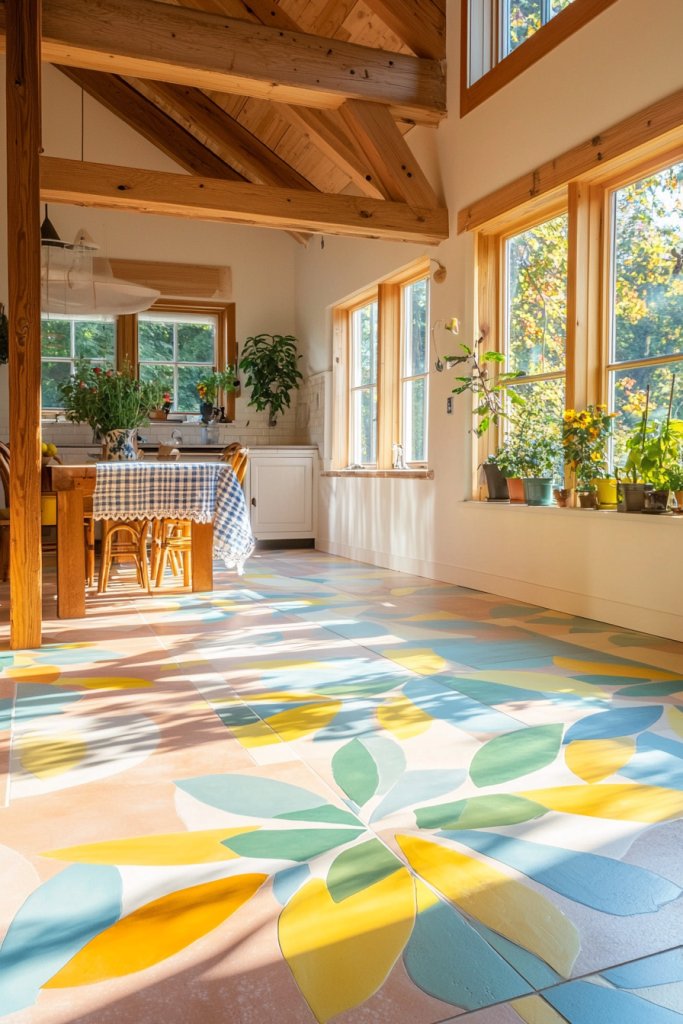
A patterned tile floor in warm terracotta, hand-painted encaustic, or vintage-style geometric designs grounds the entire cottage kitchen and adds a layer of color and artistry that no painted wall can fully replicate. The floor becomes a true design feature that sets the visual tone for every other element in the room above it.
Balance a bold, colorful tile floor with quieter walls and simple cabinetry so the pattern reads clearly without competing with too many other strong visual elements in the space. Use a grout color that closely matches the dominant tile tone to create a cohesive, flowing surface rather than a grid-like, fragmented effect.
24. Vintage Hardware Elevates Cabinets

Vintage-style fixtures and hardware in aged brass, oil-rubbed bronze, or hand-painted ceramic transform standard cabinetry into something that looks genuinely bespoke and deeply characteristic of the cottage kitchen aesthetic. A simple cabinet knob or a cup-pull drawer handle carries more visual weight than most people expect and sets the finishing tone for the entire room.
Replace all the hardware in a kitchen in a single afternoon to achieve one of the highest-impact, lowest-cost updates available to any home decorator working within a tight renovation budget. Choose a single metal finish and apply it consistently across cabinet pulls, faucet, and light fixture to create a cohesive, intentional look throughout the space.
25. Family Heirlooms Personalize Kitchens
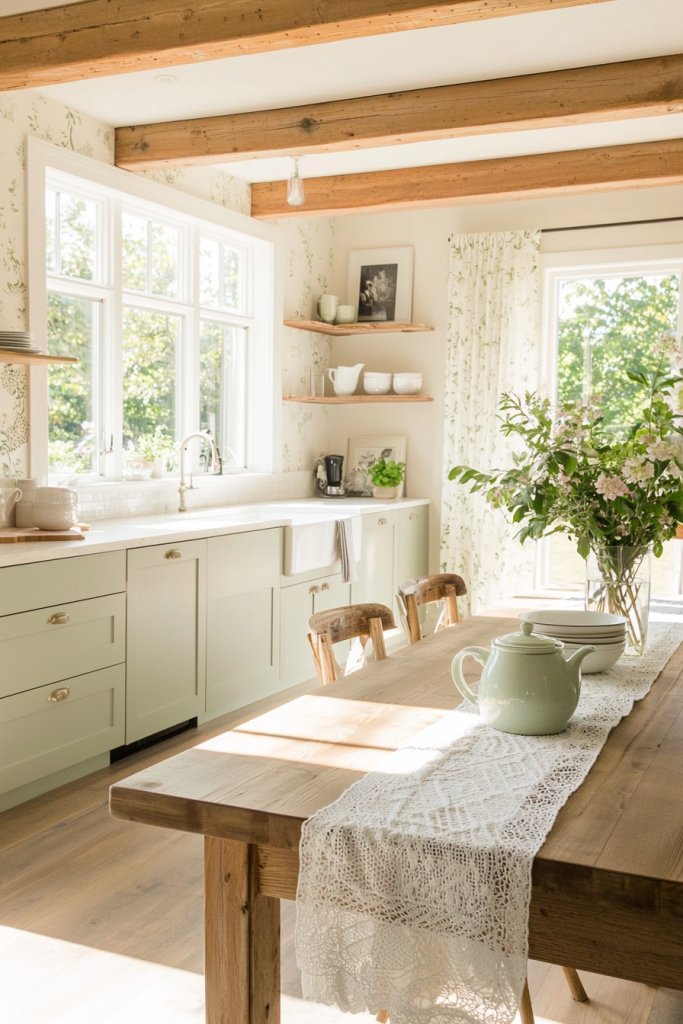
Displaying a grandmother’s ceramic serving dish, a collection of inherited copper pots, or a hand-stitched sampler passed down through generations gives a cottage kitchen a depth of personal meaning that no retailer can sell and no trend can replicate. These objects anchor the room in real family history and make every meal prepared there feel connected to something larger than the present moment.
Style heirlooms on open shelves or hang them as wall art so they remain visible and integrated into the daily life of the kitchen rather than stored away out of sight. Group related pieces together in a small vignette with fresh flowers or a candle to give the display the reverence and attention it genuinely deserves.
Choose two or three of these ideas to try first and build your cottage kitchen gradually over time. Each new layer of texture, color, and personal meaning will bring the space closer to the warm, storybook home you want to create.