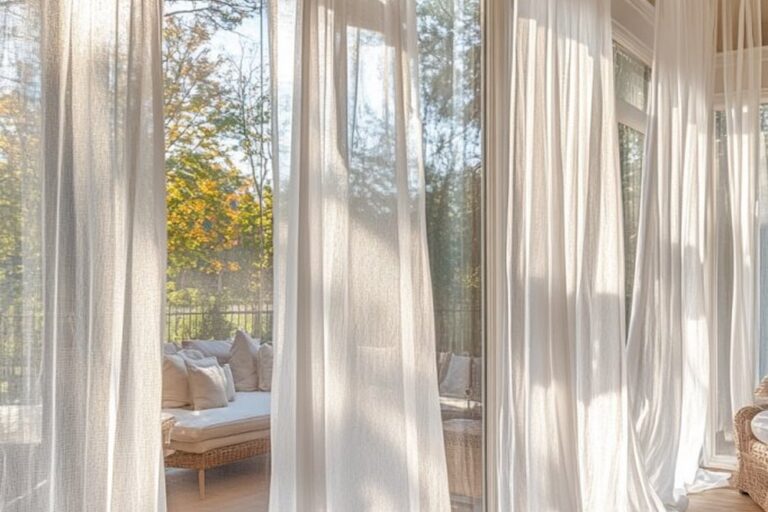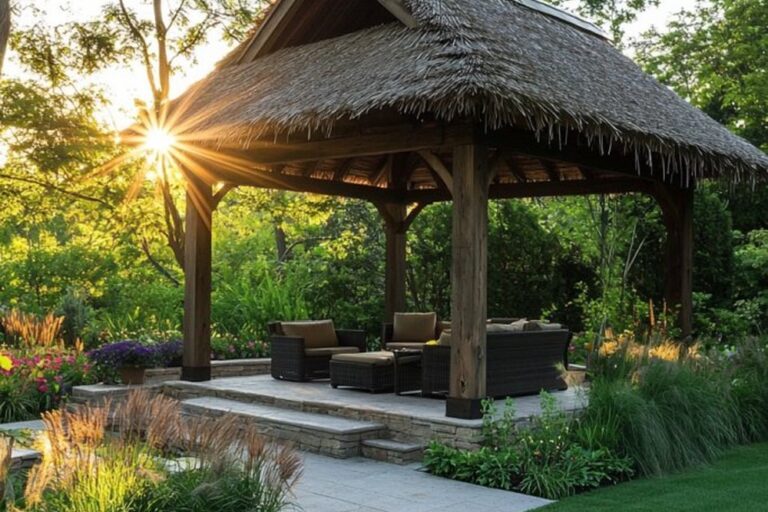
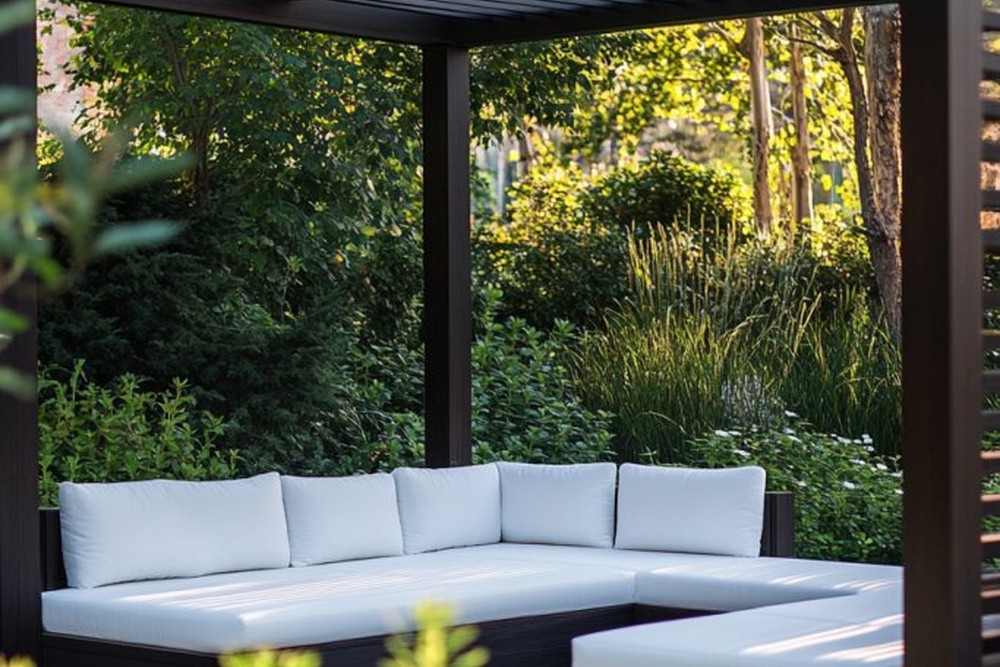
A covered patio transforms any outdoor space into a true extension of your home. These 21 ideas cover every style, budget, and backyard size so you can build the outdoor retreat you actually want.
Covered patios have moved far beyond simple awnings and basic shade structures. Homeowners now treat their outdoor spaces as full interior rooms, complete with furniture, lighting, and defined zones.
The right patio cover does more than block the sun. It anchors your outdoor decor, creates a sense of enclosure, and gives every piece of furniture a purposeful place to live.
1. Pergola With Built-In Seating
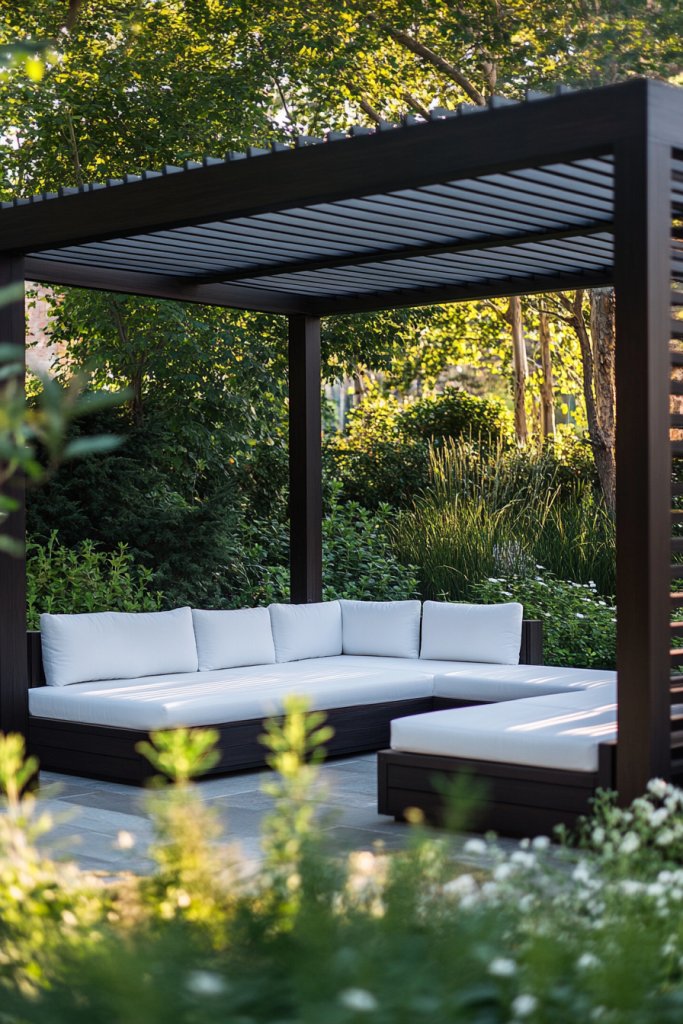
A modern pergola with integrated seating creates a structured outdoor living room anchored by clean lines and a slatted overhead frame. Powder-coated metal or treated wood forms the base, while built-in benches wrapped in plush, weatherproof cushions fill the space beneath.
Choose monochrome tones and minimal accessories for a sleek, contemporary finish that suits most backyard styles. Add modular side tables, hanging planters, and weather-resistant throw pillows to layer texture and personality into the space.
2. Cedar Beam Patio Lighting
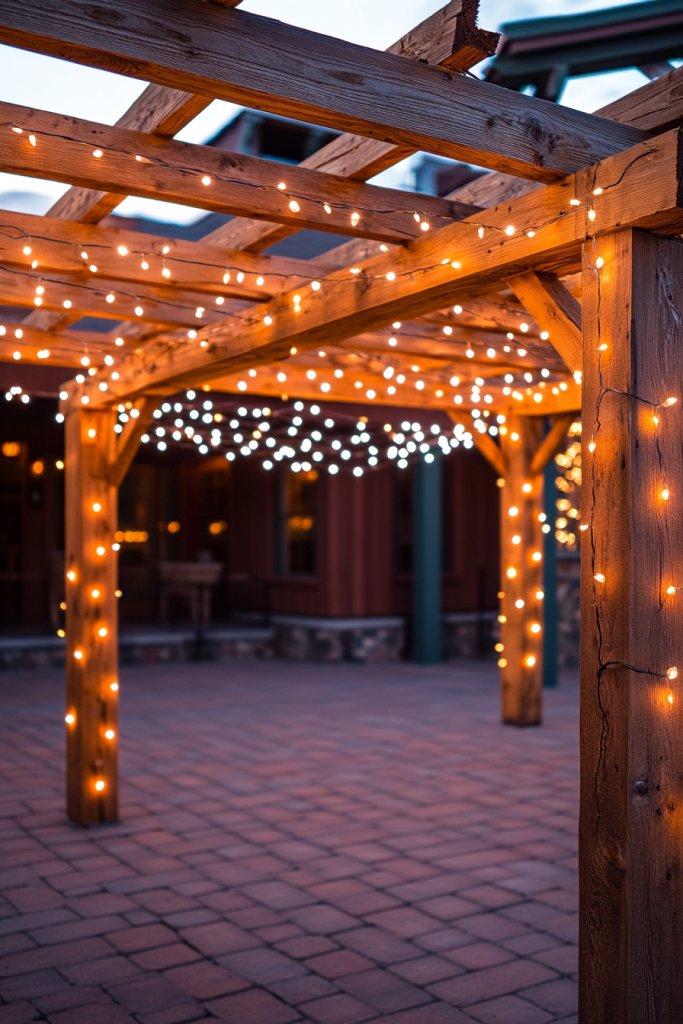
Rustic cedar beams carry a warm, honey-toned grain that brings immediate character to any covered patio design. Builders space the beams generously overhead, and homeowners drape bistro string lights between them to create a soft, lantern-like atmosphere after dark.
Seal the cedar with a UV-resistant outdoor stain to protect the grain and deepen its rich amber color season after season. Hang Edison-bulb string lights in a loose zigzag pattern across the beams for maximum visual warmth without overwhelming the rustic aesthetic.
3. Clear Roof All-Weather Gazebo
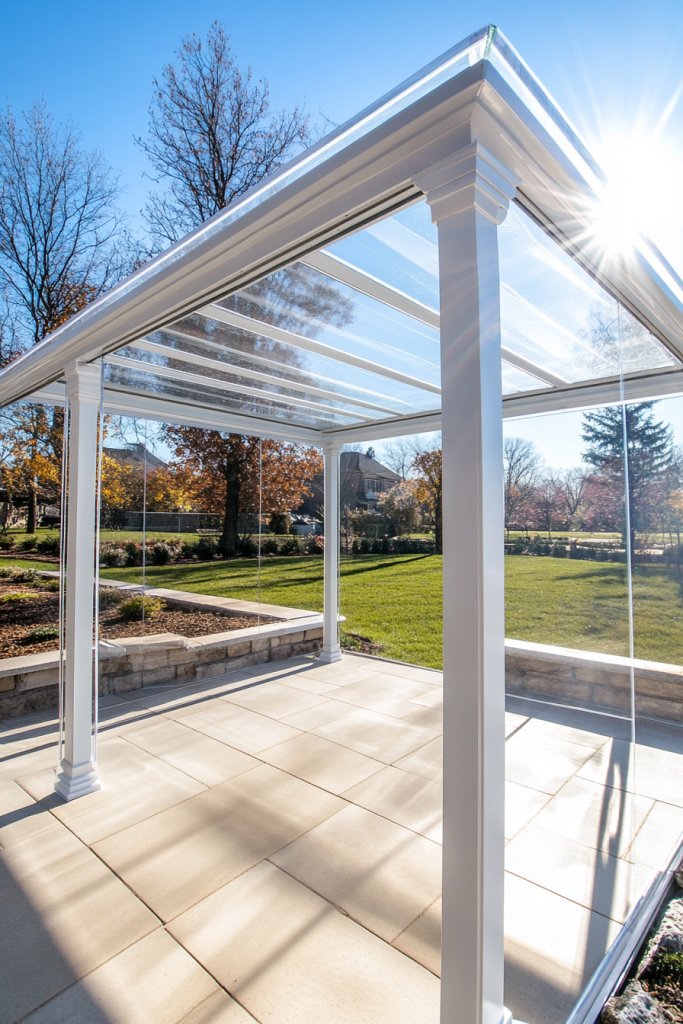
A clear-top gazebo uses polycarbonate or tempered glass panels overhead to let natural light flood the space while keeping rain completely out. The transparent roof creates a bright, airy atmosphere that feels open and expansive even on overcast days.
Choose a powder-coated aluminum frame in black or charcoal to give the clear roof a sharp, contemporary border that reads as intentional and stylish. Place tall potted plants around the gazebo perimeter to soften the hard lines and blur the boundary between the structure and your garden.
4. Retractable Canopy Flexible Shade
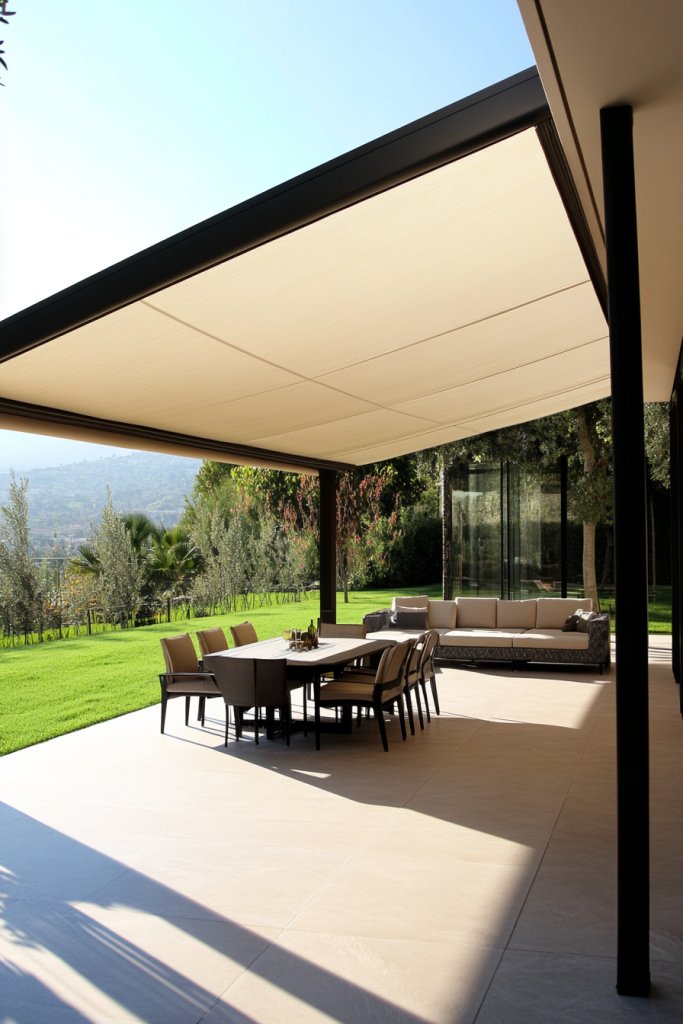
A retractable fabric canopy gives homeowners complete control over sun exposure throughout the day without committing to a fixed overhead structure. The canopy extends across a sturdy aluminum track system and retracts neatly against the house wall when full sun or an open sky is preferred.
Mount the track system directly into the exterior wall or onto freestanding posts for a clean, architectural installation that suits both attached and detached patios. Select a fabric rated for UV resistance and water repellency so the canopy performs reliably through multiple seasons without fading or sagging.
5. Green Wall Privacy Enclosure
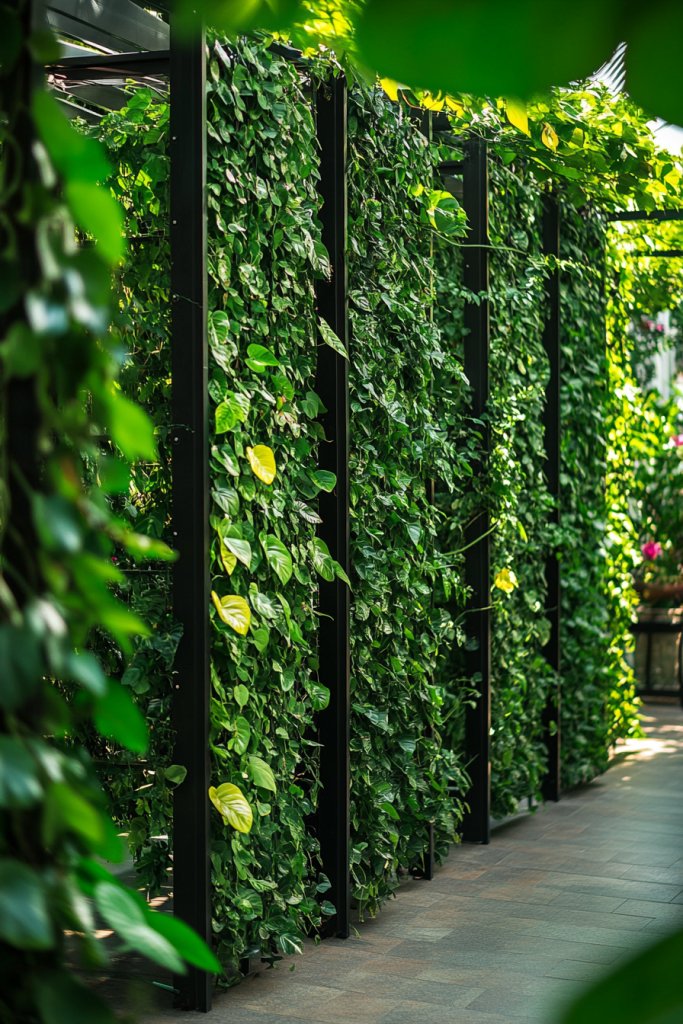
A green wall enclosure uses living plants mounted on a vertical frame to create a lush, textured boundary around the covered patio area. Ferns, succulents, pothos, and climbing ivies fill modular pockets across the wall surface, building a dense, vibrant backdrop that changes subtly with each season.
Install a built-in drip irrigation system behind the green wall panels to keep plants healthy with minimal daily maintenance. Choose a mix of evergreen species alongside seasonal bloomers so the wall retains its fullness and color throughout the entire year.
6. Metal Frame Cable Roof
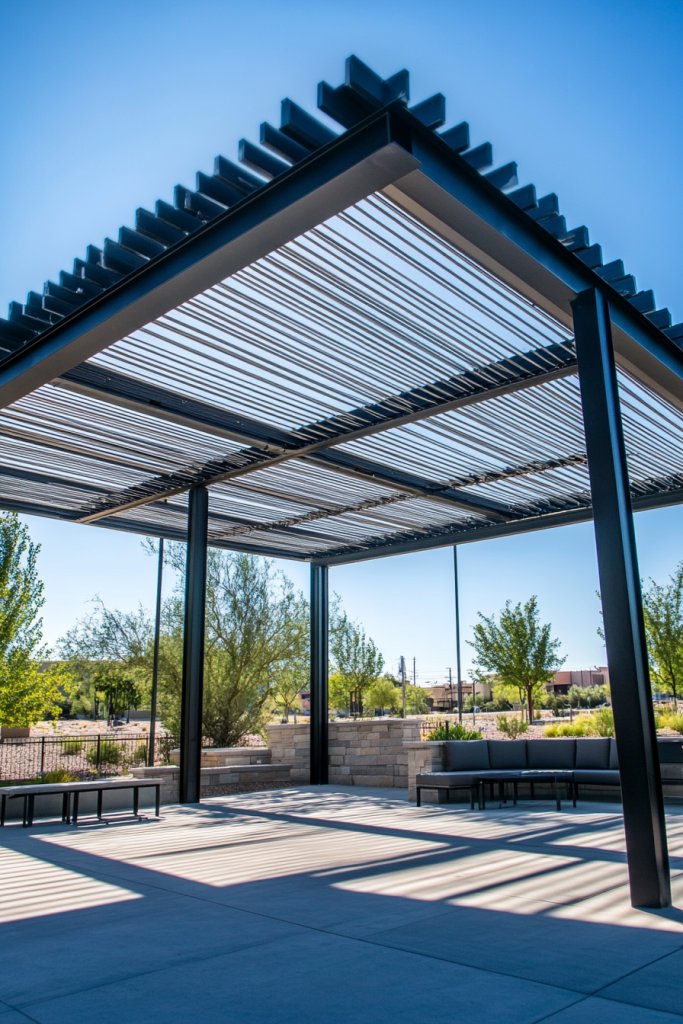
A modern metal frame patio cover uses tensioned stainless steel cables stretched across a geometric overhead grid to create a striking visual canopy. The open cable pattern casts linear shadows across the floor below, shifting throughout the day as the sun moves and adding dynamic texture to the space.
Pair the metal frame with polished concrete flooring and low-profile furniture in monochrome tones to reinforce the modern, architectural character of the design. Weave climbing plants like wisteria or jasmine through the cable grid over time to soften the hard geometry with natural, organic texture.
7. Wooden Lattice Climbing Plants
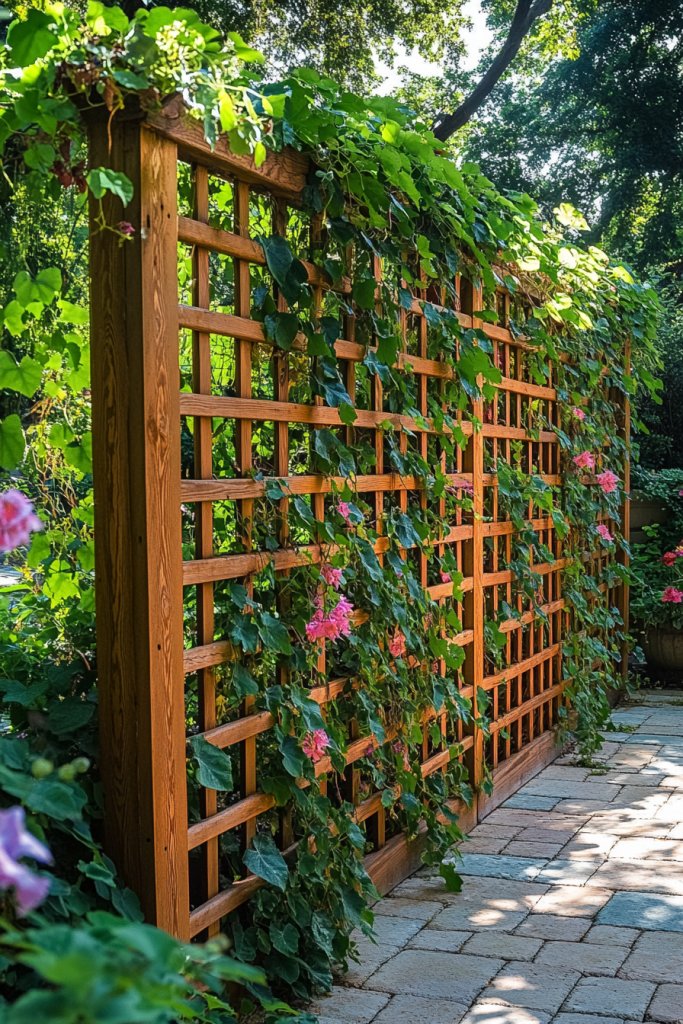
A classic wooden lattice patio cover creates a romantic, garden-inspired overhead canopy that climbing plants gradually fill in over growing seasons. Roses, wisteria, bougainvillea, and honeysuckle weave through the diamond-pattern grid and produce a dense, fragrant ceiling of color and texture above the seating area.
Treat the wooden lattice with a weatherproof exterior stain before installing any plants to protect the timber from moisture and extend the structure’s lifespan significantly. Plant fast-growing climbers at the base of each upright post and train their stems along the lattice using soft garden ties during the first growing season.
8. Industrial Patio Exposed Beams
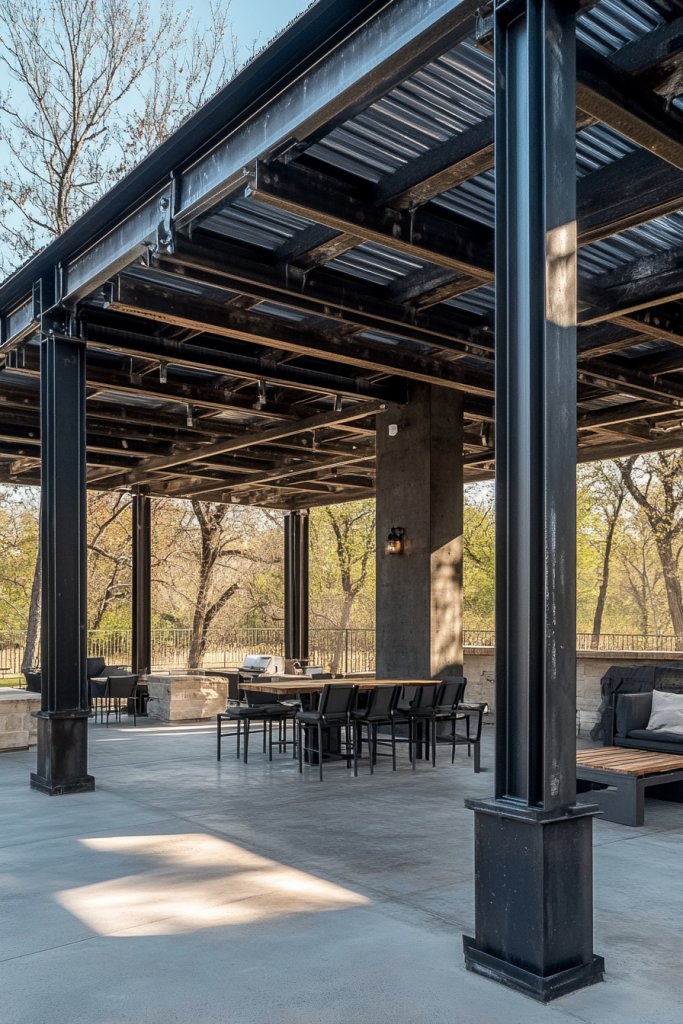
An industrial-style covered patio celebrates raw, structural materials by leaving steel beams, concrete surfaces, and weathered wood completely exposed and unfinished. Heavy steel I-beams or box sections span the overhead framework, paired with corrugated metal roofing panels that add rhythmic texture to the ceiling plane above.
Ground the industrial aesthetic with concrete pavers or polished cement flooring that echoes the raw material palette of the overhead structure. Introduce warmth through leather cushions, wooden side tables, and Edison-bulb pendant lights hung in clusters from the exposed beam framework.
9. Canvas Canopy Steel Supports
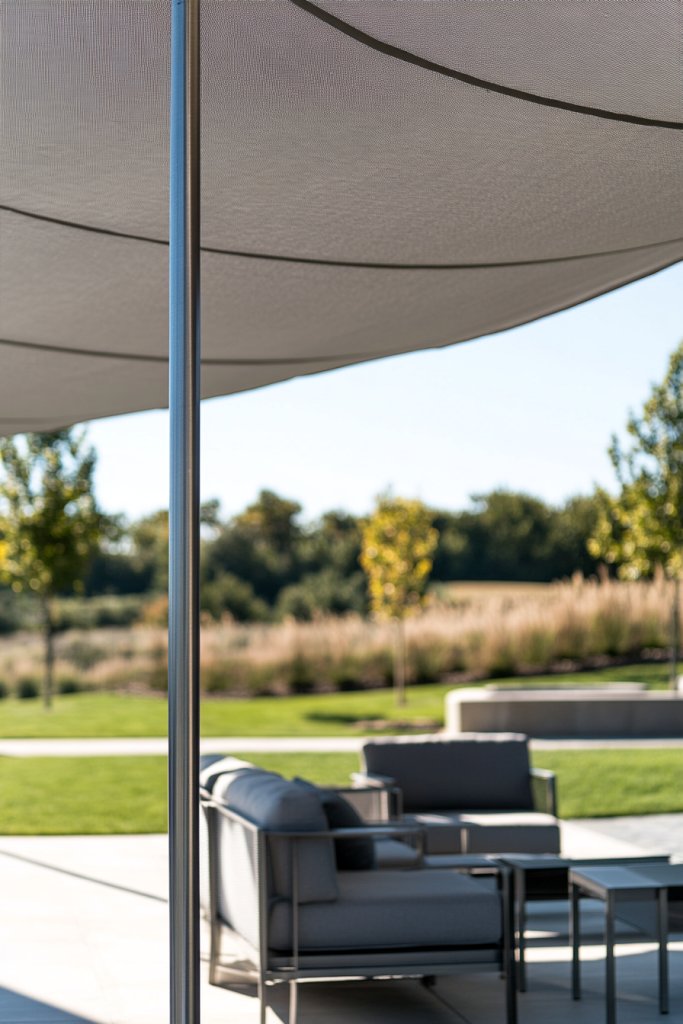
A tensioned canvas shade stretched across a grid of slim steel supports creates a clean, architectural patio cover with a distinctly contemporary character. The taut fabric surface eliminates any sagging or billowing, giving the canopy sharp geometric edges that align precisely with the structural posts below.
Spec the steel support posts at a minimum diameter of 60mm so they carry the canvas tension without flexing under wind load. Attach stainless steel turnbuckles at each corner anchor point so you can re-tension the canvas quickly at the start of each outdoor season.
10. Pavilion Brick Tiled Roof
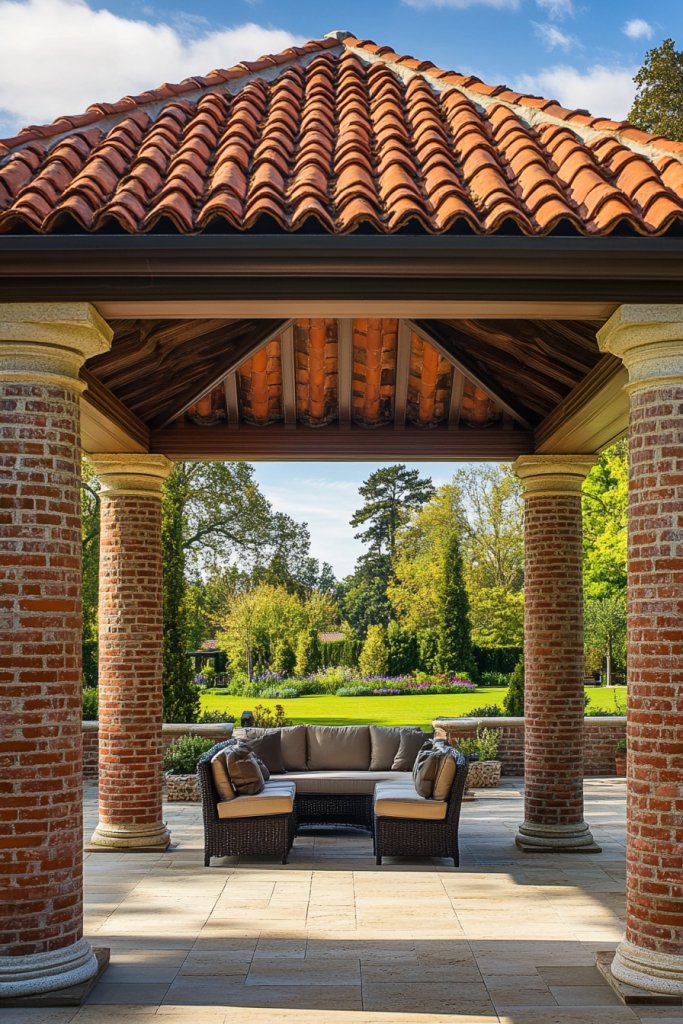
A pavilion with brick columns and a tiled roof delivers the most permanent and architecturally substantial form of covered patio design available. Solid brick piers rise from a poured concrete footing and support a traditional hip or gable roof finished with terracotta or slate tiles overhead.
Match the brick color and tile style to your home’s existing exterior materials so the pavilion reads as a seamless, planned extension of the building. Pour a continuous concrete slab beneath the pavilion and finish it with large-format stone or porcelain tiles to ground the entire structure in visual weight.
11. Slatted Wood Dappled Light
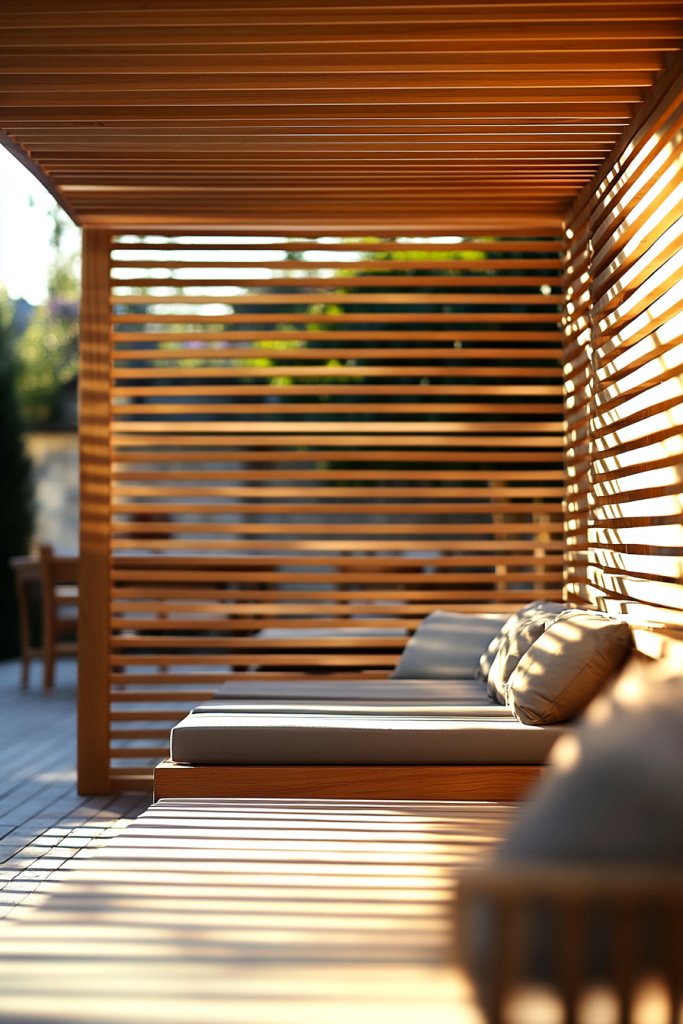
A slatted wood patio cover spaces individual timber boards at regular intervals across an overhead frame to produce soft, striped shadows across the floor below. The pattern of light and shade shifts continuously throughout the day, animating the space with natural movement that no solid roof can replicate.
Space the slats between 50mm and 80mm apart to balance shade coverage with the visual lightness of the overall structure. Sand and oil the timber slats before installation to enhance their natural grain and protect them from the seasonal moisture exposure that causes cracking.
12. Bamboo Eco-Friendly Patio Cover
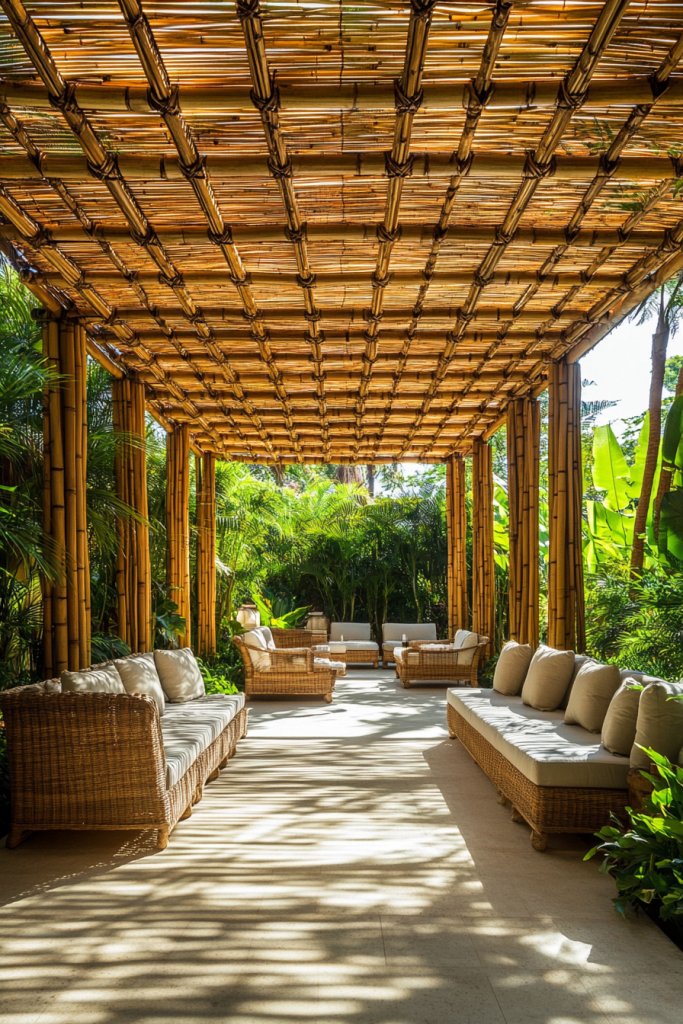
An eco-friendly bamboo patio cover brings a natural, resort-inspired warmth to any outdoor space through its distinctive golden-green cane texture and organic geometry. Thick bamboo poles form the main structural frame, while tightly bound bamboo matting or individual canes laid side by side create the overhead roof surface above.
Treat every bamboo component with a penetrating sealant and UV-inhibiting oil before assembly to prevent splitting, graying, and moisture absorption over time. Source structural-grade bamboo with a minimum wall thickness to ensure the frame carries wind and rain loads without flexing at the joints.
13. Curved Arched Metal Cover
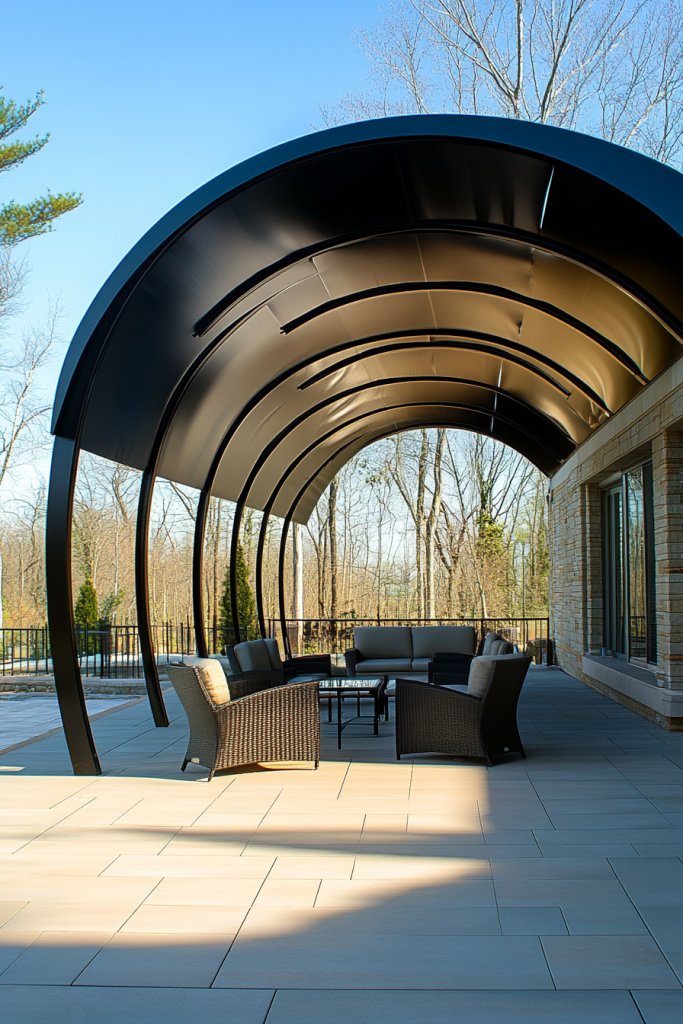
A curved metal arched patio cover introduces sculptural geometry to the outdoor space, replacing the expected flat or pitched roof with a flowing, barrel-vault profile. The arch form distributes structural load efficiently across the steel frame, allowing slimmer members and a more elegant, lightweight appearance than a conventional flat cover achieves.
Position the arch so its highest point sits directly above the primary seating area to maximize headroom and create a natural sense of shelter at the center of the space. Infill the curved frame with polycarbonate panels, woven shade cloth, or climbing plant support mesh depending on your preferred balance of light and privacy.
14. Shade Sail Dining Nook
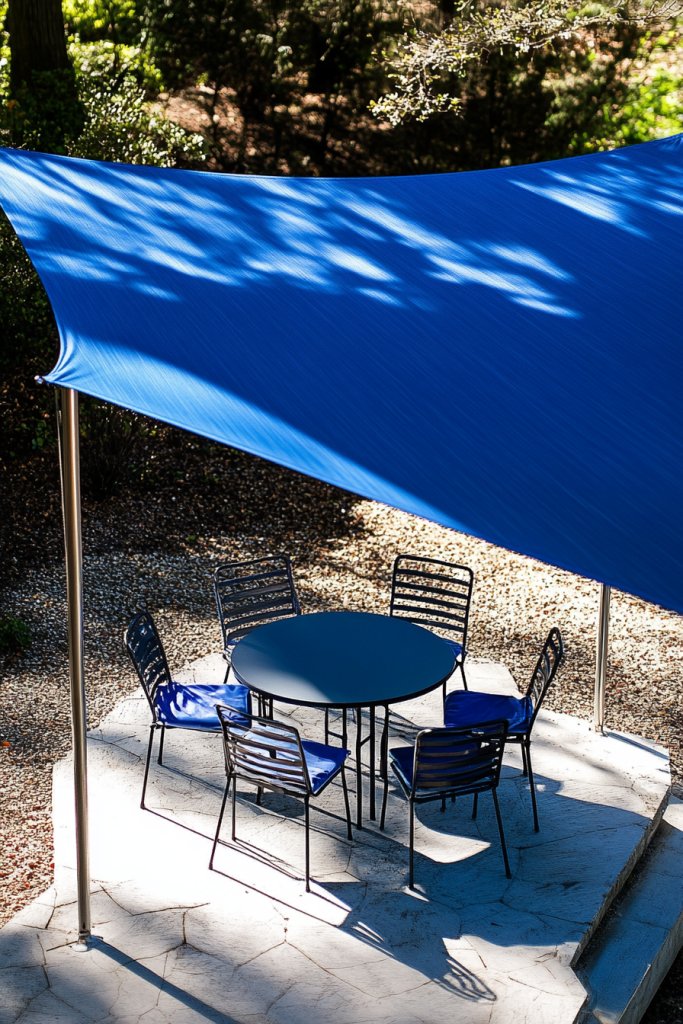
A canvas shade sail stretched over a compact outdoor dining nook creates a defined, intimate overhead plane that visually separates the eating area from the rest of the garden. The triangular or rectangular sail anchors to wall-mounted D-rings or freestanding steel posts at each corner, pulling the fabric into a taut, angled canopy above the table.
Hang the sail at an angle rather than flat so rainwater runs off the fabric surface quickly without pooling at the center. Choose stainless steel anchor hardware and high-tensile mounting points to keep the sail secure during gusty weather without loosening over time.
15. Modular Cover Panel System
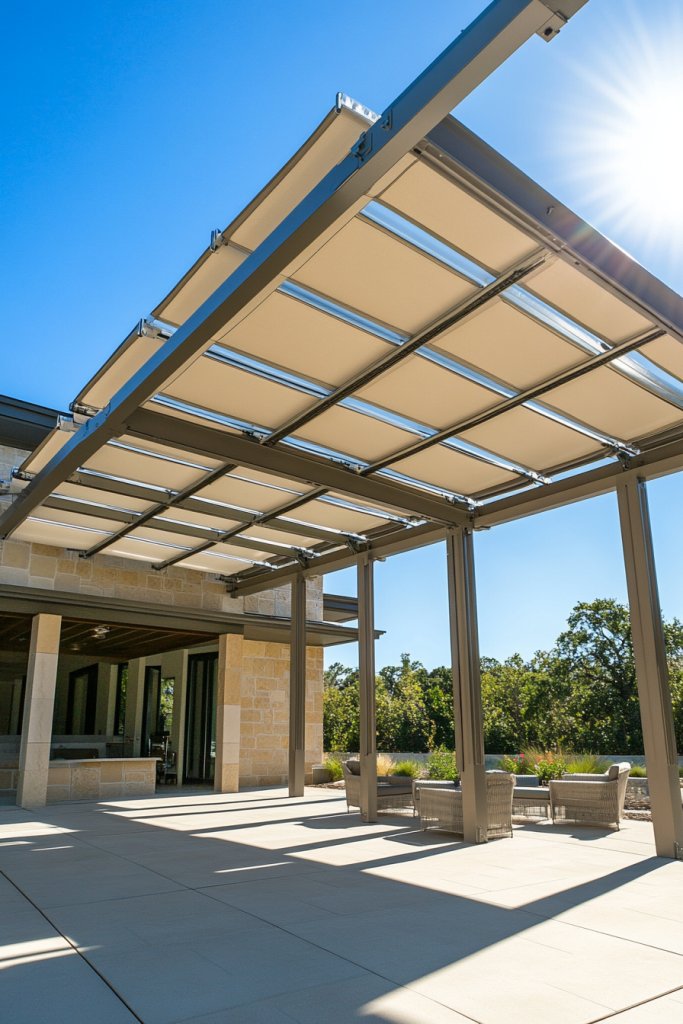
A customizable modular cover panel system lets homeowners configure the overhead patio structure in any shape or size using interlocking frame sections and interchangeable infill panels. Each module clips or bolts to the next, building out a continuous covered zone that expands or contracts as the space and budget allow over time.
Start with a single bay covering the primary seating area and add further modules in subsequent seasons as the outdoor space evolves. Choose a powder-coated aluminum frame system rather than steel to keep the overall structure lightweight, corrosion-resistant, and easy to assemble without professional installation.
16. Concrete Overhang Stone Patio
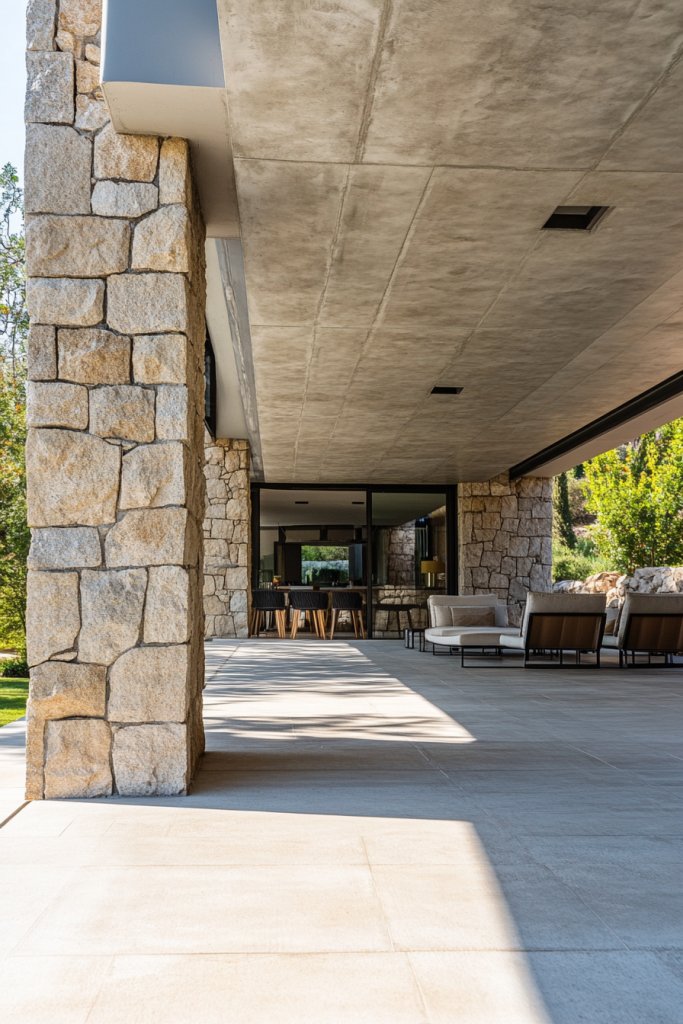
A stone and concrete covered patio with a structural overhang creates one of the most permanent and architecturally resolved outdoor living spaces a homeowner can build. A cantilevered concrete slab extends from the rear wall of the house and provides a generous, rain-proof ceiling above the patio floor below without requiring any supporting posts within the usable space.
Work with a structural engineer to specify the correct slab thickness, reinforcement, and cantilever depth before any concrete is poured for the overhang. Finish the underside of the slab with a smooth render coat in warm white or pale stone to reflect natural light back down into the shaded patio zone.
17. Automated Retractable Pergola
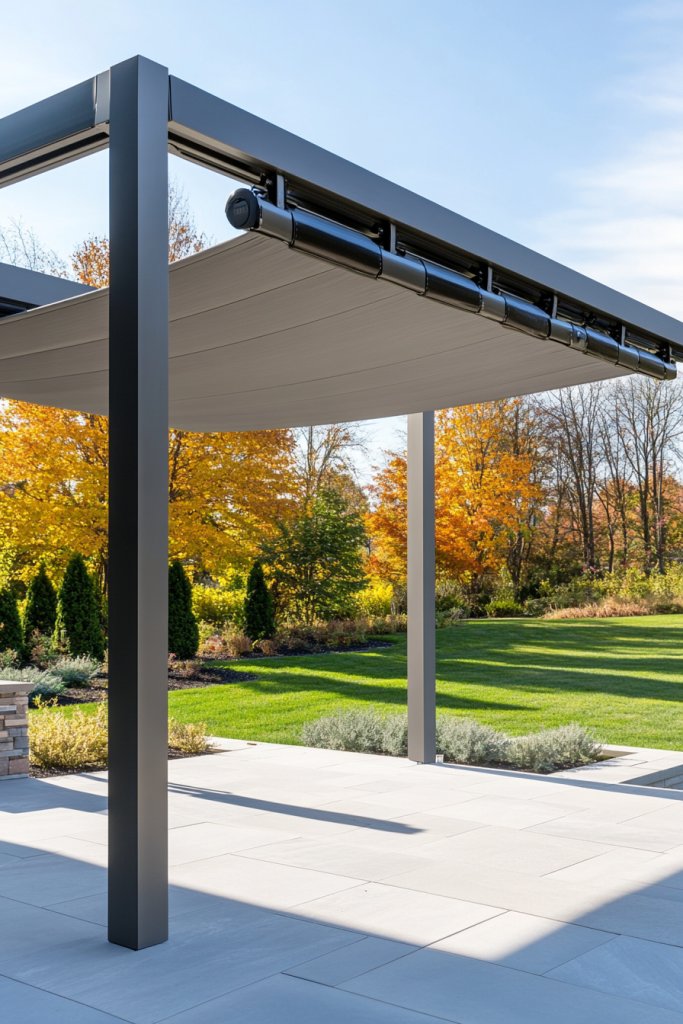
A retractable pergola with automated shade control gives homeowners a motorized louvered roof that opens and closes at the touch of a single button or a voice command. Individual aluminum louvers rotate from fully open to fully closed, shifting the patio from a sun-drenched terrace to a completely sheltered outdoor room within seconds.
Install the automated pergola on a north or west-facing elevation to maximize the practical benefit of on-demand shade during the hottest afternoon hours. Specify a drainage channel within each louver blade so that rainwater channels along the blades and evacuates through the corner posts without dripping into the space below.
18. Vintage Ironwork Ornamental Patio
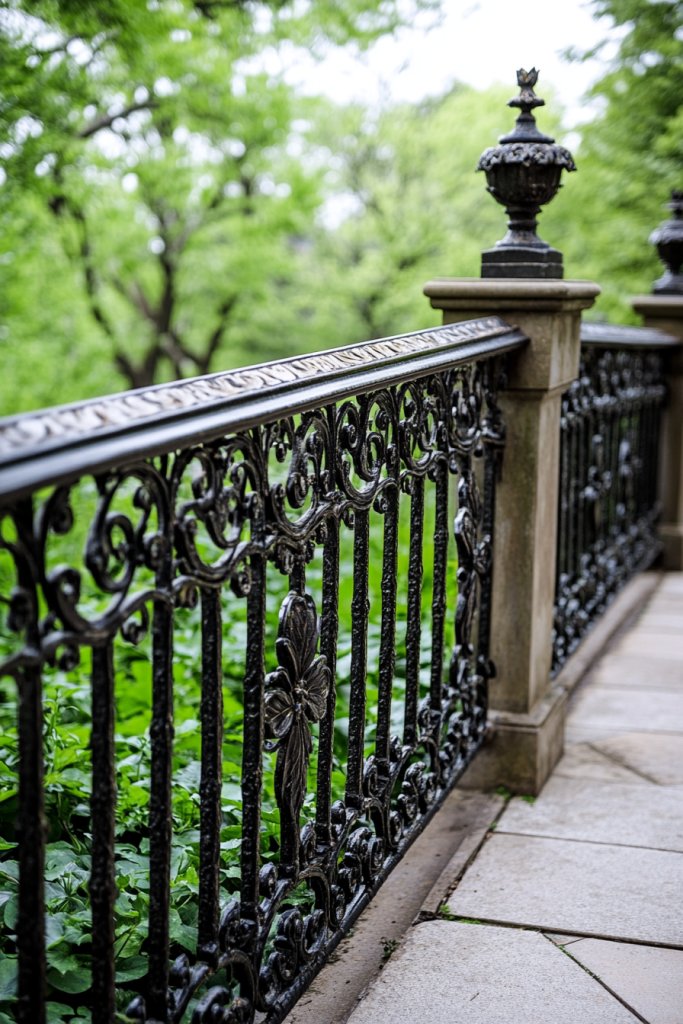
A vintage ironwork patio cover uses ornate cast or wrought iron framework to create an overhead canopy that feels genuinely historical and deeply decorative. Scrolled finials, curved brackets, and repeating floral motifs across the iron panels give the entire structure a richly detailed surface that functions as architectural jewelry above the outdoor space.
Pair the ornamental ironwork frame with a simple infill of woven shade cloth or clear polycarbonate panels to provide practical weather protection without competing with the decorative framework. Plant climbing roses or jasmine at the base of each iron post and train them upward through the scrollwork to blur the boundary between the structure and the surrounding garden.
19. Natural Fiber Rope Canopy
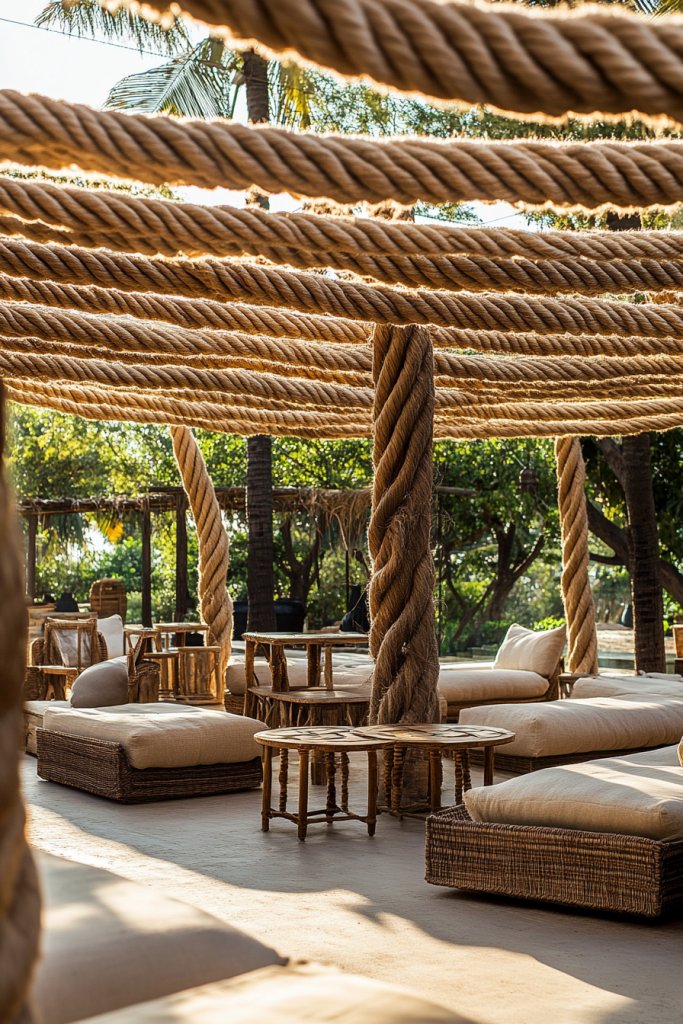
An overhead patio shade made from natural fiber rope creates a tactile, artisan-crafted canopy that brings genuine handmade texture to the outdoor space above. Thick manila, jute, or sisal rope weaves through a simple wooden or metal overhead grid in a loose macrame pattern, producing soft filtered shade and a warm, organic aesthetic.
Seal the rope with a clear outdoor-grade sealant before installation to slow the natural fiber degradation that moisture and UV exposure cause over time. Weave the rope in larger diamond or hexagonal patterns toward the canopy perimeter and tighter patterns at the center to concentrate the most shade directly over the primary seating or dining area.
20. Multi-Level Zoned Patio Design
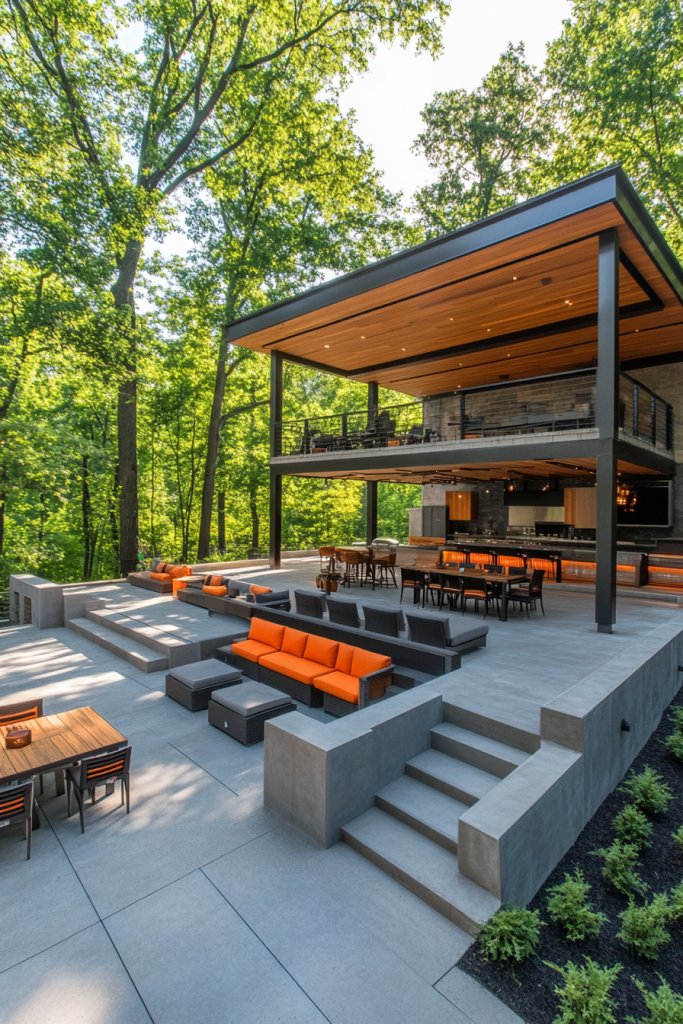
A multi-level covered patio uses changes in floor elevation and separate overhead structures to carve distinct functional zones from a single large outdoor space. One level might house a sheltered dining area under a solid roof, while a lower terrace features a pergola-covered lounge zone with open slatted panels and soft furnishings.
Define each zone with a different flooring material, such as timber decking on one level and large-format stone pavers on the next, to reinforce the spatial separation visually. Run a continuous overhead lighting plan across both levels using a unified fixture style so the multi-level patio reads as one designed space rather than two disconnected structures.
21. Minimalist Flat Roof Patio
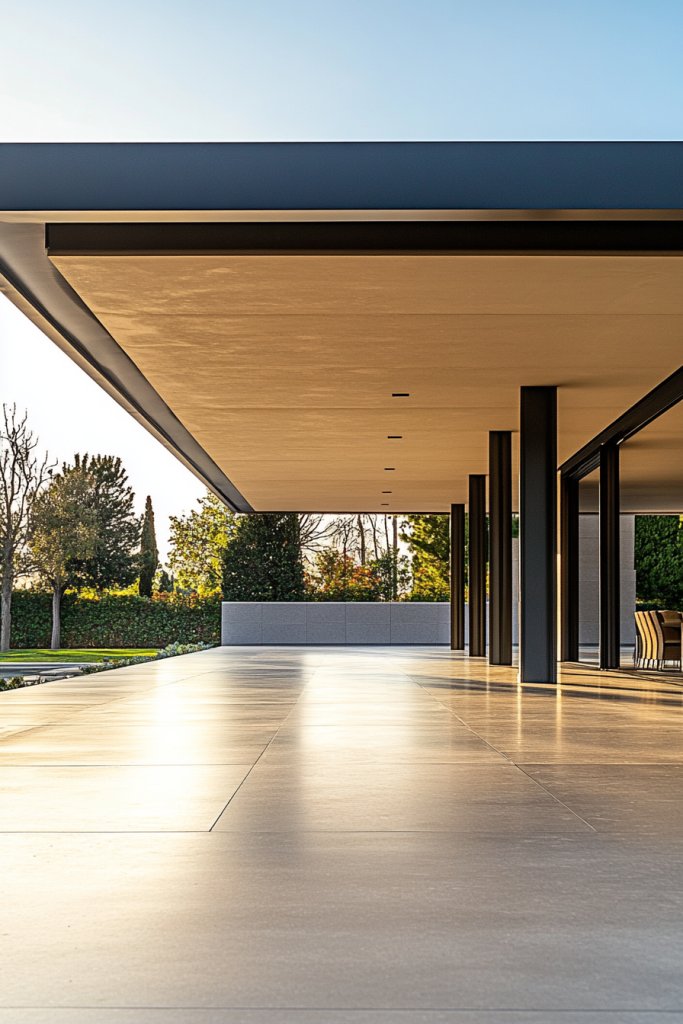
A minimalist flat roof patio cover uses a horizontal slab or panel system elevated on slender hidden support columns to create a clean, uninterrupted overhead plane. The concealed structural system keeps the underside of the roof completely free of visible beams or brackets, producing a seamless, shadow-free ceiling that emphasizes geometric simplicity above all else.
Spec a slight fall of at least one degree across the flat roof surface so rainwater drains consistently toward a concealed gutter rather than pooling at the center. Choose slim-profile recessed downlights flush-mounted into the soffit to maintain the flat, uninterrupted ceiling plane that makes this design style so architecturally effective.
Pick the covered patio style that fits your home’s exterior and start with one structural element, the roof frame or the flooring, before layering in furniture and accessories. A well-designed outdoor cover adds lasting value to your home and gives every room inside a better view.