

Japandi style transforms a bedroom into a calm, purposeful sanctuary that blends Japanese minimalism with Scandinavian warmth. Every element earns its place, creating a space that genuinely restores the mind and body.
Japandi design merges two distinct but complementary philosophies into one cohesive interior language. Japanese wabi-sabi embraces imperfection and nature, while Scandinavian hygge prioritizes comfort and simplicity.
The result is a bedroom aesthetic that feels both intentional and deeply livable. Clean lines, natural materials, and a restrained color palette work together to eliminate visual noise and encourage rest.
1. Calm Neutral Bedroom Colors
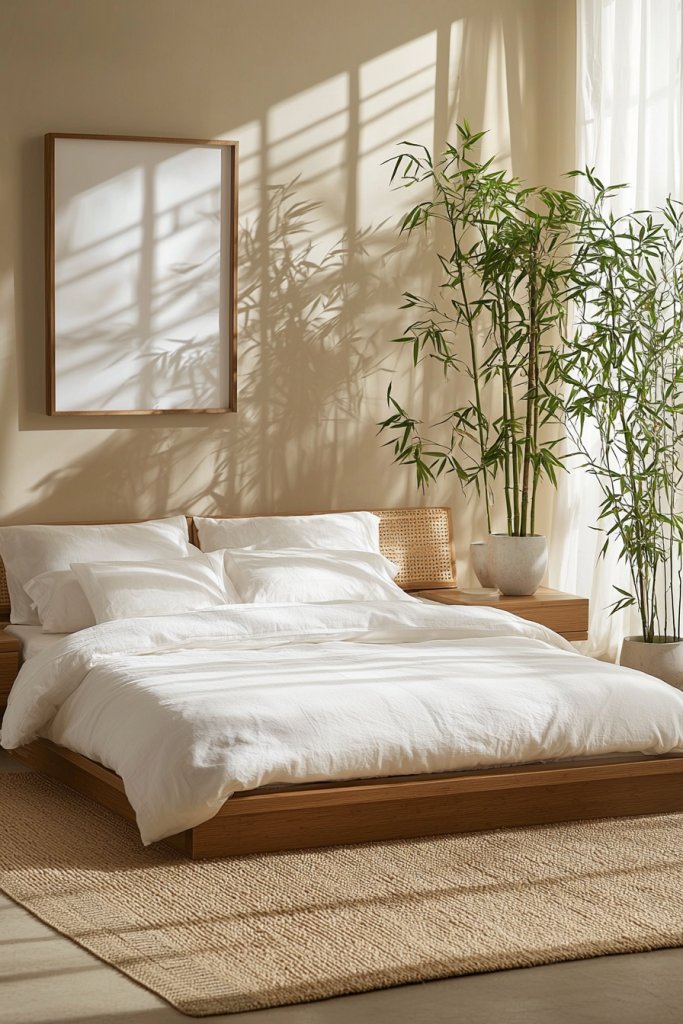
A Japandi bedroom starts with soft whites, warm beiges, and muted grays that coat the walls and anchor the entire room. These neutral tones reflect natural light generously, making even a modest bedroom feel open and breathable.
Choose a single dominant neutral and layer it across walls, bedding, and larger furniture pieces for a cohesive look. Adding a second tone through linen curtains or a cotton throw introduces subtle contrast without disrupting the calm.
2. Minimalist Bedroom Furniture Choices

Minimalist furniture gives a Japandi bedroom its signature sense of openness and visual quiet. A low-profile platform bed with clean, straight edges anchors the room without demanding attention, and a slender nightstand keeps surfaces free of clutter.
Select pieces built from natural materials such as solid oak or bamboo, and avoid decorative carvings or ornate hardware. Every furniture item should serve a clear purpose, and its craftsmanship should speak louder than its ornamentation.
3. Natural Wood Accent Ideas

Natural wood accents bring organic warmth into a Japandi bedroom and prevent the neutral palette from feeling cold or flat. A reclaimed wood headboard, a timber-framed mirror, or a simple wooden bench at the foot of the bed each introduce rich grain and texture.
Mix wood tones deliberately by pairing lighter ash or pine with darker walnut for a layered, grounded effect. Keep the number of wood pieces intentional so each one registers as a considered design choice rather than visual clutter.
4. Subtle Textile Pattern Styling
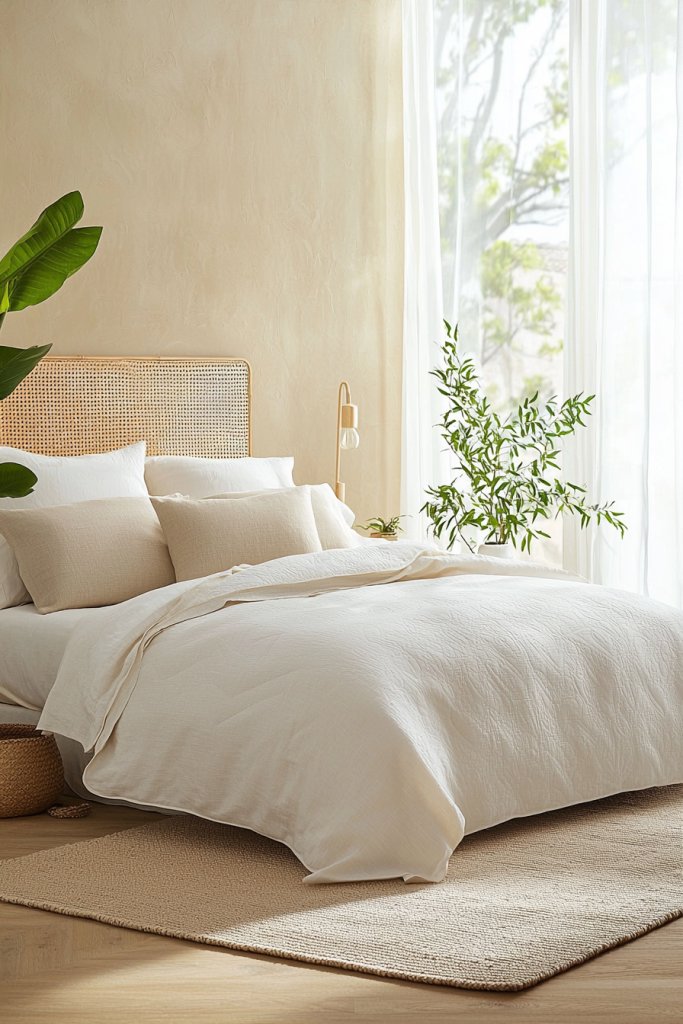
Textiles in a Japandi bedroom carry warmth and softness without introducing unnecessary pattern noise. Linen bedding with a fine stripe, a wool throw with a gentle geometric weave, or a jute rug with a low-pile texture all add dimension while staying visually quiet.
Layer two or three textile pieces in complementary neutral tones to build coziness without overwhelming the space. Choose natural fibers exclusively, as cotton, linen, and wool all reinforce the connection to nature that defines Japandi interiors.
5. Shoji Screen Privacy Solutions
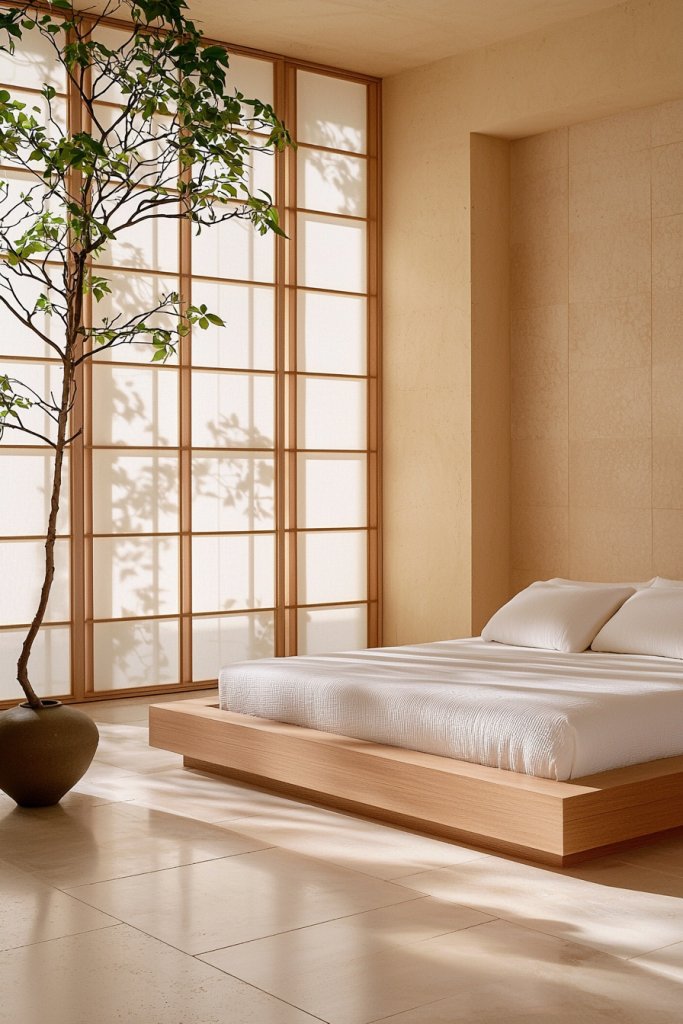
Japanese shoji screens bring authentic character to a Japandi bedroom while solving practical privacy needs with elegance. Their translucent paper panels diffuse natural light softly, casting a warm, diffused glow across the room that no curtain can replicate.
Position a shoji screen between a sleeping area and a dressing corner to define zones without building permanent walls. Choose a frame in natural timber to reinforce the organic material palette running throughout the rest of the room.
6. Scandinavian Bedroom Lighting Fixtures

Scandinavian-inspired lighting fixtures complement a Japandi bedroom with their simple geometric forms and warm-toned output. A pendant light in raw brass, a matte ceramic table lamp, or a slim wooden floor lamp each deliver ambient light without introducing decorative excess.
Hang a pendant low over each bedside area to create intimate pools of light that make the room feel cozy after dark. Always choose bulbs with a warm color temperature between 2700K and 3000K to maintain the soft, restful atmosphere.
7. Zen Garden Bedroom Decor
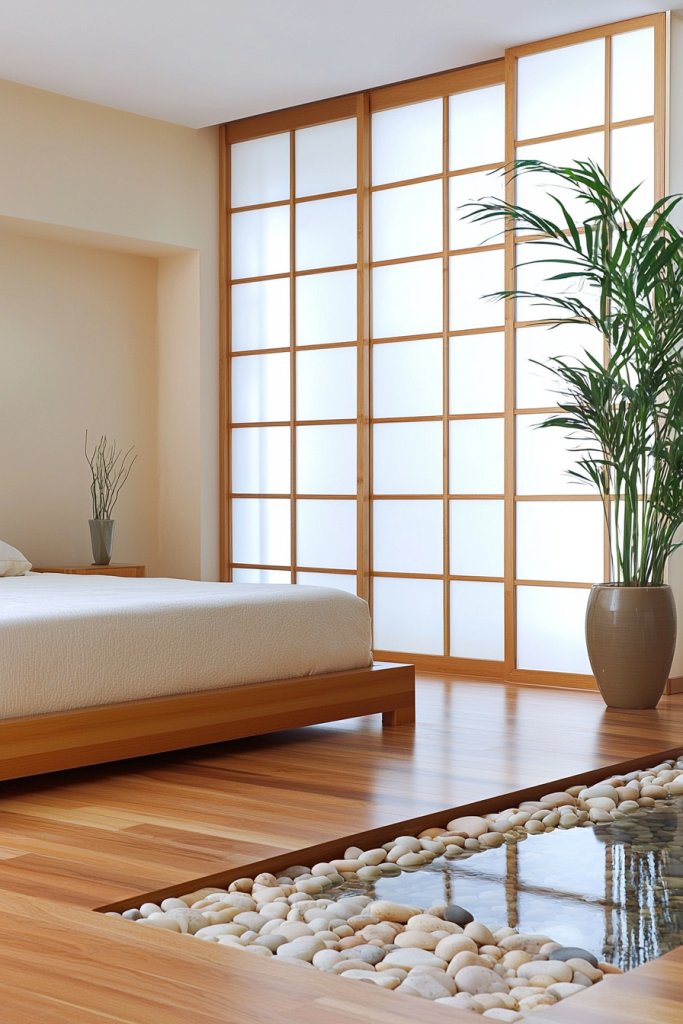
A small zen garden placed on a bedside table or low dresser introduces a meditative focal point into a Japandi bedroom. Raked sand, smooth river stones, and a miniature bamboo rake create a tactile display that invites mindful attention.
Keep the garden compact so it enhances the surface rather than cluttering it, and position it where natural light catches the texture of the sand. Refresh the raked patterns regularly to make the practice feel like a small, intentional daily ritual.
8. Indoor Plants for Serenity
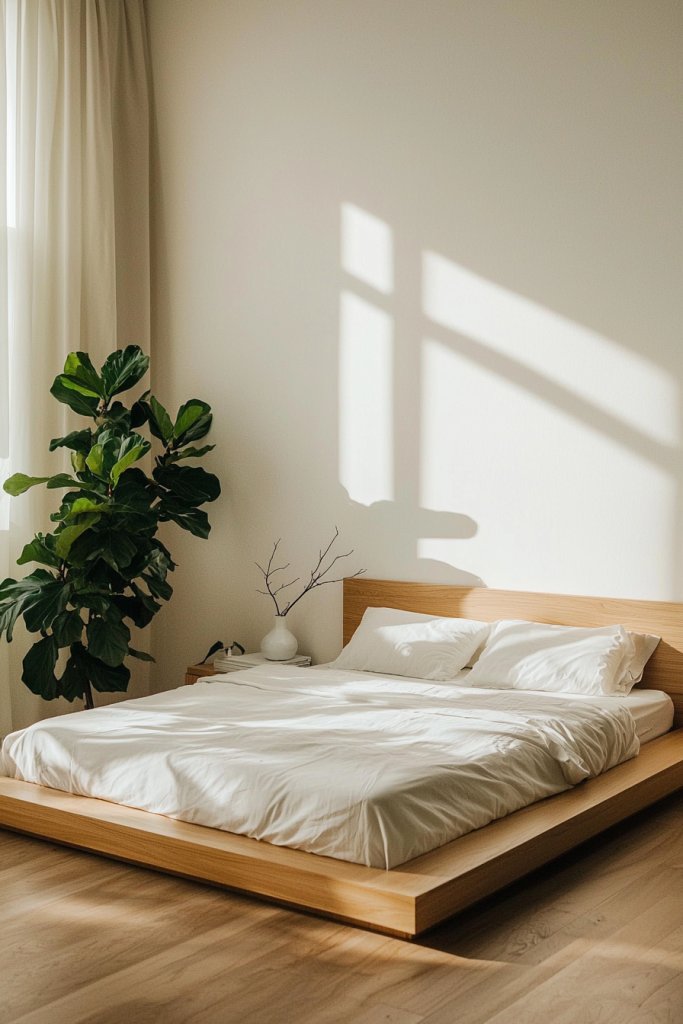
Indoor plants bring life, color, and a sense of calm into a Japandi bedroom without breaking the minimalist aesthetic. A snake plant in a simple ceramic pot, a trailing pothos on a shelf, or a bonsai tree on a low table each contribute quiet natural beauty.
Choose low-maintenance species that thrive in the softer light typical of a bedroom environment. Group plants in odd numbers and vary their heights to create an arrangement that feels organic rather than staged.
9. Minimalist Bedroom Wall Art
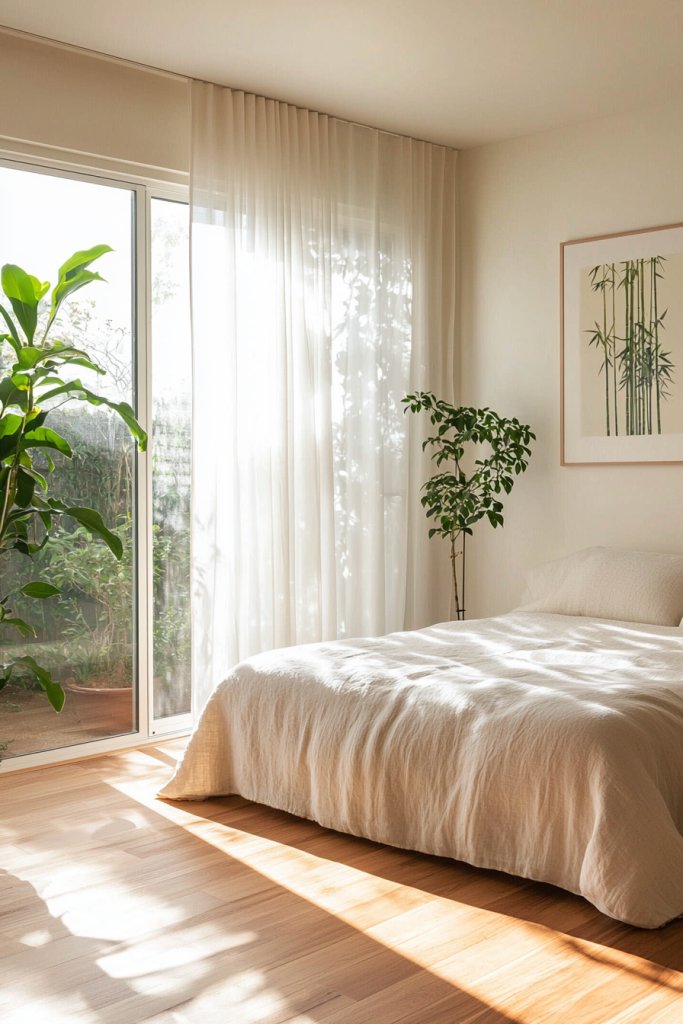
Simple wall art gives a Japandi bedroom personality without adding visual clutter to the carefully balanced space. A single ink brushstroke print, a small framed botanical illustration, or a hand-painted ceramic tile each make a strong statement through restraint.
Hang one or two pieces at eye level on the wall opposite the bed so they register as intentional rather than decorative filler. Choose natural timber frames or thin black metal frames to keep the presentation clean and aligned with the overall aesthetic.
10. Decluttered Space for Clarity
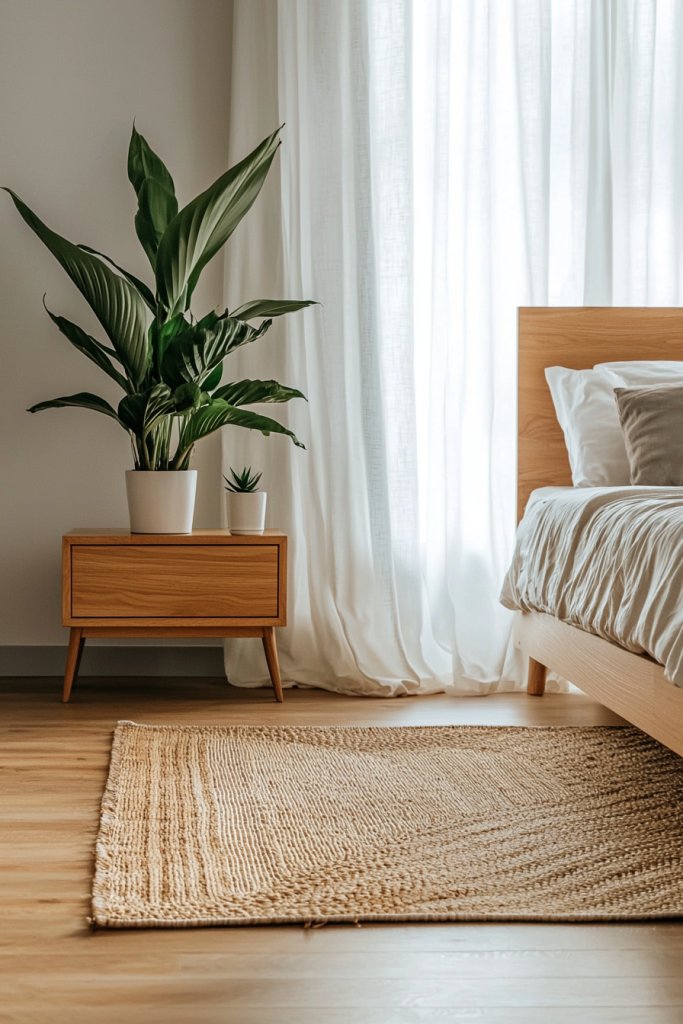
A decluttered Japandi bedroom allows the eye to rest and the mind to genuinely unwind at the end of the day. Every surface, including the floor, the nightstand, and the dresser top, should hold only what the occupant uses daily.
Conduct a room edit by removing every item that serves no functional or deeply meaningful purpose. Store frequently used items in closed cabinetry so the room always presents a clean, uninterrupted visual landscape.
11. Smart Bedroom Storage Solutions
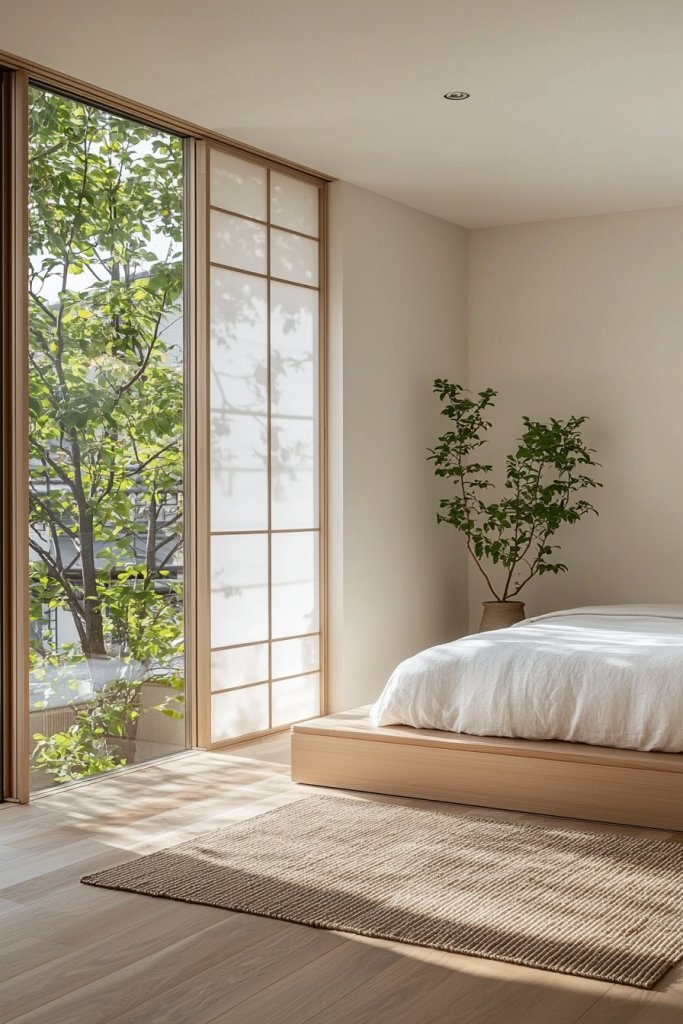
Functional storage solutions keep a Japandi bedroom looking intentional by hiding everyday clutter behind closed doors and clean facades. Under-bed drawers, built-in wardrobes with flat-panel doors, and low sideboards with push-to-open hardware all store generously without advertising their contents.
Paint or stain storage furniture in the same tone as the surrounding walls to help it recede visually and preserve the room’s sense of calm. Organize the interior of each storage piece so that opening a drawer or door never disrupts the peaceful atmosphere.
12. Layered Bedding Comfort Tips
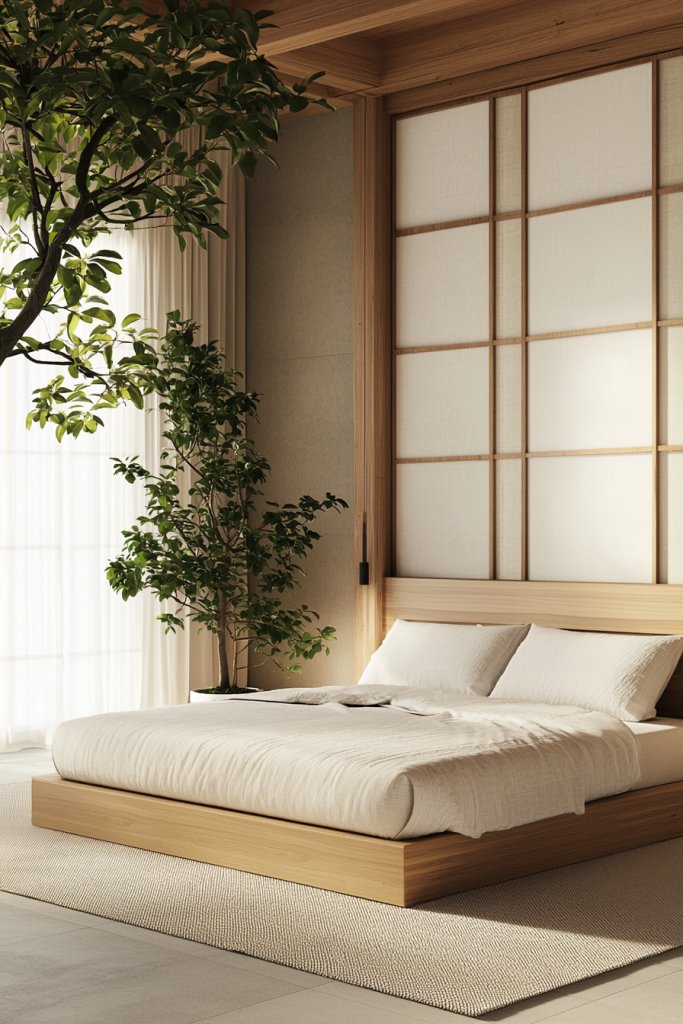
Layered bedding transforms the bed into the most inviting focal point of a Japandi bedroom and anchors the entire color story. Start with a fitted linen sheet, add a lightweight duvet in a warm white or oat tone, and finish with a textured knit throw folded at the foot.
Keep all bedding layers within the same tonal family so the layering reads as depth rather than pattern conflict. Linen and cotton blends work best because they soften beautifully with washing and develop a relaxed texture that suits the aesthetic.
13. Earthy Tones Add Warmth
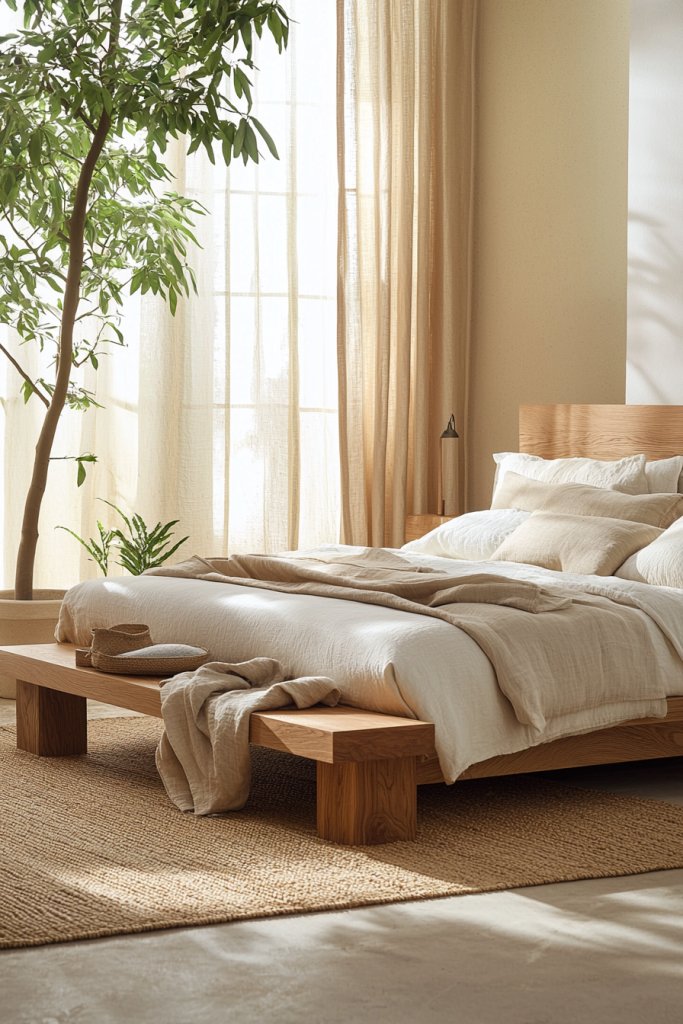
Earthy tones such as warm terracotta, sandy ochre, and deep olive introduce grounded warmth into a Japandi bedroom without disrupting its calm. These colors work best as accents, appearing in a ceramic vase, a woven cushion, or a single painted wall rather than dominating the entire scheme.
Pair earthy accent tones with the room’s neutral base by choosing shades that share the same warm undertone for a harmonious result. A terracotta pot beside a light beige wall, for example, creates a naturally satisfying contrast that feels both modern and timeless.
14. Minimal Headboard Design Ideas
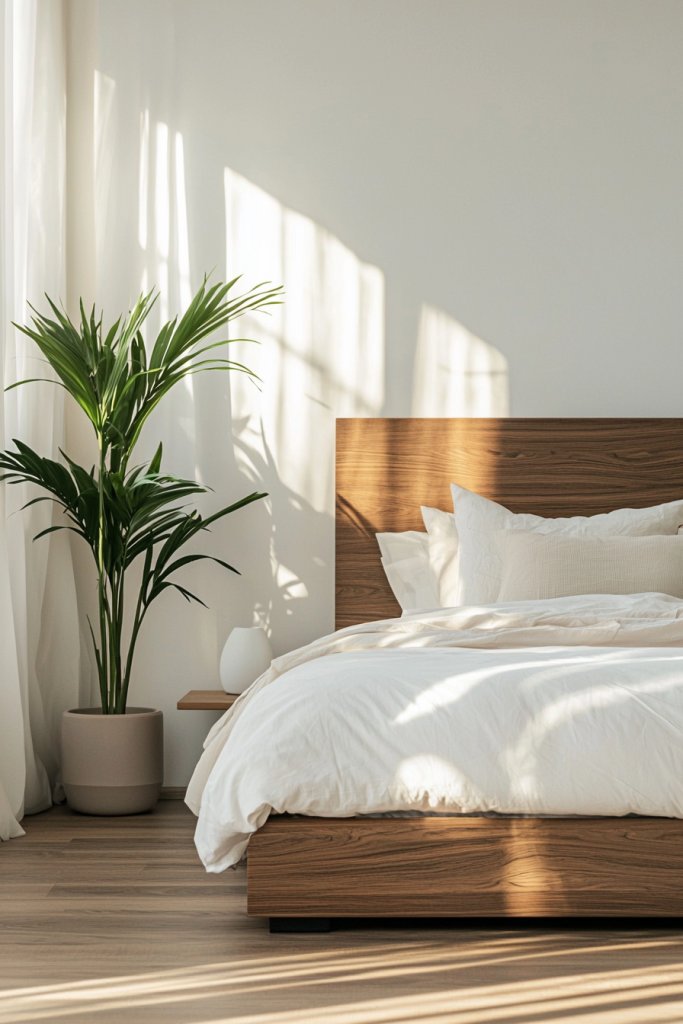
A statement headboard with minimal design anchors the Japandi bedroom’s largest wall without overwhelming the space with unnecessary detail. A solid timber slab headboard, a low-profile upholstered panel in natural linen, or a simple wall-mounted shelf-headboard hybrid each deliver strong visual impact through form alone.
Choose a headboard height that feels proportional to the ceiling so the room maintains its sense of balance and openness. Avoid tufting, nailhead trim, and decorative carving, as each of these details contradicts the Japandi commitment to honest, unadorned materials.
15. Open Shelving Display Styling
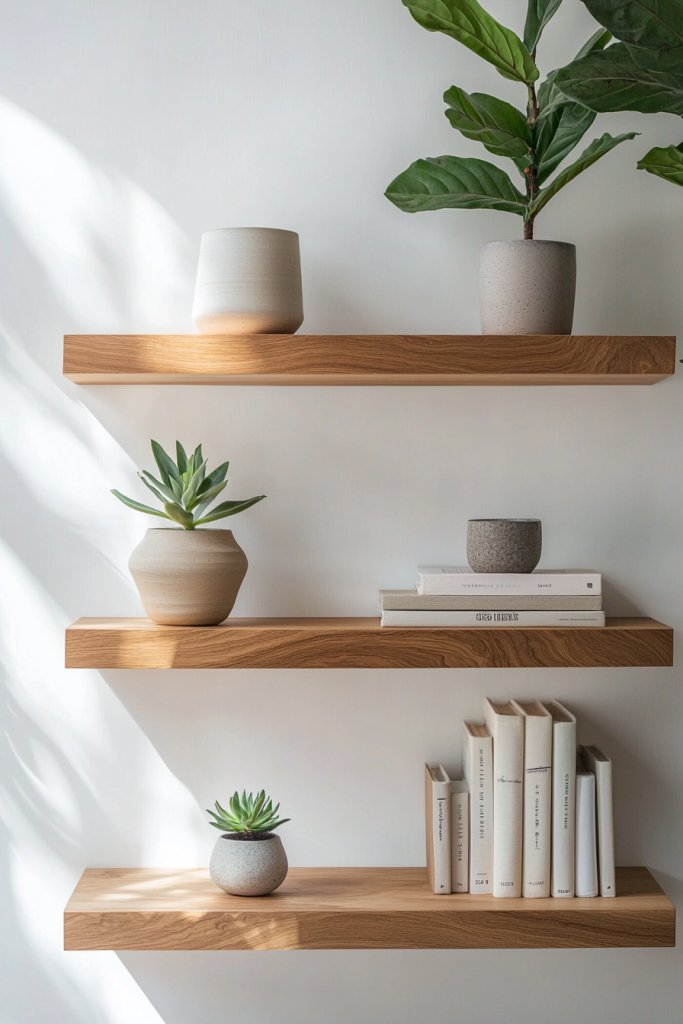
Open shelving in a Japandi bedroom creates an opportunity to display a curated selection of meaningful objects in a visually deliberate way. A floating timber shelf carrying a single plant, two books, and a small ceramic bowl demonstrates that restraint produces more impact than abundance.
Edit shelf displays ruthlessly by keeping only items that are either functional or genuinely beautiful, and remove anything that simply accumulated there. Vary the height and material of displayed objects slightly to create a composed arrangement that feels considered rather than random.
16. Soft Ambient Bedroom Lighting
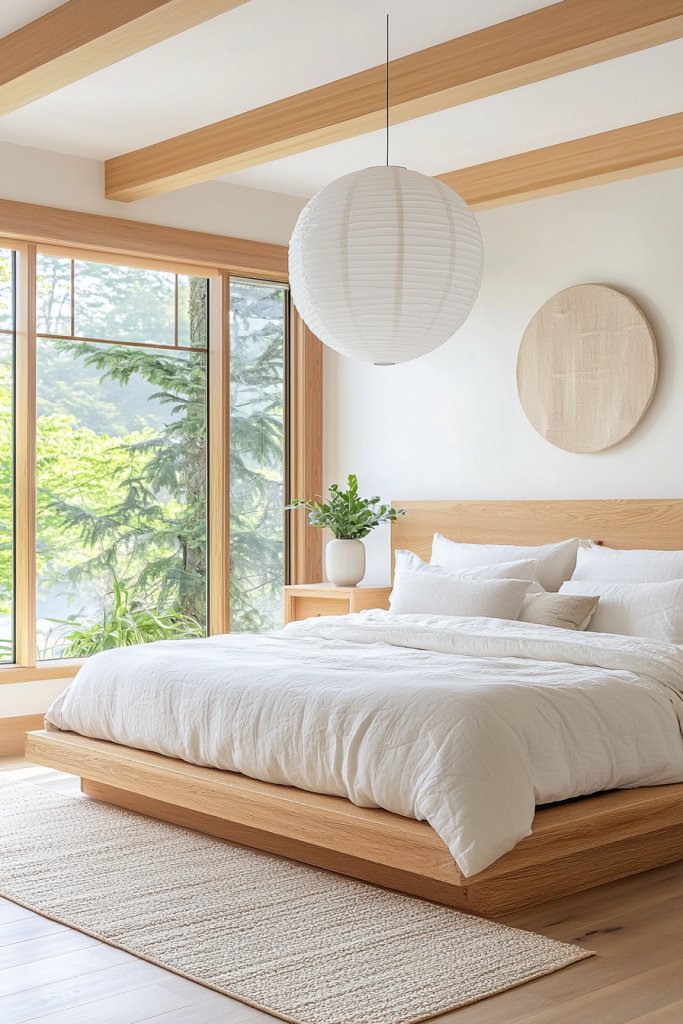
Soft ambient lighting wraps a Japandi bedroom in a warm, even glow that encourages the body to transition naturally into rest. Recessed ceiling lights on a dimmer, a pair of low bedside lamps, and a floor lamp in a reading corner combine to eliminate harsh shadows throughout the room.
Layer at least three light sources at different heights so no single fixture bears the burden of illuminating the entire space. Dimmer switches on every circuit give complete control over the mood as the evening progresses toward bedtime.
17. Natural Stone Bedroom Elements
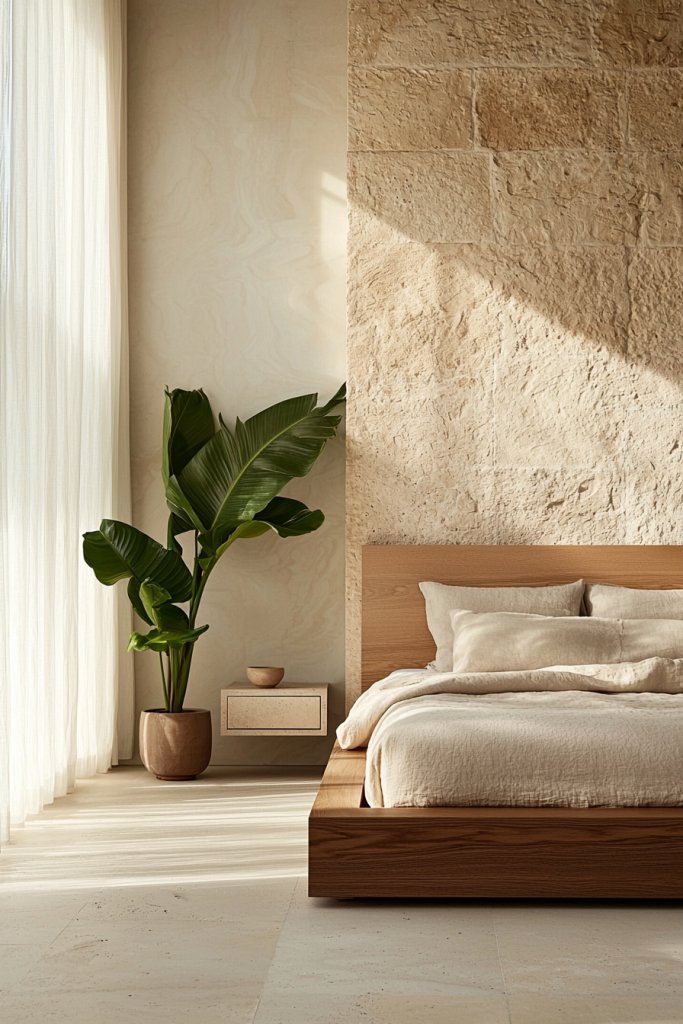
Natural stone elements bring an ancient, grounding quality into a Japandi bedroom that no manufactured material can replicate. A stone vessel on the nightstand, a slate tray on the dresser, or a river-stone arrangement beside the bed each introduce raw texture and quiet visual weight.
Choose stones in muted, earthy tones that align with the room’s existing neutral palette rather than contrasting against it. Pair stone pieces with wood accents nearby so the two natural materials balance each other and reinforce the overall organic theme.
18. Sliding Doors Save Space
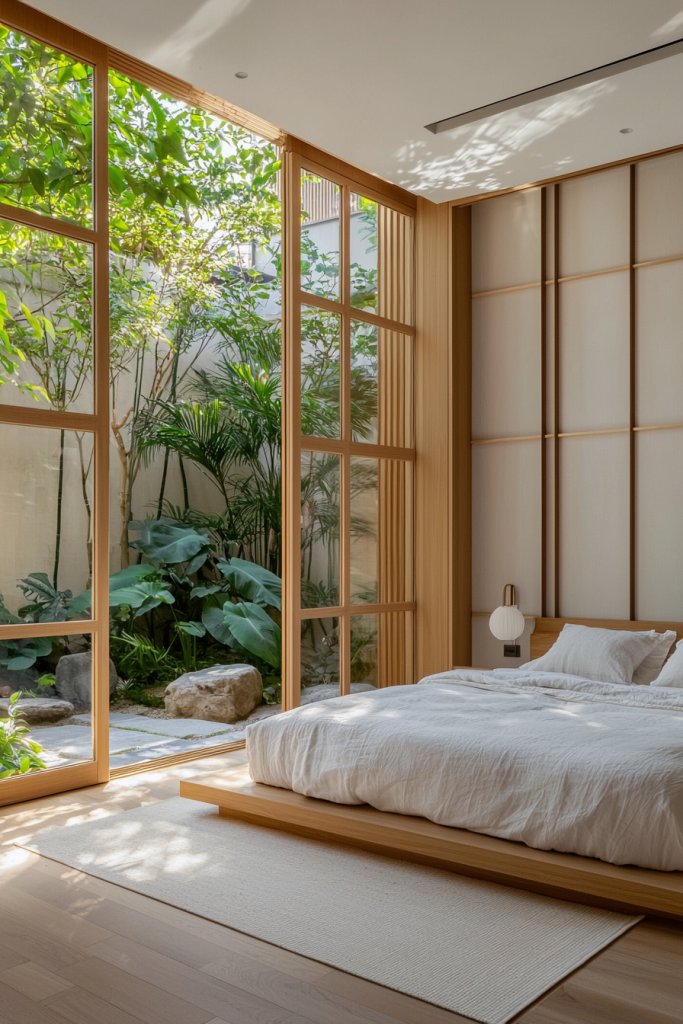
Sliding doors bring space efficiency and clean visual lines to a Japandi bedroom by eliminating the swing arc that hinged doors require. A floor-to-ceiling sliding wardrobe door in flat-panel timber or frosted glass keeps the room feeling expansive and unobstructed.
Install a soft-close sliding track system so doors glide silently, which maintains the quiet, peaceful atmosphere a Japandi bedroom demands. Choose a door material that echoes another surface already present in the room, such as matching the wardrobe door grain to the bed frame.
19. Indoor Outdoor Bedroom Connection
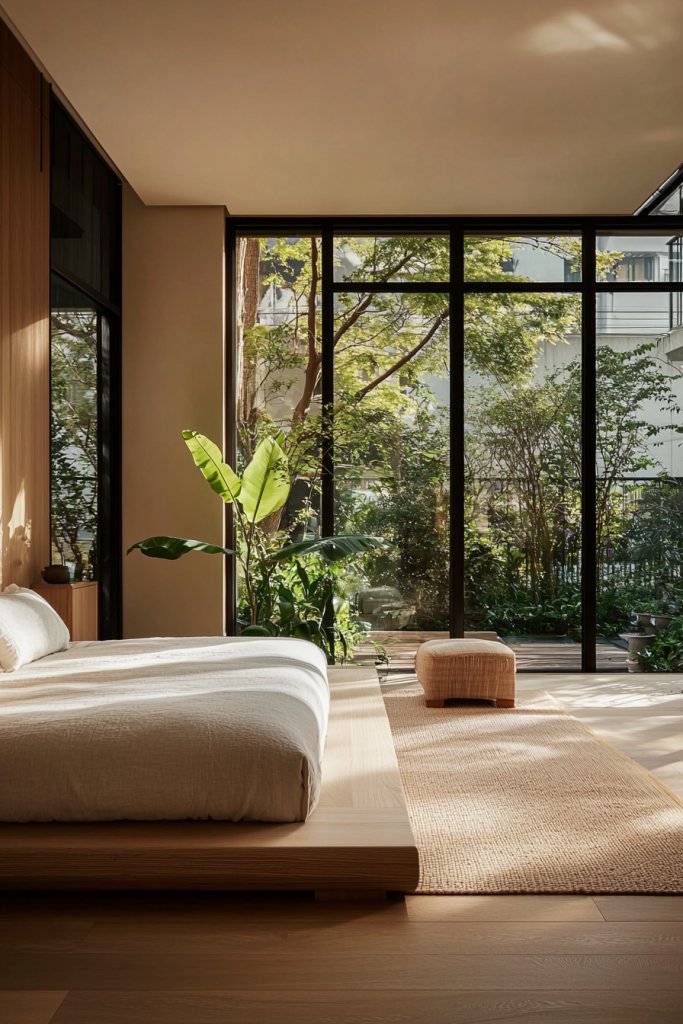
A strong connection between the bedroom and the outdoors deepens the Japandi aesthetic by blurring the boundary between interior and nature. Large windows left unobstructed, a glass door opening onto a small balcony garden, or a window seat positioned to frame a garden view each reinforce this relationship.
Bring the outdoor palette inside by choosing interior tones that echo the greens, browns, and grays visible through the bedroom window. Position a low plant or stone arrangement near the window to visually bridge the indoor surface and the outside world.
20. Tatami Mat Authentic Flooring
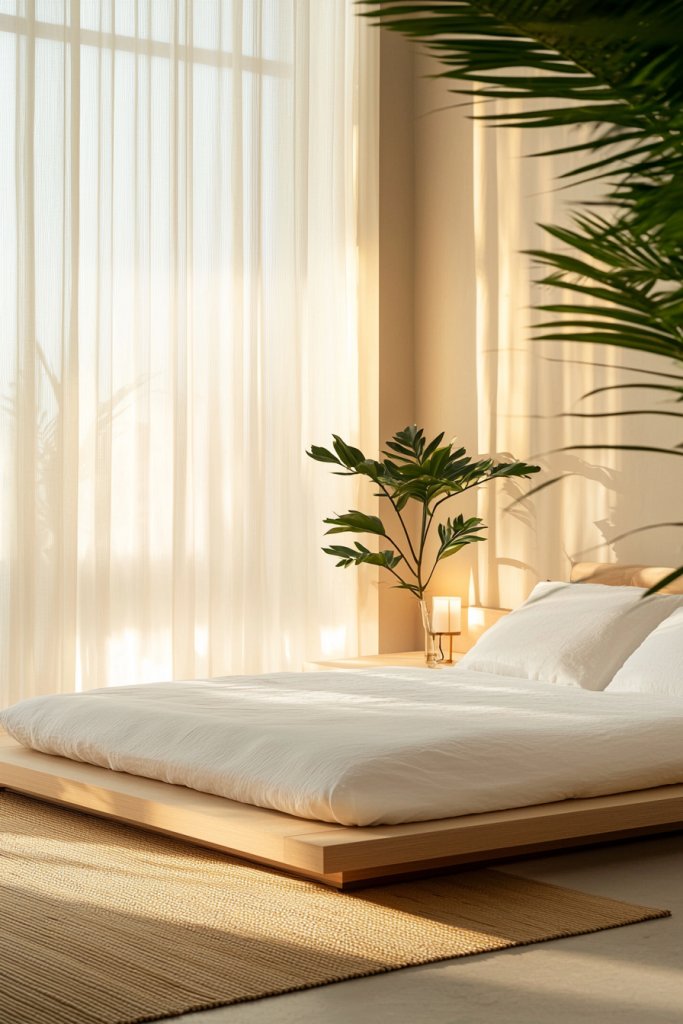
Japanese tatami mats introduce authentic texture and cultural depth to a Japandi bedroom floor that no synthetic material can match. Their tightly woven rush grass surface carries a subtle natural scent and a warm green-gold tone that grounds the entire room.
Lay tatami mats across the sleeping area only, using them as a defined zone beneath the bed and nightstands while leaving surrounding floors bare. Pair tatami with low-profile furniture to maintain the proportional relationship between floor and ceiling that gives a Japandi bedroom its airy quality.
21. Cozy Bedroom Reading Nook
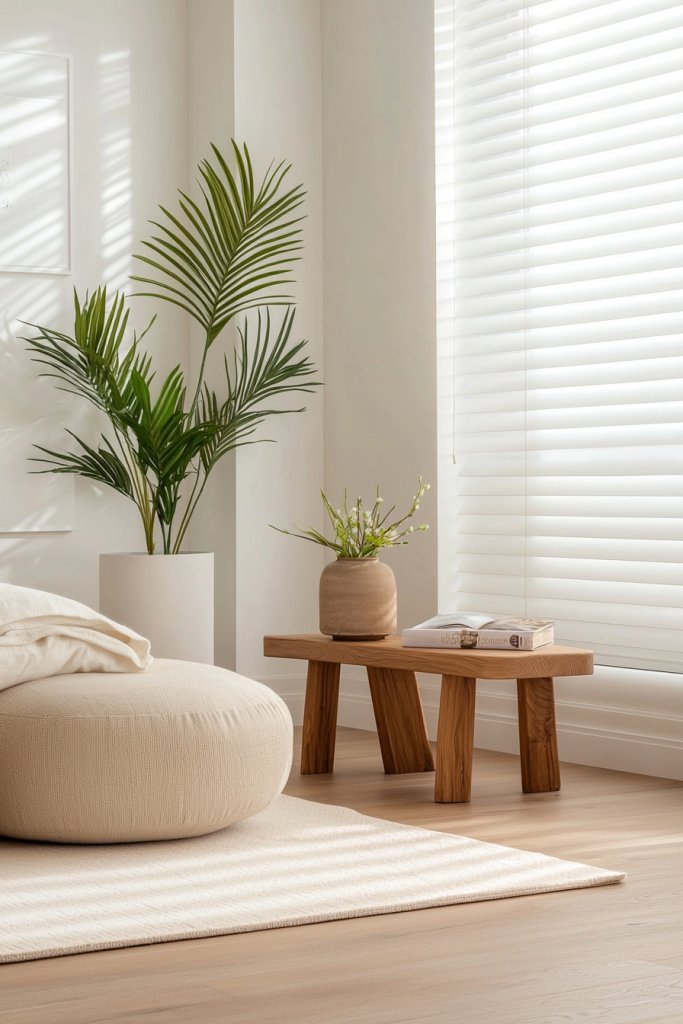
A cozy reading nook gives a Japandi bedroom a dedicated leisure corner that separates restorative activity from sleep without requiring a separate room. A low armchair upholstered in natural linen, a slim floor lamp angled over the shoulder, and a small side table for a tea cup create a complete, self-contained retreat.
Position the reading nook beside a window to maximize natural light during daytime use and add a simple roller blind for evening privacy. Keep the nook’s furniture palette consistent with the rest of the bedroom so the corner feels like an extension of the space rather than a separate decorating project.
22. Streamlined Bedroom Workspace Design
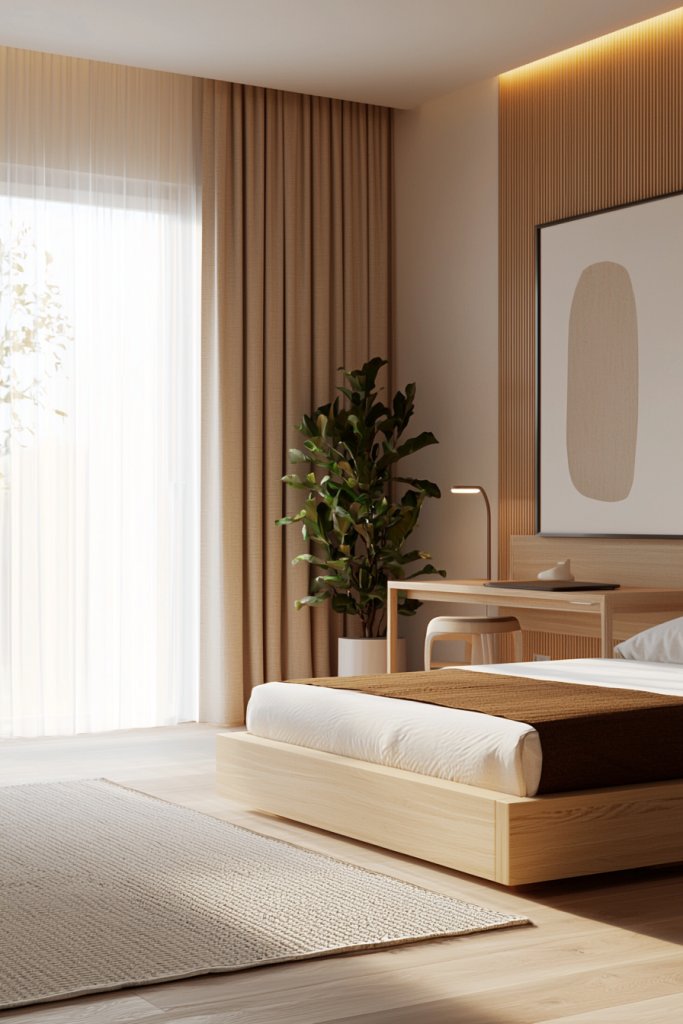
A streamlined workspace integrated into a Japandi bedroom maintains productivity without introducing office chaos into a room designed for rest. A wall-mounted timber desk with a single drawer, a simple task lamp, and one low-profile chair keep the work area functional and visually minimal.
Position the desk perpendicular to the bed so the two zones occupy separate sightlines and the sleeping area remains psychologically distinct. When the workday ends, clear the desk surface completely so the room returns to its restful baseline and stops signaling productivity.
23. Handmade Decor Personal Touches
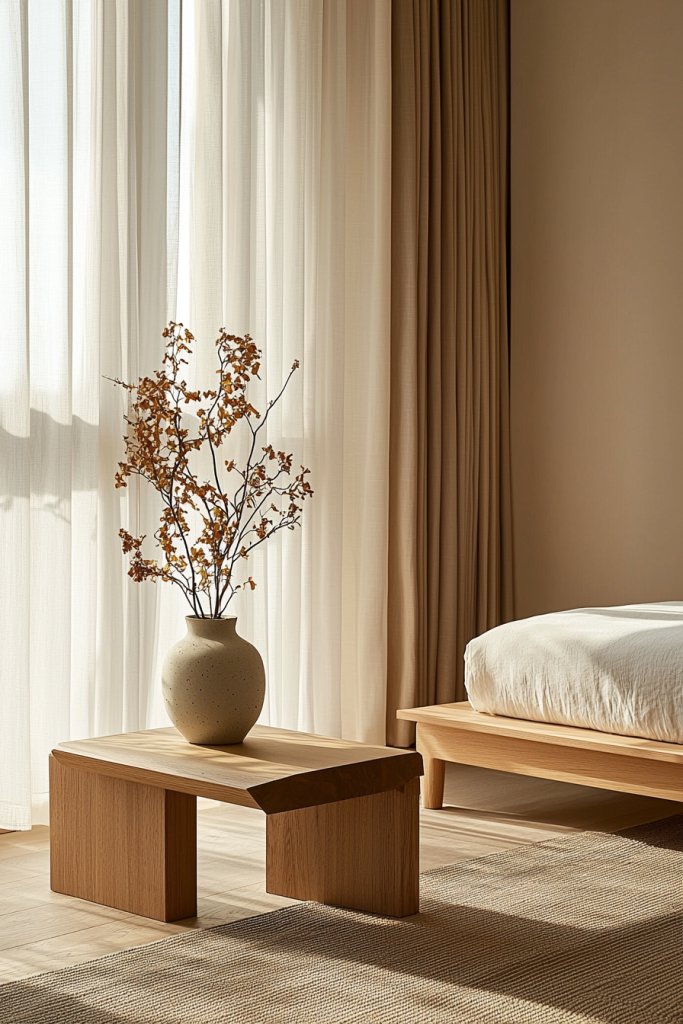
Handmade decor pieces give a Japandi bedroom its most personal dimension by introducing objects that carry genuine human craftsmanship and individual story. A hand-thrown ceramic pot, a hand-woven basket, or a hand-stitched cushion cover each bring a warmth and authenticity that mass-produced items cannot replicate.
Select handmade pieces that align with the room’s existing material palette so they feel integrated rather than decoratively imposed. Limit handmade accents to three or four pieces displayed with intention so each one receives the quiet attention it deserves.
Start with one or two of these ideas and let each change settle before adding the next layer. A Japandi bedroom builds its magic through patience and restraint, so give every new element room to breathe.