Wabi sabi Christmas decor transforms your home into a peaceful, grounded retreat that celebrates natural beauty and honest imperfection. These 25 ideas will guide you toward a holiday space that feels calm, intentional, and deeply personal.
The wabi sabi philosophy finds beauty in simplicity, imperfection, and the passage of time. Applied to Christmas decor, it means choosing materials and arrangements that feel organic, unhurried, and genuinely warm.
Natural textures, muted tones, and handcrafted details replace the loud and the synthetic. Your home becomes a quiet sanctuary rather than a showroom, and every corner tells an honest, unpolished story.
1. Natural Materials Work Best
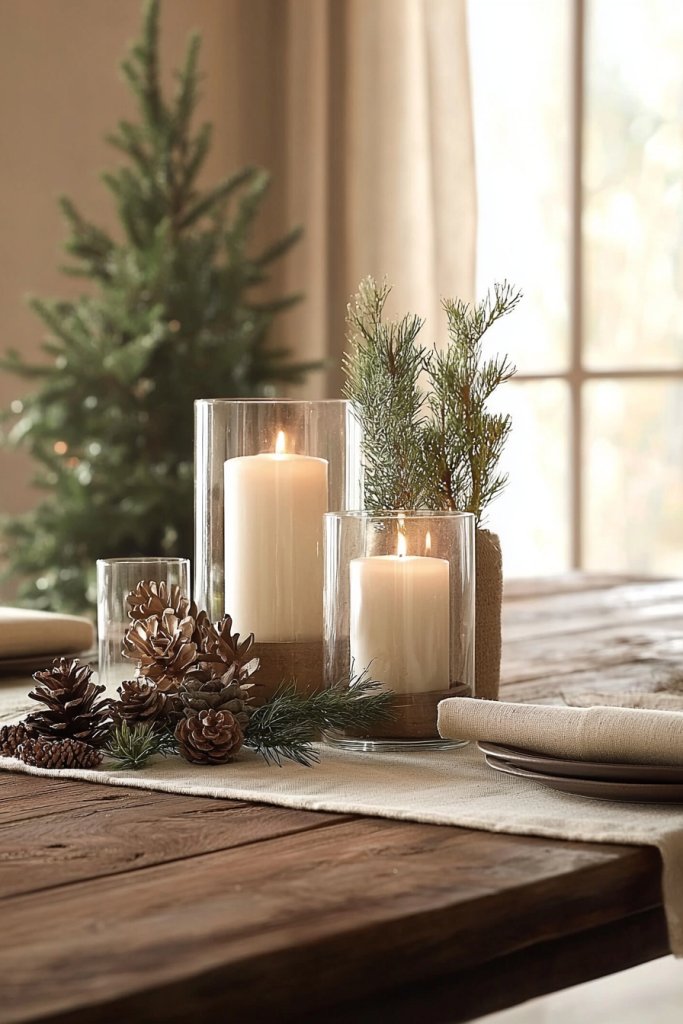
Natural materials bring an immediate sense of warmth and grounding to any Christmas interior. Wood, stone, dried botanicals, and woven fibers layer together to create a space that feels genuinely alive and connected to the outdoors.
Choose one natural material as your anchor, then build around it with complementary elements from the same earthy family. A wooden bowl filled with seasonal nuts or dried orange slices sits beautifully on a console and doubles as subtle holiday fragrance.
2. Earthy Color Palettes Shine
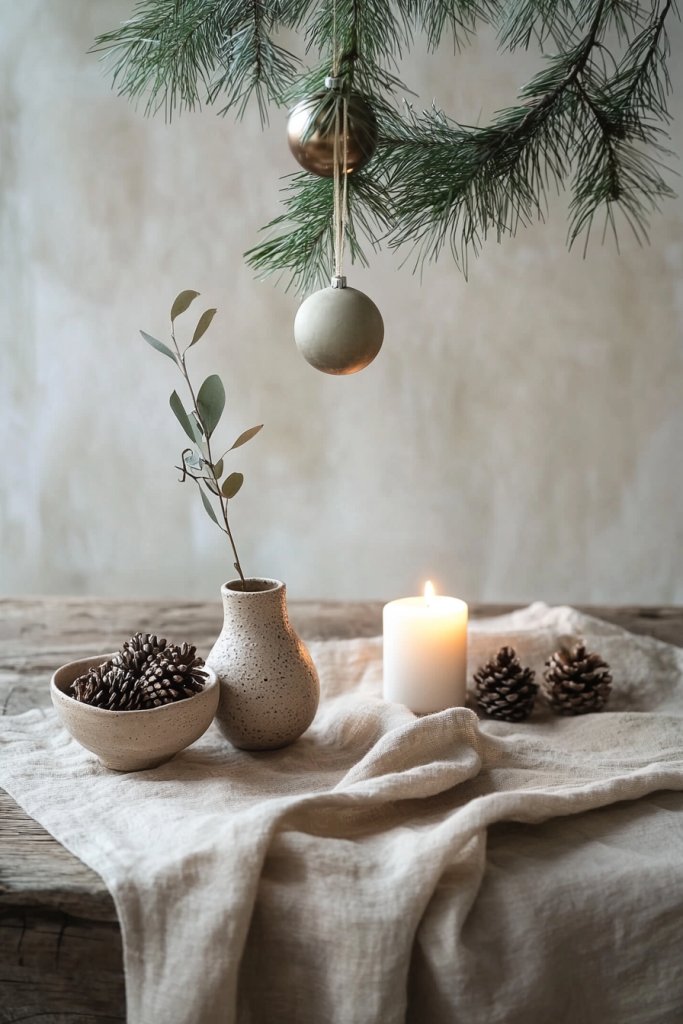
Deep browns, muted sage greens, and soft warm grays form the perfect wabi sabi Christmas color palette for any room. These earthy tones mimic the natural world outside and create an atmosphere of calm rather than visual noise.
Layer your chosen earthy colors across textiles, ceramics, and natural accents rather than applying them all at once on one surface. A linen table runner in warm oat tones beside pine cone clusters and stone candle holders creates a cohesive, restful scene.
3. Handmade Ornaments Add Soul
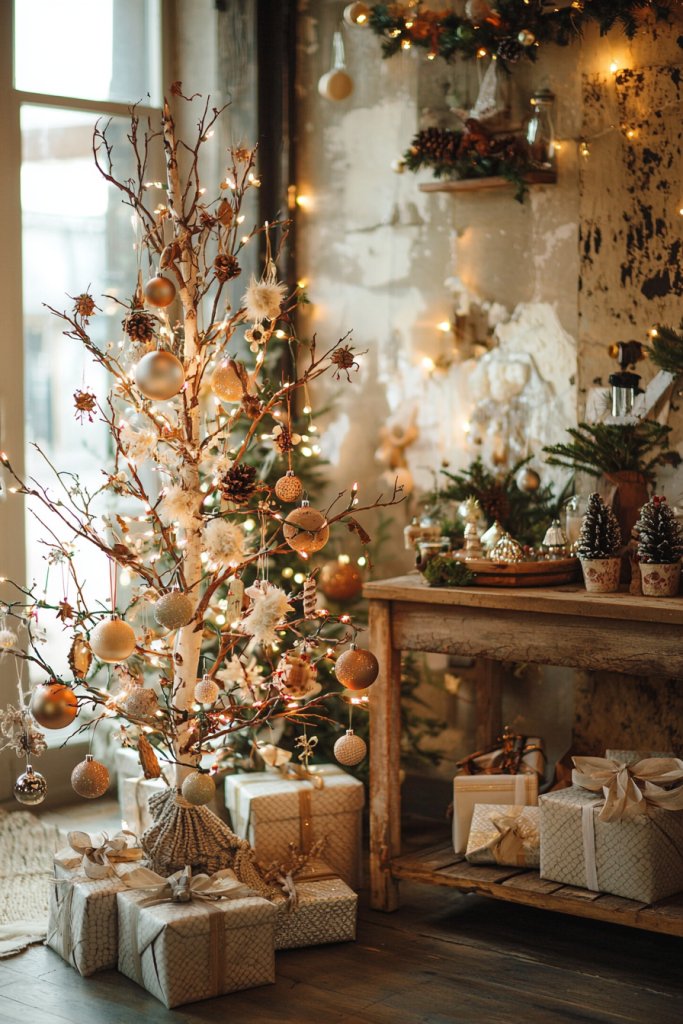
Handmade ornaments carry a warmth and individuality that factory-produced decorations simply cannot replicate on any Christmas tree or wall display. Each piece, whether shaped from clay, stitched from linen, or carved from wood, brings its own quiet story into your interior.
Organize a simple ornament-making session with family members and let each person create something personal and unscripted. Use air-dry clay stamped with botanical impressions, or cut linen into simple geometric shapes and tie them with twine.
4. Simple Greenery Decorates Naturally
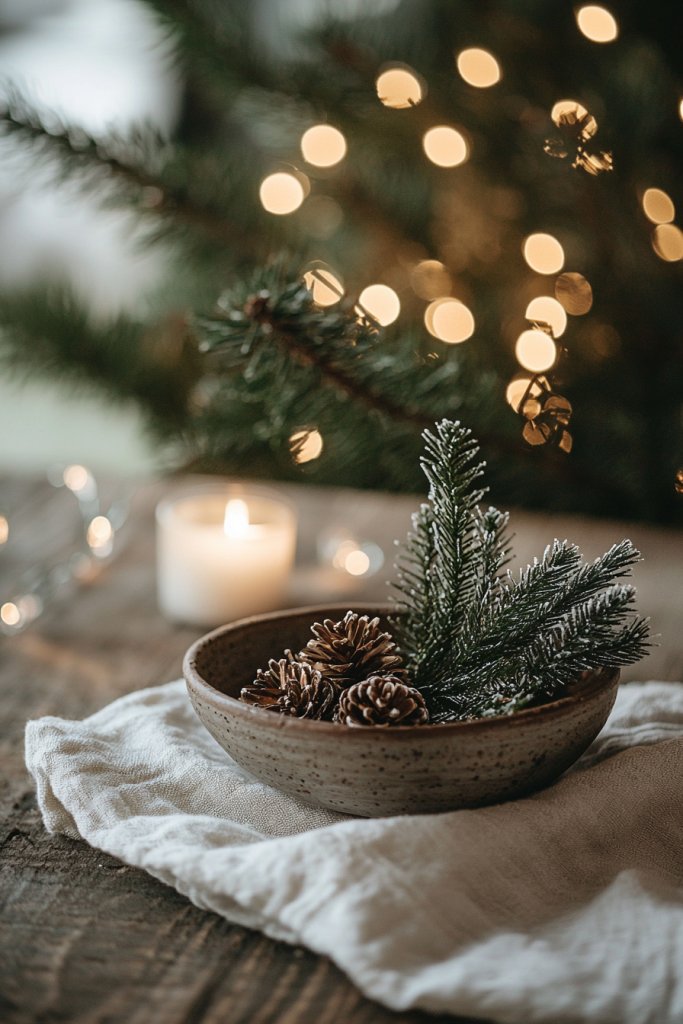
Simple greenery brings the calm energy of the outdoors directly into your Christmas interior without overwhelming any space. Eucalyptus branches, sprigs of pine, rosemary stems, and ivy trails all work beautifully draped over shelves, tucked into vases, or arranged loosely along a mantel.
Avoid symmetrical or overly styled greenery arrangements, as loose and organic placements feel far more authentic to the wabi sabi aesthetic. Tuck a few stems into a simple clay pot or lean a bundle of pine branches casually against a wall corner.
5. Dried Flower Centerpieces Captivate
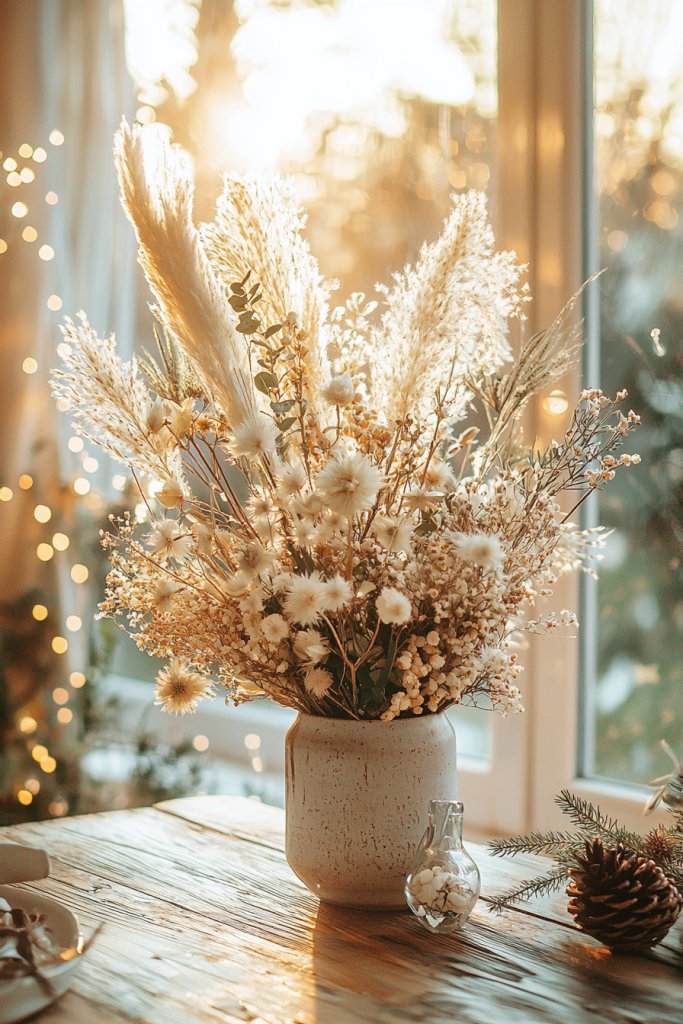
Dried flower centerpieces bring quiet, enduring beauty to Christmas dining tables and sideboards throughout the holiday season. Pampas grass, dried lavender, cotton stems, and preserved eucalyptus combine into arrangements that feel both timeless and distinctly seasonal.
Build your centerpiece in a low ceramic or clay vessel and keep the arrangement loose rather than tightly packed or symmetrical. Mix dried flowers of varying heights and textures so the eye travels naturally across the arrangement without stopping at any one focal point.
6. Vintage Decor Tells Stories
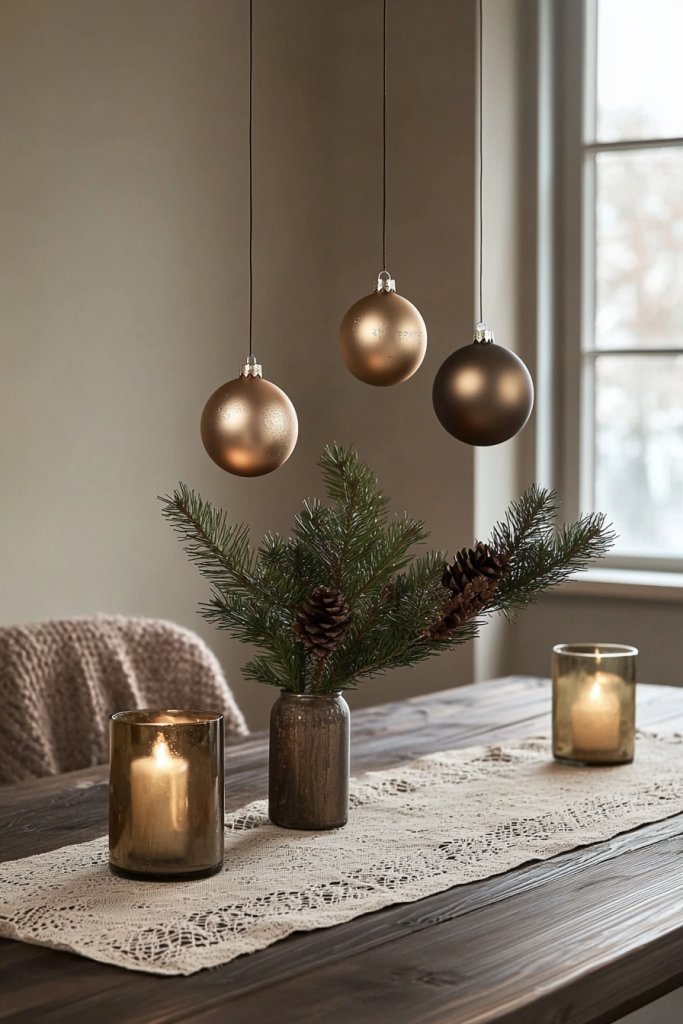
Vintage decor pieces introduce depth, history, and genuine character into a wabi sabi Christmas interior immediately. A tarnished candlestick, a worn ceramic figurine, or an antique glass bauble carries visible signs of age that make it more interesting and beautiful than anything brand new.
Source vintage pieces from thrift stores, family storage, or antique markets and mix them freely with your natural materials. Group items of similar age or patina together on a wooden tray or shelf to create a curated but unstudied vignette.
7. Unfinished Wood Accents Impress
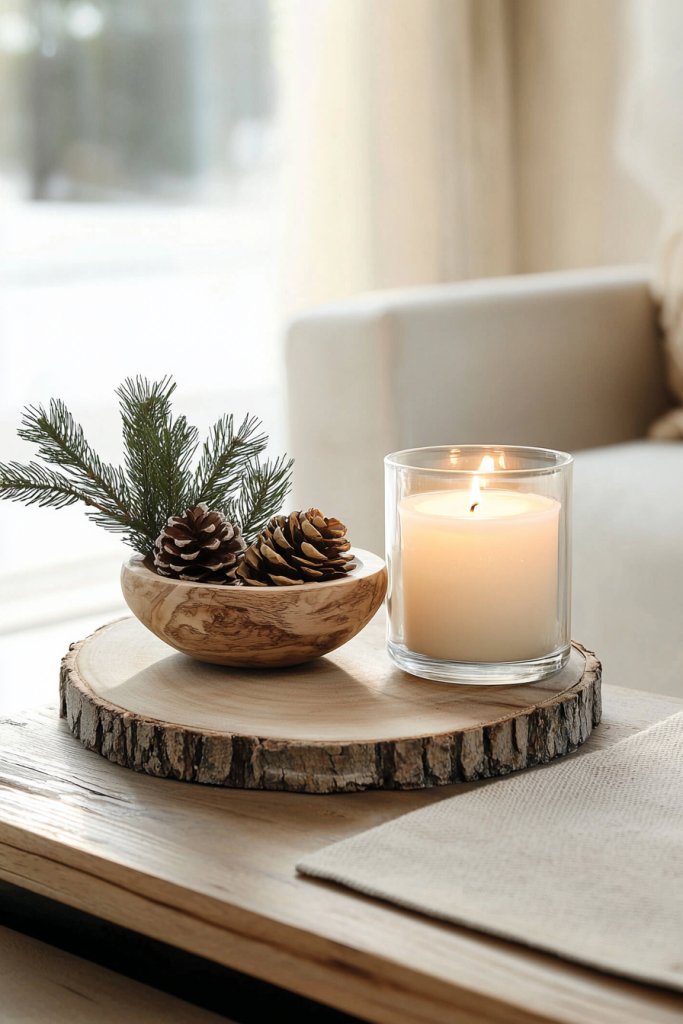
Unfinished wood accents bring raw, honest texture to Christmas interiors and complement almost every other natural material beautifully. Raw timber slices used as candle bases, rough-hewn wooden stars, and unsanded branch sections all contribute that distinctly imperfect wabi sabi quality to shelves and tabletops.
Position unfinished wood accents alongside smoother surfaces like linen or stone to highlight the pleasing contrast between textures. A rough timber slab under a grouping of candles and dried stems creates an instant, effortless seasonal vignette on any sideboard.
8. Fabric Banners Add Warmth
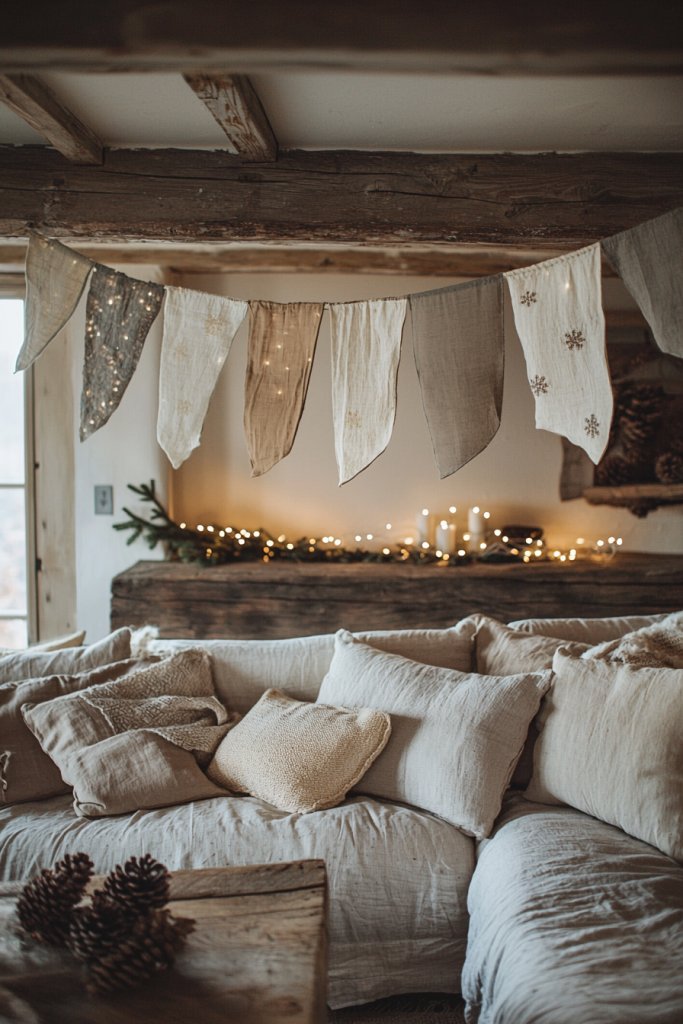
Fabric banners and garlands introduce soft movement and natural texture to Christmas walls, staircases, and doorways in the most understated way. Strips of undyed linen, loosely woven cotton, or raw muslin hung in simple swags create a warm, handcrafted feeling that mass-produced tinsel garlands never achieve.
Cut fabric into uneven strips or simple pennant shapes and hang them from a length of natural twine along a wall or mantel edge. Stamp or stencil simple botanical shapes onto the fabric before hanging to add a quiet decorative detail without overworking the design.
9. Minimalist Candle Arrangements Glow
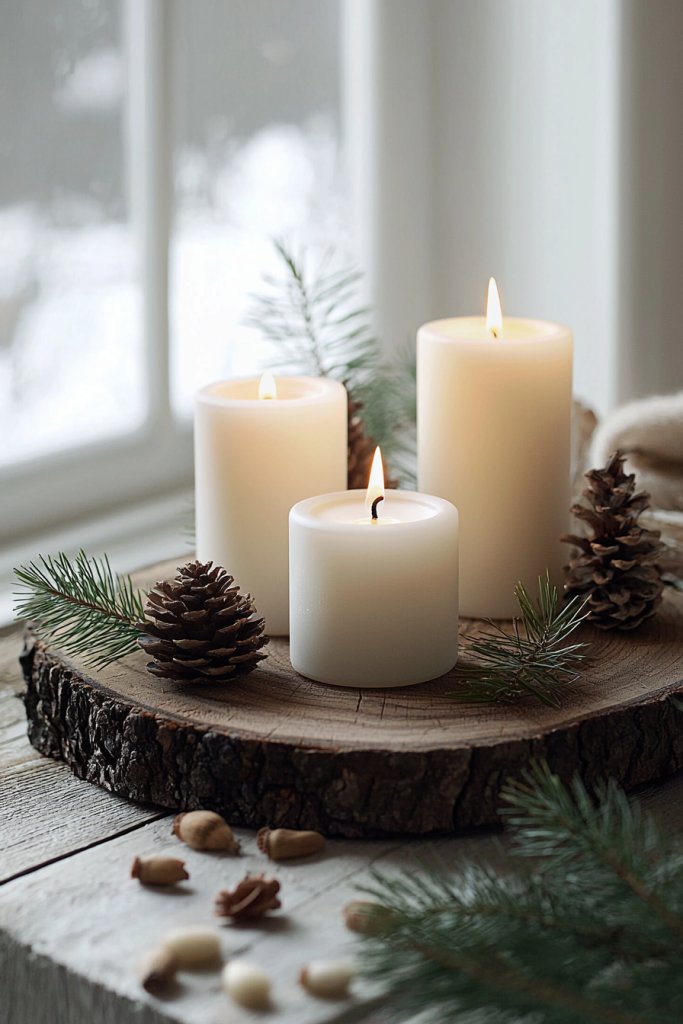
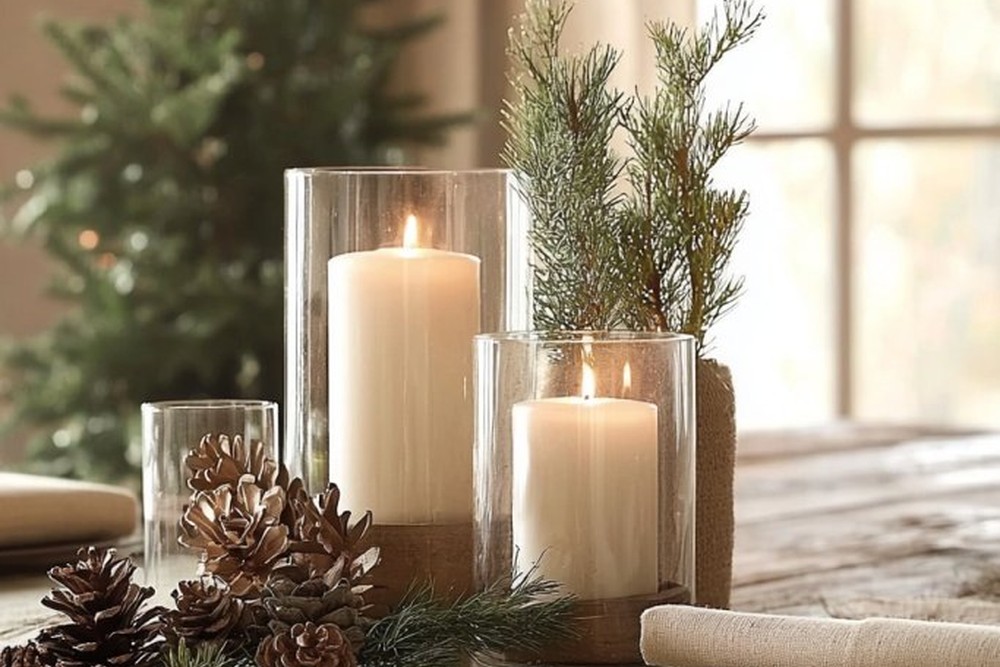
Minimalist candle arrangements create the most atmospheric and tranquil Christmas lighting in any room of the home. Beeswax pillar candles, tapered candles in clay holders, and small tea lights grouped on raw wooden boards all generate a soft, flickering warmth that suits the wabi sabi aesthetic beautifully.
Group candles in odd numbers at varying heights on a low tray or directly on a shelf surface cleared of clutter. Surround them with a loose arrangement of dried moss, small stones, or a few sprigs of pine to anchor the vignette naturally.
10. Asymmetrical Arrangements Feel Honest
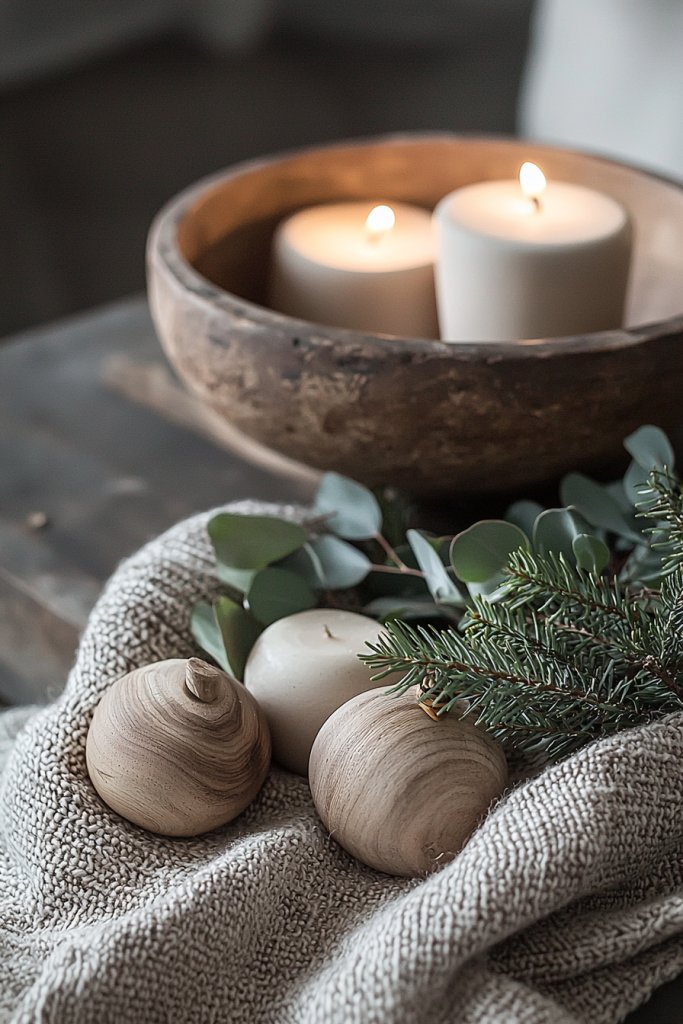
Asymmetrical arrangements sit at the heart of wabi sabi interior styling and bring an immediately relaxed, natural quality to Christmas decor. A grouping of objects that leans slightly to one side, or a garland that drapes unevenly across a mantel, feels far more authentic than anything rigidly balanced or perfectly measured.
Practice asymmetrical styling by placing your tallest element to one side of a tray or shelf and building smaller items outward from it. Step back frequently during styling to assess the visual weight of each side rather than counting or measuring objects precisely. Trust your instincts and resist adjusting arrangements into perfect symmetry, as the slight imbalance creates the gentle tension that makes wabi sabi spaces so visually interesting.
11. Stone and Clay Pottery Ground
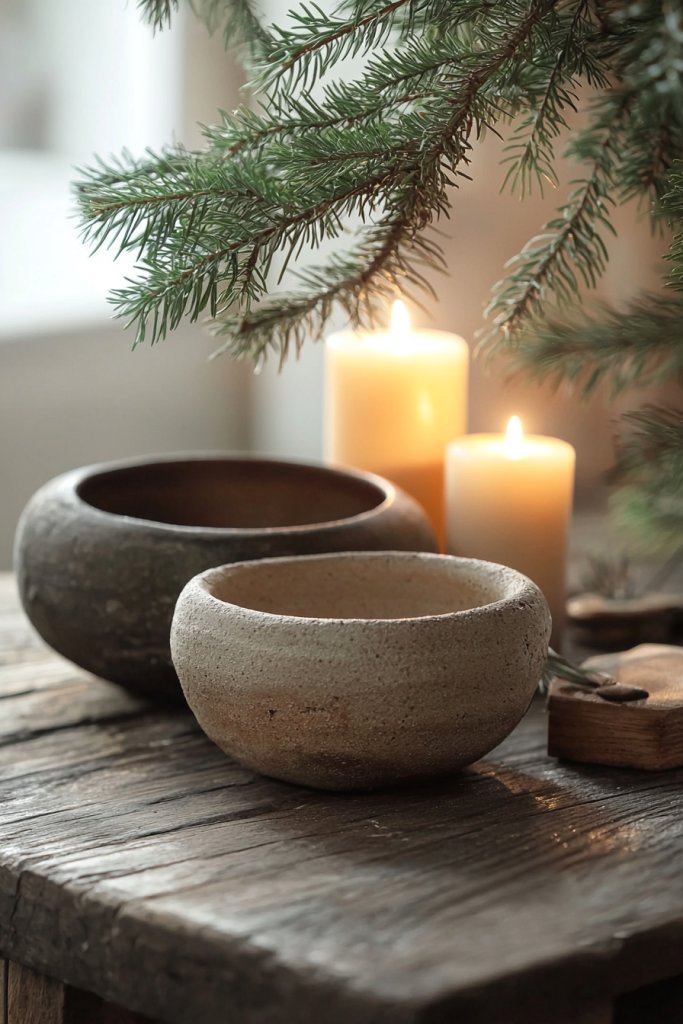
Stone and clay pottery bring an ancient, grounding quality to Christmas interiors that no synthetic material can replicate in the same way. Rough-textured clay vases, hand-thrown ceramic bowls, and smooth river stones used as decorative objects all contribute a calm, elemental presence to shelves and tabletops.
Use clay pots and stone objects as bases for greenery, candles, or dried flower arrangements throughout your holiday rooms. A hand-thrown bowl filled with seasonal nuts, stones, or small pine cones makes an effortless and beautiful tabletop moment.
12. Old Christmas Cards Display Beautifully
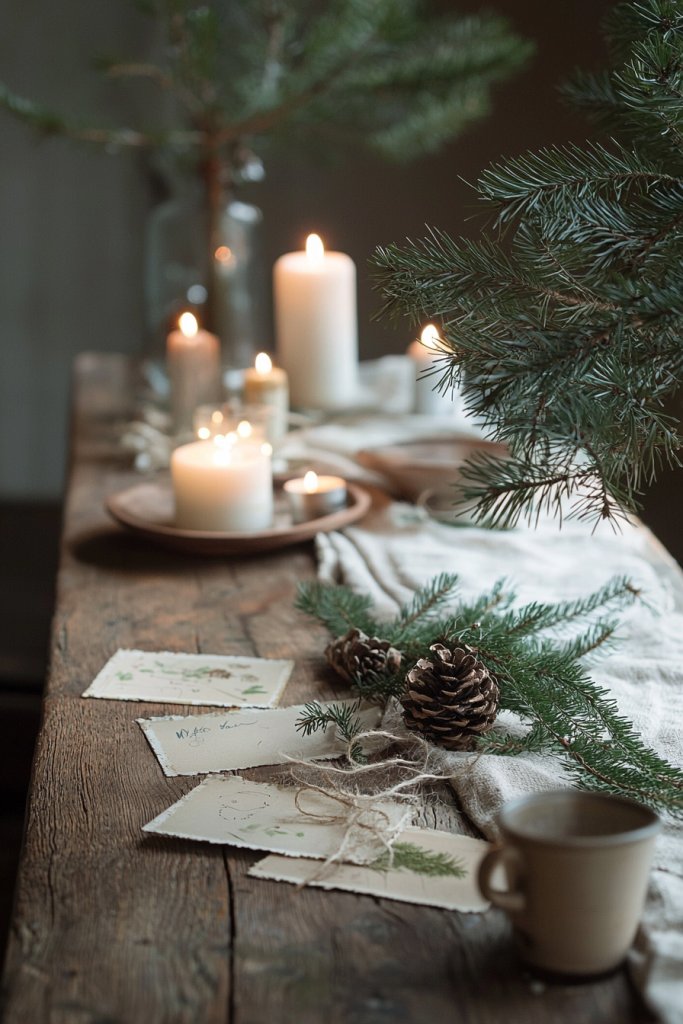
Repurposing old Christmas cards as wall or shelf decor adds a deeply personal and nostalgic dimension to holiday interiors. Vintage cards with faded illustrations, worn edges, and yellowed paper carry the kind of visible history that wabi sabi styling genuinely celebrates and elevates.
Gather cards from past years or source them from antique markets and group them by color tone or illustration style for a cohesive display. Lean them casually along a shelf edge or tuck them between books and natural objects for an unstudied, layered effect.
13. Soft Textured Fabrics Comfort
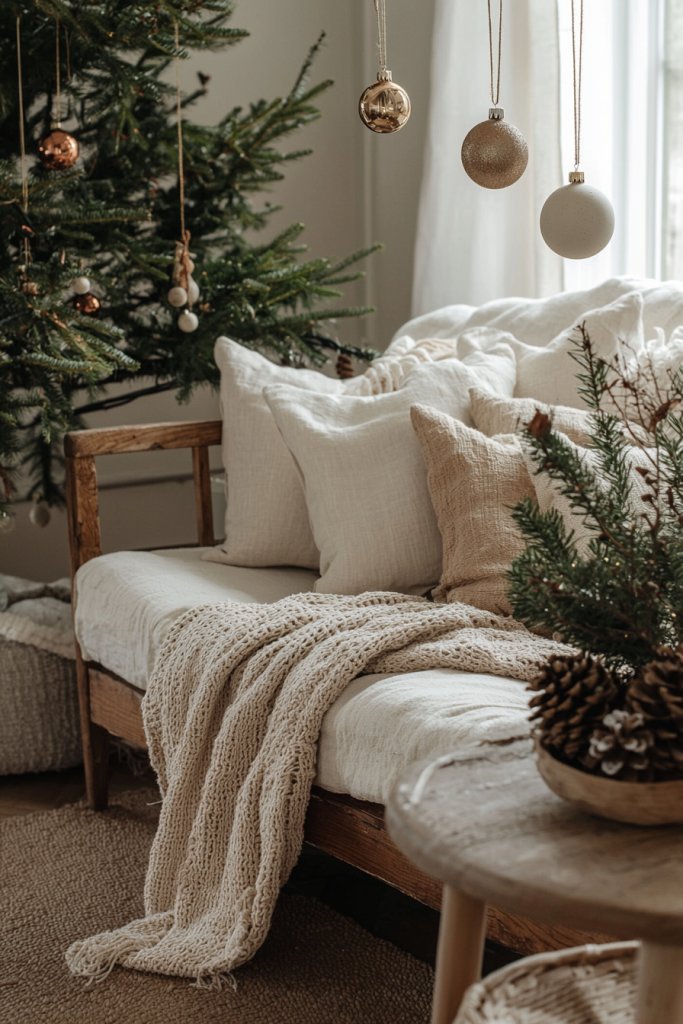
Soft, textured fabrics transform Christmas rooms into genuinely cozy and tactile environments that invite people to slow down and settle in. Chunky knit throws, rough linen cushion covers, raw cotton blankets, and wool table runners all add layer upon layer of natural warmth to sofas, chairs, and dining spaces. The irregular weave and natural fiber variations of these textiles suit the wabi sabi aesthetic with complete ease.
Layer two or three different fabric textures on a sofa or armchair rather than using a single matching set of cushions and throws. Choose textiles in your earthy color palette so each layer adds warmth without introducing visual noise or competing patterns.
14. Natural Wreaths Celebrate Imperfection
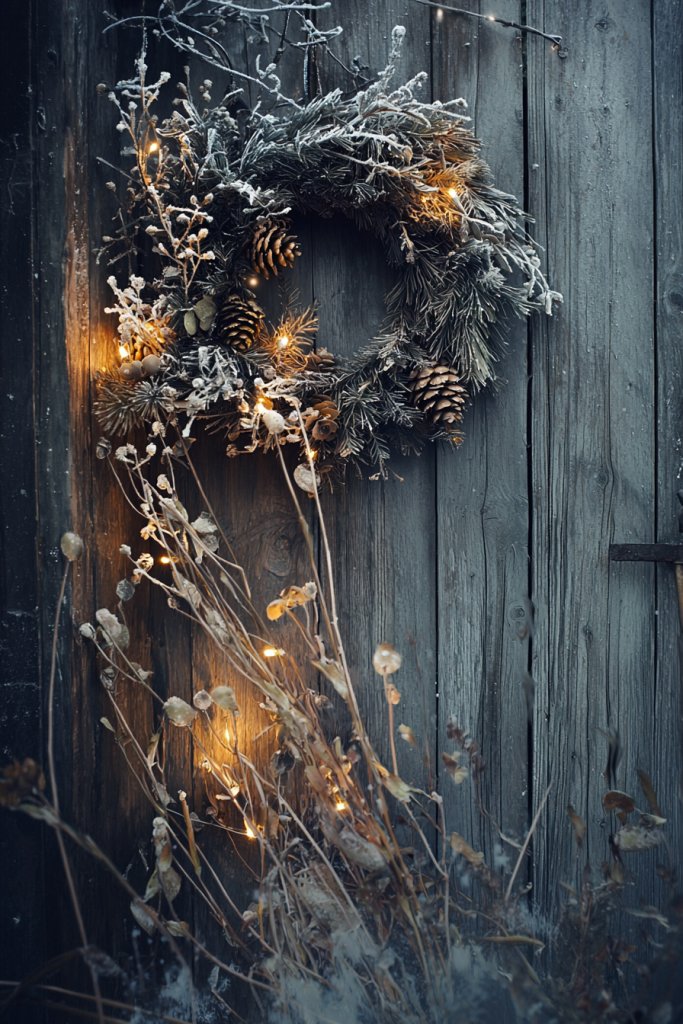
Natural element wreaths bring the outdoors to your front door or interior walls in a way that celebrates genuine, unpolished beauty. Pinecone clusters, dried seed heads, eucalyptus branches, twigs, and preserved berries combine into wreaths that feel hand-gathered rather than commercially assembled.
Build your wreath on a simple grapevine or wire base and add natural elements in an uneven, layered manner rather than spacing them out with perfect regularity. Incorporate a mix of textures including smooth, rough, soft, and spiky elements so the finished wreath rewards a close look with constant small discoveries.
15. Cozy Blanket Displays Invite Rest
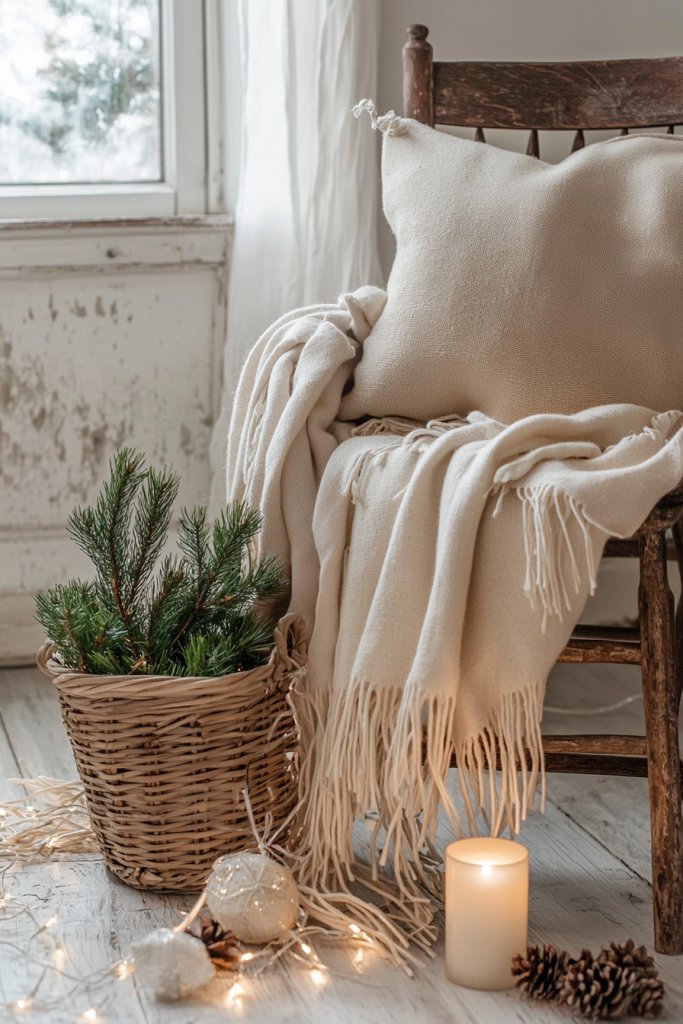
A cozy blanket display transforms any living room corner or bedroom chair into an irresistible Christmas retreat that encourages genuine relaxation. Loosely folded or casually draped blankets in natural fibers communicate immediate warmth and show visitors that your home values comfort above rigid tidiness.
Choose blankets in complementary earthy tones and vary the textures between chunky knit, woven cotton, and soft wool for a layered, curated effect. Fold each blanket differently so some appear neatly stacked while others drape casually over a ladder rung or basket edge.
16. Simple String Lights Warm Rooms
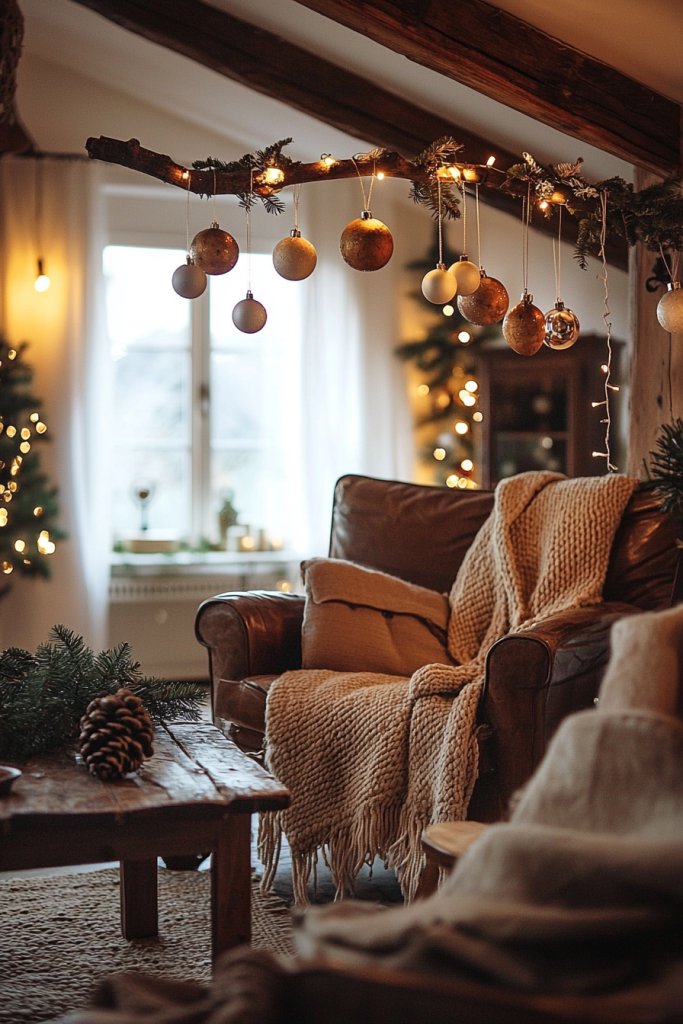
Simple string lights add a gentle, golden warmth to Christmas interiors without the visual chaos that elaborate lighting displays often create. Warm white bulb strings draped loosely over shelves, wound around dried branch arrangements, or tucked inside glass vessels produce a soft, flickering glow that suits the wabi sabi mood perfectly.
Choose string lights with visible Edison-style bulbs or simple fairy light strands in warm white rather than cool white or multicolored options. Drape them loosely rather than spacing them with precise evenness so the light falls in natural, organic pools across your surfaces.
17. Seasonal Fruits Decorate Tables
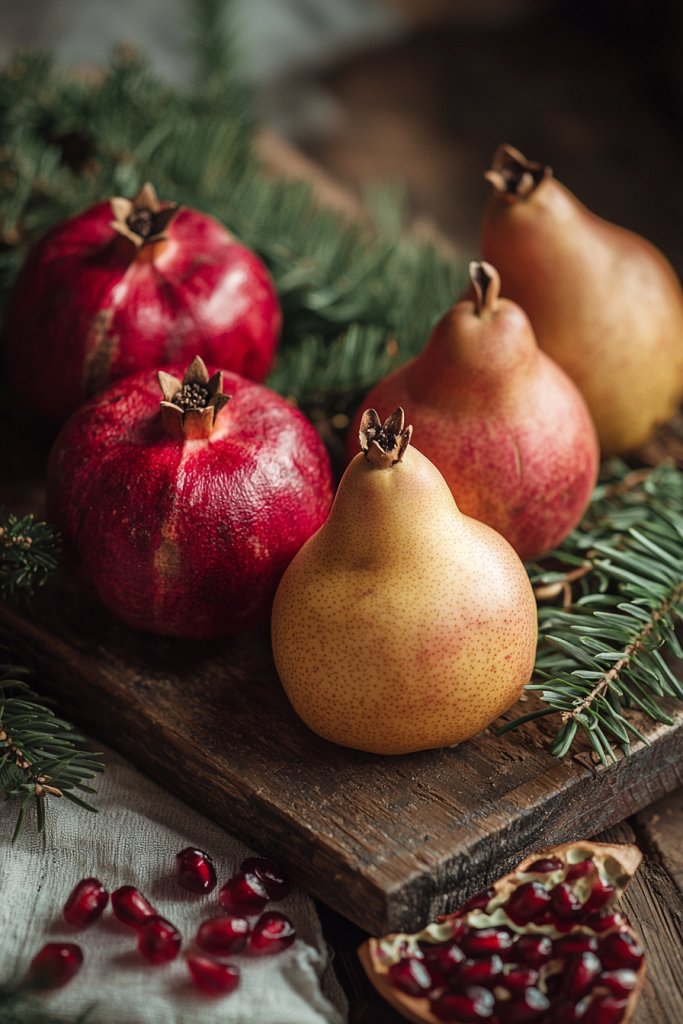
Seasonal fruits bring natural color, fragrance, and organic form to Christmas tabletops and room styling in the most effortless way. Deep red pomegranates, golden clementines, dried orange slices, and glossy red apples all contribute rich seasonal tones that complement an earthy wabi sabi palette without requiring any artificial color.
Arrange seasonal fruits loosely in a wooden bowl or on a flat ceramic plate as a living centerpiece that changes naturally over time. Add dried cinnamon sticks, star anise, or a few sprigs of rosemary between the fruits to build fragrance and textural variety into the arrangement.
18. Nature-Inspired Table Settings Impress
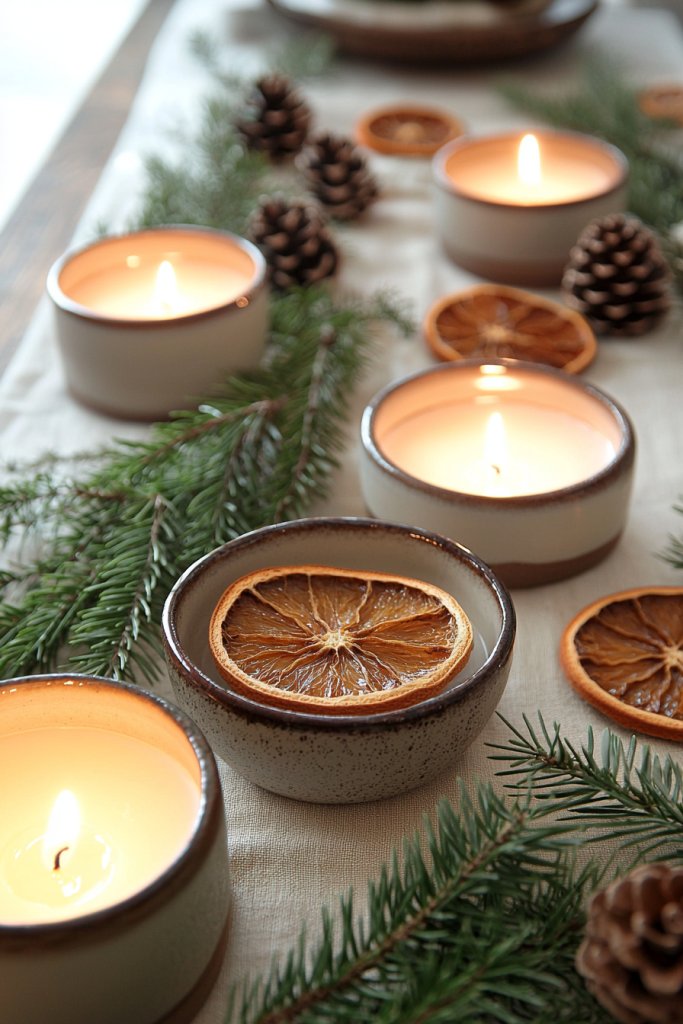
A nature-inspired table setting turns the Christmas dining table into a genuinely beautiful and personally meaningful interior moment. Place settings built around natural linen napkins, stone or clay side plates, wooden handled cutlery, and a loose centerpiece of dried botanicals create a table that feels earthy and warm rather than formal and stiff.
Tuck a small sprig of eucalyptus or dried lavender beneath each napkin as a simple and fragrant personal detail for each place setting. Choose plates and bowls with slight variations in glaze or shape rather than perfectly matching sets so the table feels curated rather than uniform.
19. Irregular Vases Display Freely
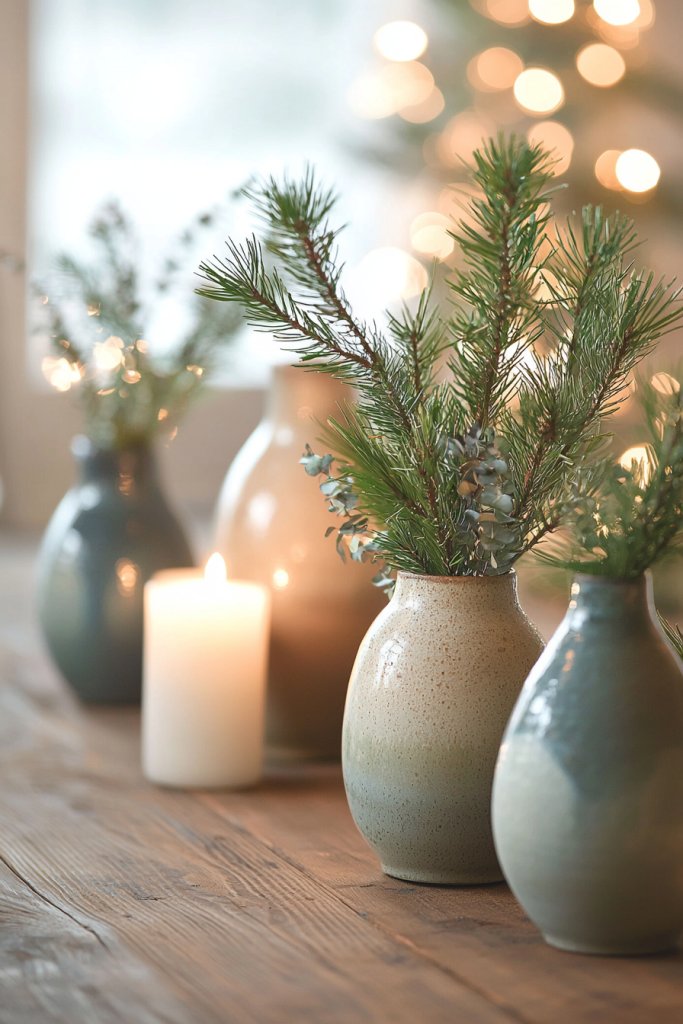
Irregular and uneven vases bring immediate wabi sabi character to any Christmas shelf, windowsill, or sideboard display in your home. Hand-thrown ceramic vases with wonky necks, slightly lopsided clay pots, and rough-textured stoneware pieces each carry the visible mark of human hands and natural process.
Source irregular vases from ceramic markets, independent makers, or vintage shops rather than mass-produced homeware stores that prioritize perfect uniformity. Group two or three vases of different heights and shapes together on a shelf for a styled cluster that feels collected over time rather than purchased all at once.
20. Holiday Mood Boards Guide Style
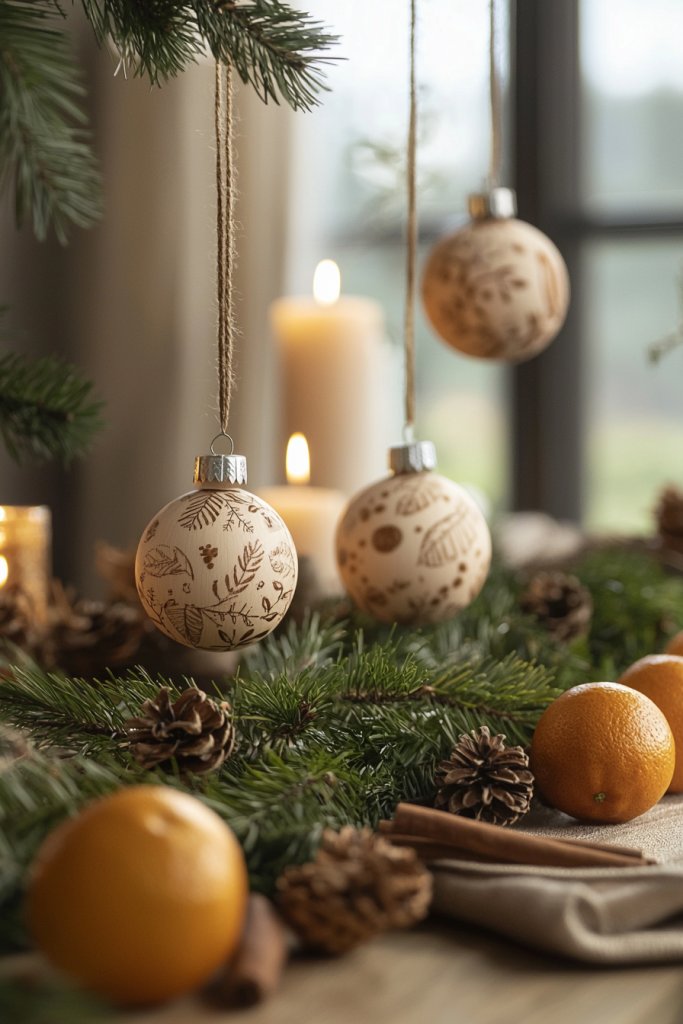
A holiday mood board gives your wabi sabi Christmas decorating a clear visual direction before you purchase or arrange a single item. Pinning together images of natural textures, earthy color swatches, aged ceramics, and dried botanicals helps you identify the specific mood you want your rooms to express during the festive season.
Create your mood board on a physical pin board using torn magazine images, fabric swatches, paint chips, and pressed leaves for a tactile, inspiring reference. Hang it in your decorating workspace or photograph it and use it as a reference when shopping at markets or vintage stores.
21. Family Heirlooms Honor History
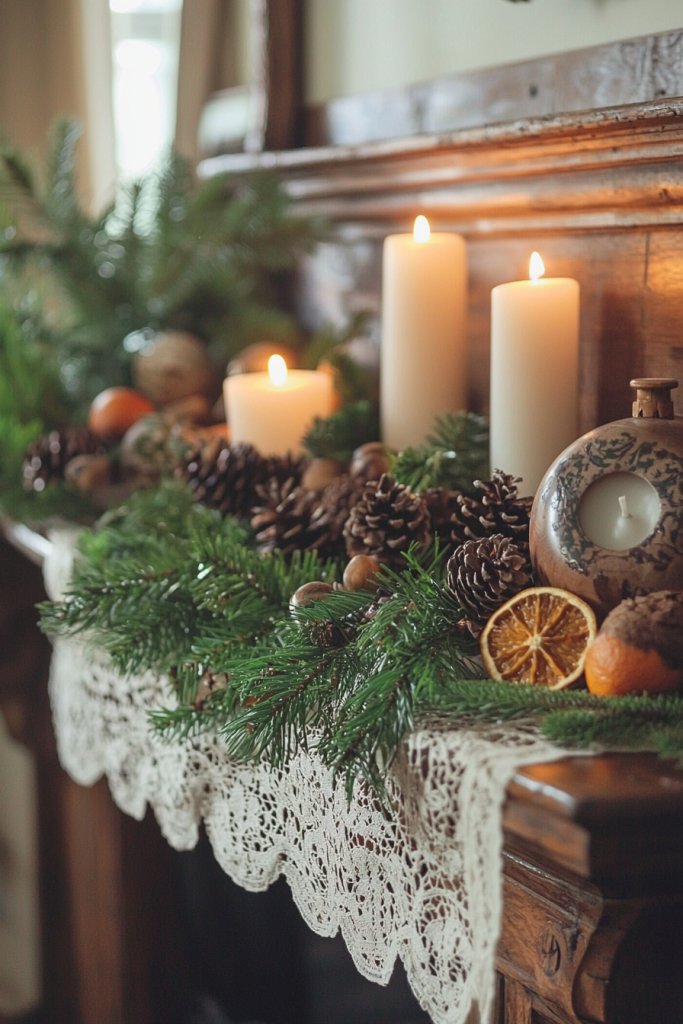
Displaying family heirlooms during Christmas turns your interior into a deeply personal and emotionally resonant space that no shop-bought collection can replicate. A grandmother’s ceramic nativity set, an old wooden toy, or a hand-embroidered table runner carries decades of family history and genuine sentimental weight that commercial decor simply cannot offer.
Create a dedicated shelf or tray display for family heirlooms so they receive the focused attention they deserve rather than becoming lost among other decorations. Style them simply alongside a candle and a small natural element like a stone or a dried flower so the heirlooms remain the clear visual focus.
22. Rustic Servingware Elevates Tables
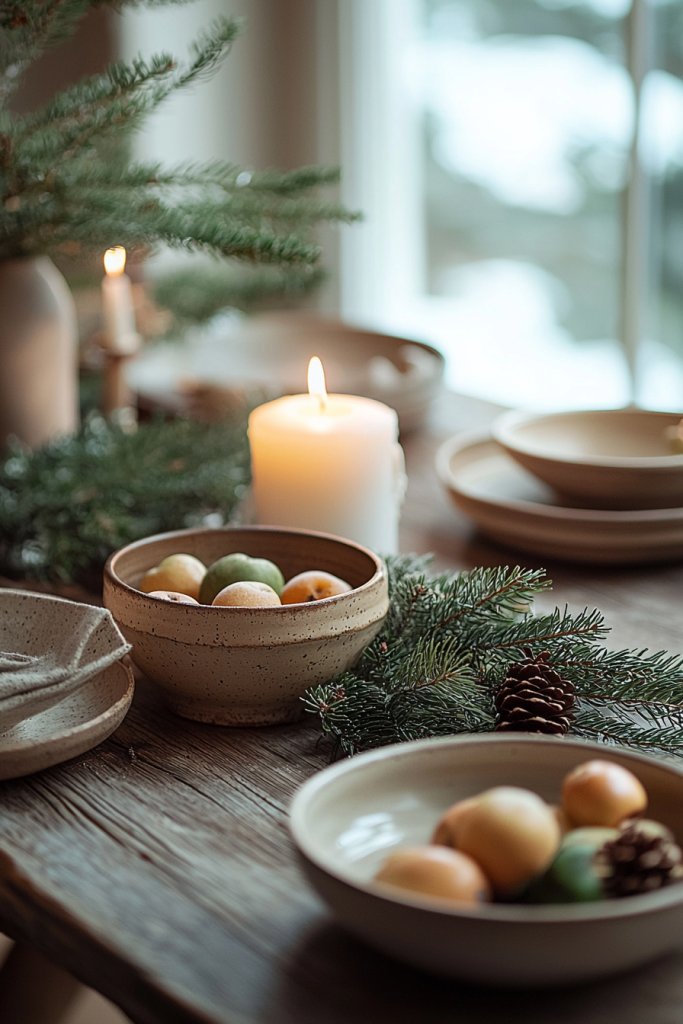
Rustic servingware transforms a Christmas dining table into a warm, earthy tablescape that prioritizes genuine beauty over polished perfection. Rough-textured ceramic serving bowls, hand-carved wooden boards, and matte-glazed pitchers all contribute to a table that feels abundantly welcoming rather than stiffly formal.
Build your servingware collection gradually from ceramic makers, artisan markets, and vintage stores rather than purchasing a uniform set all at once. Mix wooden and ceramic pieces on the same table so the contrast between warm wood tones and cool stoneware glazes creates visual interest across the entire surface.
23. Organic Shapes Define Spaces
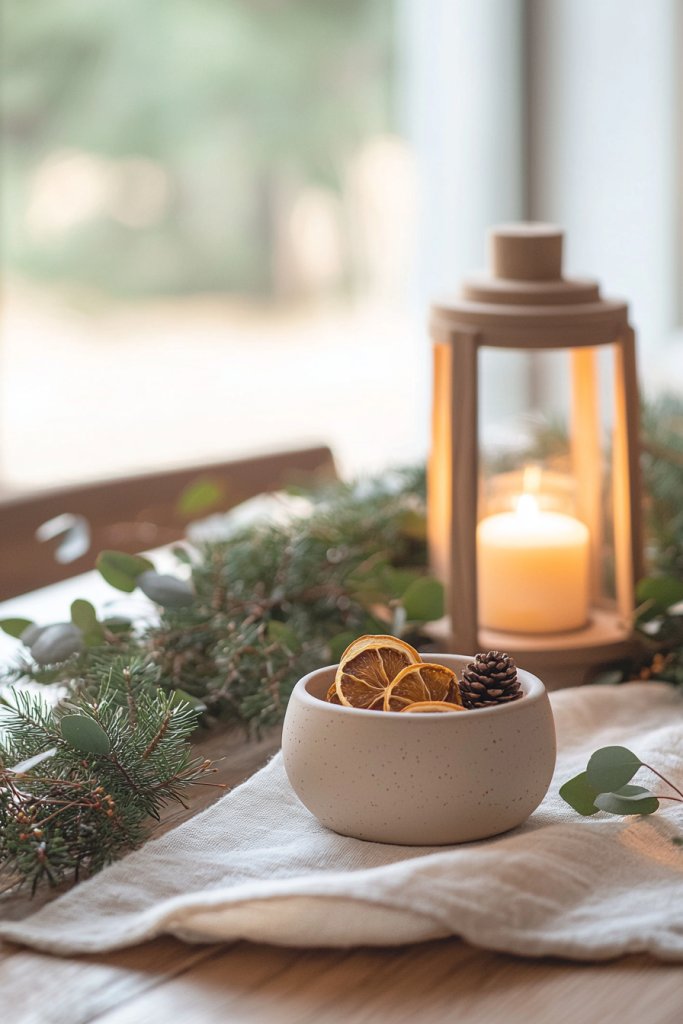
Incorporating organic shapes into Christmas decor removes the rigid geometry of conventional holiday styling and replaces it with something far more natural and visually interesting. Freeform ceramic sculptures, irregularly shaped candles, twisted branch arrangements, and loosely gathered fabric swags all introduce the kind of fluid, nature-inspired forms that wabi sabi interiors celebrate.
Look for organic shapes in unexpected places, including driftwood pieces, smoothed river stones, hand-pinched clay objects, and naturally dried gourds. Introduce them onto shelves and mantels alongside more structured elements so the contrast between organic and geometric creates a dynamic, interesting visual conversation.
24. Neutral Muted Textiles Layer Softly
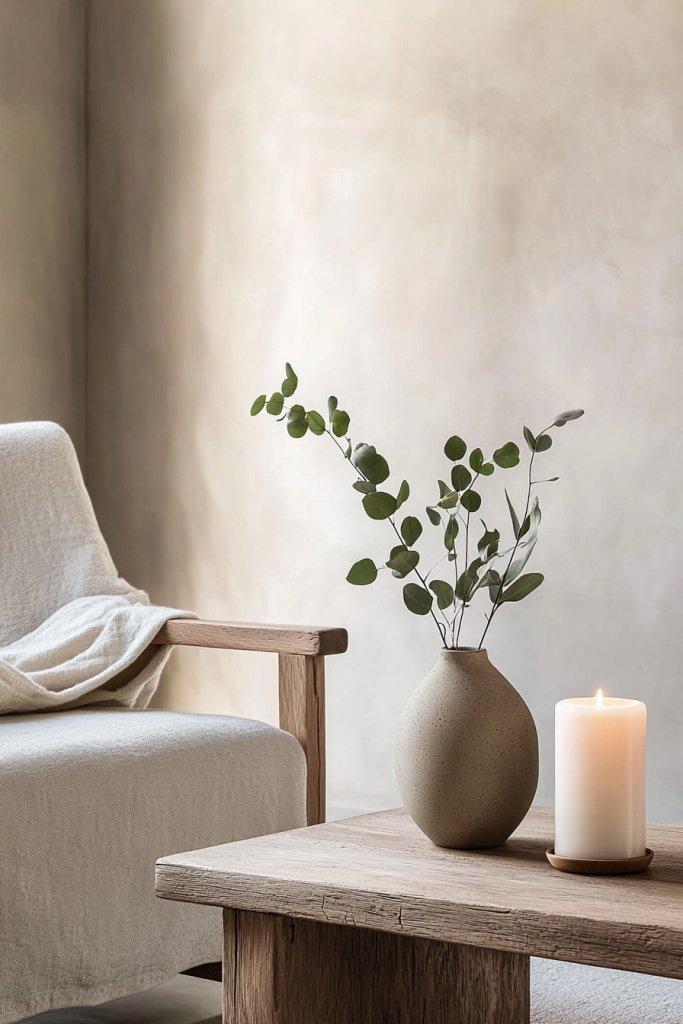
Neutral and muted textiles build the quiet, layered softness that defines the most successful wabi sabi Christmas interiors from floor to ceiling. Undyed linen cushion covers, raw cotton curtains, oatmeal-toned throws, and natural wool rugs all work together to wrap a room in calm, unpretentious warmth.
Layer neutral textiles in varying weights and weaves so the room feels visually rich even within a very restricted color range. A chunky knit throw over a smooth linen sofa beside a rough jute rug creates a satisfying progression of textures across the room floor.
25. Tranquil Reading Nooks Restore Energy
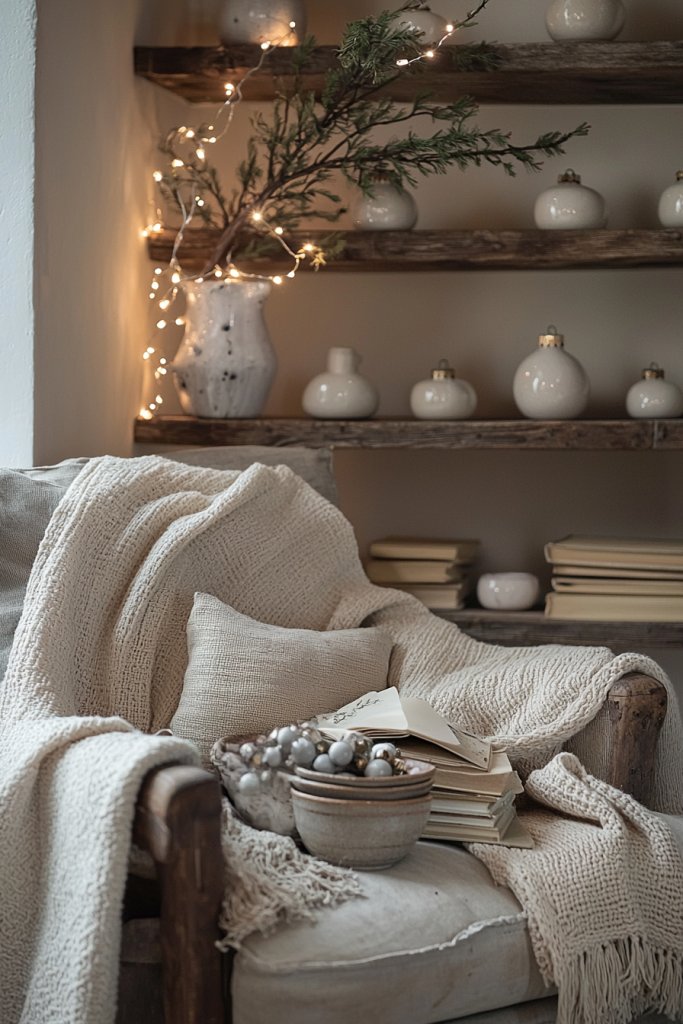
A tranquil reading nook creates the perfect wabi sabi Christmas retreat within your home where quiet and personal restoration feel genuinely possible. A single armchair positioned near a window, dressed with a soft linen throw, a small stack of books, and a candle on a nearby side table forms an immediate sanctuary from the noise and rush of the festive season.
Choose a corner of your living room or bedroom that already feels naturally quiet and build the nook outward from that existing calm energy. Keep decorative objects on nearby surfaces minimal, limiting them to one candle, one plant or botanical stem, and one personal object with meaning.
Start with one room and one natural material, then let your wabi sabi Christmas decor grow slowly and honestly from there. Visit a local ceramic market or gather materials from your garden to take your first peaceful step toward a more intentional holiday home.