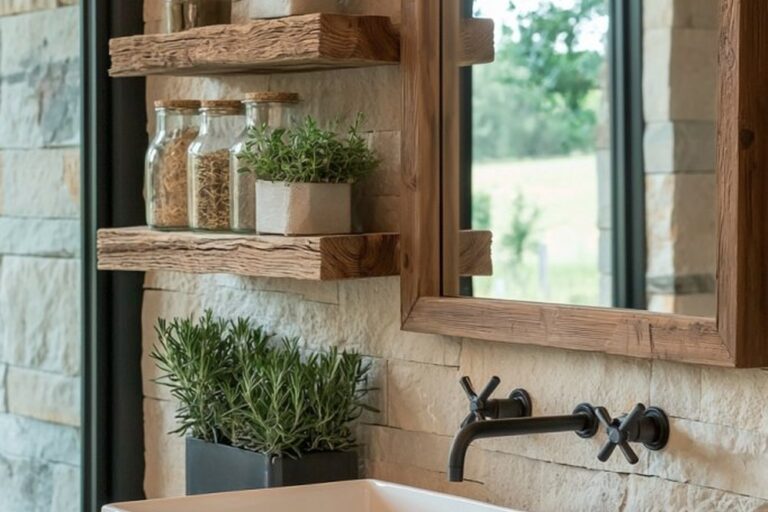

Japandi design transforms any bathroom into a calm, purposeful sanctuary by blending Japanese minimalism with Scandinavian warmth. These 16 ideas give you everything you need to create a serene, functional space that feels effortlessly beautiful every single day.
Japandi style draws from two powerful design philosophies that share a deep respect for simplicity, nature, and intentional living. Japanese wabi-sabi embraces imperfection and natural materials, while Scandinavian hygge celebrates comfort and quiet coziness.
Together, these influences create interiors that feel both restrained and deeply inviting. A Japandi bathroom strips away visual noise and replaces it with carefully chosen textures, muted tones, and functional beauty that genuinely soothes the senses.
1. Neutral Color Palette Basics

A Japandi bathroom lives and breathes through its muted, earthy color palette. Soft beiges, warm taupes, and quiet greys cover walls and floors in matte finishes that absorb light and reduce harsh glare, creating a gentle, diffused glow throughout the room.
Start by choosing one base neutral tone, such as warm taupe or pale sand, and apply it across walls and larger surfaces for visual consistency. Layer in varying textures through stone, plaster, and unpolished wood to add quiet depth without introducing competing colors or patterns.
2. Natural Wood Vanity Warmth

A natural wood vanity cabinet instantly softens the hard surfaces common in most bathrooms. Warm oak, walnut, or ash tones bring an organic richness to the space, grounding the room with earthy texture and making the entire bathroom feel more lived-in and welcoming.
Choose a flat-front vanity with a matte or oiled wood finish to keep the look clean and aligned with Japandi principles. Pair the cabinet with a stone or concrete countertop to balance the warmth of the wood with a cooler, more grounded material.
3. Matte Black Hardware Contrast

Matte black hardware introduces a quiet, modern contrast against pale walls and warm wood surfaces in a Japandi bathroom. Tapware, drawer pulls, towel bars, and shower fittings in matte black create a cohesive visual thread that anchors the entire design without overpowering it.
Select hardware with simple, geometric silhouettes and avoid ornate detailing that would clash with the minimalist aesthetic. Apply matte black consistently across all metal elements in the room so the contrast feels intentional and unified rather than scattered or accidental.
4. Textured Stone Floor Appeal

Textured stone or concrete flooring adds subtle visual depth to a Japandi bathroom without introducing loud pattern or color. Honed slate, rough travertine, or poured concrete each bring an organic, tactile quality that connects the space to nature and reinforces the wabi-sabi philosophy of imperfect beauty.
Choose large-format stone tiles with a natural, unfilled surface to minimize grout lines and keep the floor looking clean and expansive. Add a small woven bath mat in a neutral tone to introduce softness underfoot while maintaining the room’s overall restrained aesthetic.
5. Built-In Niche Storage Solutions

Built-in wall niches solve bathroom clutter problems by giving toiletries and essentials a dedicated, recessed home directly within the wall. These architectural storage pockets sit flush with the surface, keeping the room visually tidy and allowing the clean lines of the space to remain fully intact.
Position niches inside the shower wall at a practical height and finish the interior with the same tile used throughout the bathroom for seamless continuity. Keep only daily essentials inside and remove excess products to honor the Japandi commitment to intentional, clutter-free living.
6. Freestanding Bathtub Style

A freestanding bathtub with an organic, sculpted silhouette becomes an instant focal point in a Japandi bathroom. Smooth oval or softly curved tub shapes in white, stone grey, or matte concrete finishes echo the natural, unhurried forms found throughout Japanese and Scandinavian design traditions.
Position the tub near a window or under soft lighting to maximize its sculptural presence and create a spa-like atmosphere in the room. Pair it with a simple floor-mounted matte black tap and keep surrounding surfaces completely clear to let the tub stand alone as a statement piece.
7. Soft Diffused Lighting Ambiance

Soft, diffused lighting removes harsh shadows and replaces them with a warm, even glow that makes a Japandi bathroom feel genuinely restful. Recessed ceiling fixtures, wall-mounted sconces with frosted shades, and under-vanity LED strips all distribute light gently across natural surfaces without creating glare.
Install a dimmer switch so you can adjust light intensity to match your mood and the time of day with ease. Combine warm-toned bulbs in a color temperature around 2700K with natural light from frosted glass windows to maintain the room’s calm, golden atmosphere throughout the day.
8. Frameless Mirror Visual Space
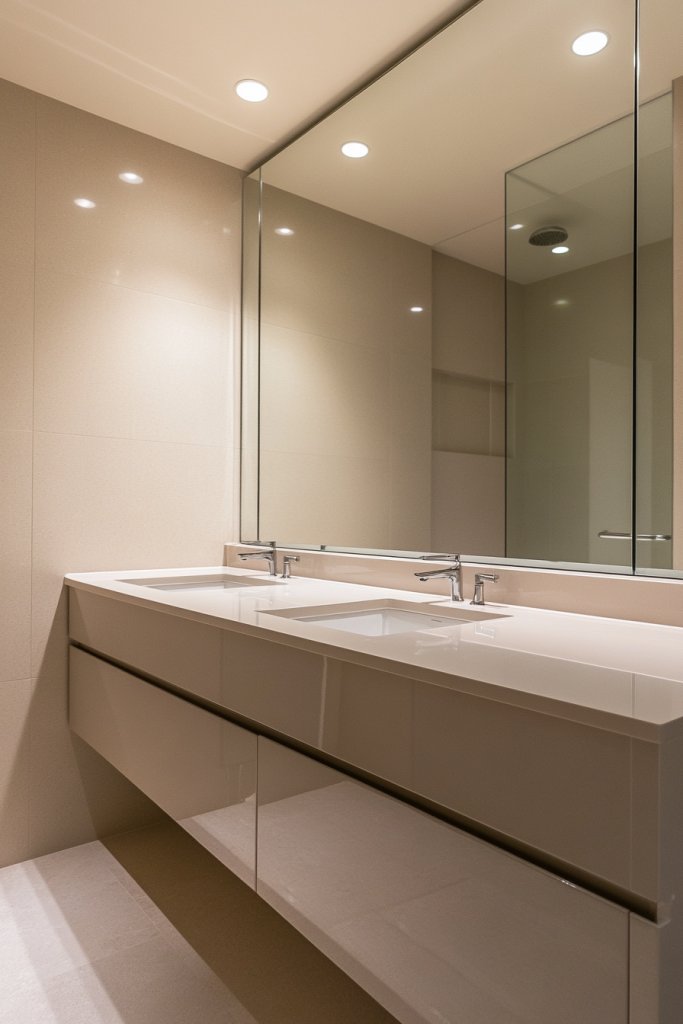
A frameless mirror opens up a Japandi bathroom by reflecting light and space without adding visual weight or competing decorative detail. The clean, unbroken edge of a frameless design aligns perfectly with the minimalist principles at the core of Japandi interiors, keeping the wall looking open and uncluttered.
Choose a mirror sized generously to reflect as much of the room as possible and mount it directly above the vanity for maximum practical use. Avoid mirrors with decorative frames or ornate borders, as these details break the visual simplicity that makes a Japandi bathroom so effective and calming.
9. Natural Material Storage Ideas

Simple storage solutions made from natural materials keep a Japandi bathroom organized while adding warmth and texture to the overall design. Open wooden shelves, rattan baskets, and bamboo trays all serve a functional purpose while contributing an organic, handcrafted quality that feels entirely at home in this style.
Mount a slim wooden shelf above the toilet or beside the vanity to hold folded towels, small plants, or daily essentials within easy reach. Edit the contents regularly and display only items you actively use, allowing the natural beauty of the storage materials themselves to contribute to the room’s quiet aesthetic.
10. Zen Accessory Clean Lines

Zen-inspired accessories with clean, deliberate lines complete a Japandi bathroom without overwhelming its carefully maintained simplicity. A smooth ceramic soap dish, a single sculpted candle holder, or a flat stone tray each contribute a quiet sense of ritual and intention to the everyday bathroom experience.
Limit decorative accessories to three or fewer carefully chosen pieces and arrange them with deliberate spacing on the vanity or shelf. Select items made from natural materials like unglazed ceramic, raw stone, or solid wood to reinforce the connection to nature that defines authentic Japandi interiors.
11. Woven Linen Towel Texture

Woven or linen towels introduce subtle tactile texture into a Japandi bathroom while remaining completely in harmony with its muted, natural color palette. The loose weave and slightly rough hand of linen fabric adds visual warmth and an artisanal, unhurried quality that perfectly suits the wabi-sabi spirit of this design style.
Fold towels neatly and drape them over a matte black towel bar or stack them on an open wooden shelf to create a simple, styled display. Choose towels in undyed natural linen, warm white, or soft grey to ensure they complement the room’s neutral tones without introducing unwanted color contrast.
12. Hidden Ventilation Sleek Design

Discreet ventilation keeps a Japandi bathroom fresh and moisture-free without interrupting the clean, unbroken visual flow of walls and ceilings. Slim, flush-mounted vent covers in white or a tone matched to surrounding surfaces disappear into the room’s architecture, maintaining the seamless aesthetic that Japandi design demands.
Choose a low-profile vent grille with a simple linear pattern and paint or finish it to match the wall surface for maximum concealment. Position the vent away from the main sightlines of the room so it performs its function quietly and efficiently without drawing the eye or disrupting the overall design.
13. Natural Fragrance Diffuser Styling

A subtle natural fragrance diffuser adds a sensory layer to the Japandi bathroom experience, engaging smell alongside sight and touch to deepen the feeling of calm. Reed diffusers in simple glass vessels or ceramic aromatherapy burners with clean silhouettes work beautifully within this style without cluttering the space.
Choose scents grounded in nature, such as hinoki wood, white tea, eucalyptus, or yuzu, to reinforce the organic atmosphere already established through materials and color. Place the diffuser on a wooden tray beside the vanity or on a shelf to integrate it visually as a styled, intentional element rather than an afterthought.
14. Wooden Slat Wall Interest

Vertical wooden slat walls bring rich, rhythmic texture to a Japandi bathroom and create a striking focal point that feels architectural rather than decorative. Evenly spaced slats in warm oak or cedar run floor to ceiling, drawing the eye upward and making the room feel taller, calmer, and more considered.
Install the slat wall behind the freestanding tub or along a single feature wall to avoid overwhelming the room with too much wood grain in one space. Treat the timber with a water-resistant matte oil finish to protect it from bathroom humidity while preserving the natural, muted tone of the wood.
15. Indoor Plants Minimalist Containers

Small indoor plants in minimalist containers bring a quiet breath of life into a Japandi bathroom without disrupting its carefully edited simplicity. A single fern in a matte ceramic pot, a trailing pothos on a wooden shelf, or a small bamboo plant in a smooth stone vessel each add natural color and organic form.
Choose plants that genuinely thrive in low light and high humidity environments, such as peace lilies, ferns, or moss balls, to ensure they stay healthy with minimal care. Limit yourself to one or two plants and select containers with simple shapes and neutral tones to keep the display feeling intentional and restrained.
16. Minimal Decor Clutter-Free Sanctuary

Keeping decor and accessories minimal preserves the tranquil, open atmosphere that makes a Japandi bathroom so restorative and appealing. Every item on display should earn its place through both function and beauty, and anything that serves neither purpose belongs in a closed cabinet or out of the room entirely.
Conduct a regular edit of your bathroom surfaces and remove any items that have accumulated without intention, restoring the clean visual calm of the space. Commit to the principle of less as more and trust that a few beautifully chosen, well-placed pieces create far more impact than a crowded display of many.
Your Japandi bathroom transformation starts with one intentional decision, whether that is a new neutral paint color, a natural wood vanity, or a set of linen towels. Begin with the change that excites you most and let each thoughtful addition build the serene retreat you deserve.