A stunning gallery wall can instantly transform your living room into a curated, personality-filled space. These versatile displays combine art, photos, and decorative accents to suit every taste and room size.
Gallery walls have become one of the most popular ways to style a living room, offering a creative outlet that reflects personal taste. Homeowners use them to fill blank walls with intention, turning empty space into a visual story.
The beauty of a gallery wall lies in its flexibility, since you can go bold with mixed frames or keep things calm with a uniform grid. Every arrangement style carries its own mood, from cozy rustic charm to sleek contemporary elegance.
1. Symmetrical Frames Create Balance
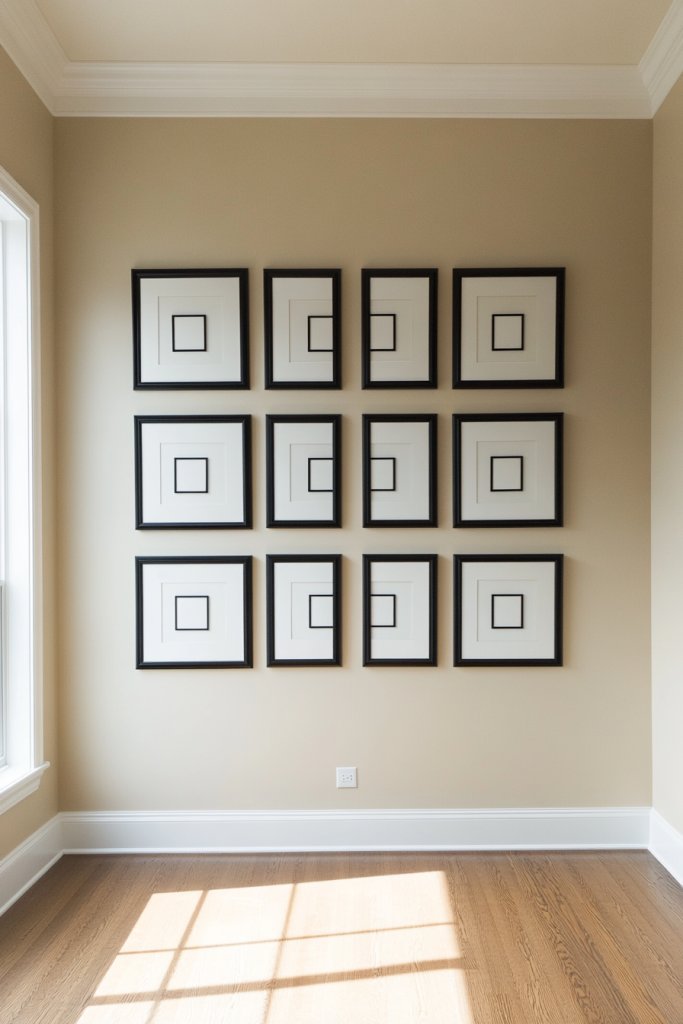
Symmetrical gallery walls use matching frames hung in a precise mirror-image layout, creating a clean and calming visual effect. The frames, often in black or white, align at the same height and spacing to deliver a polished, intentional look.
Start by measuring your wall and using painter’s tape to map out frame positions before you commit to any nails. Keep spacing consistent at around two to three inches apart, and choose prints with a shared color palette to strengthen the cohesive feel.
2. Mixed-Size Frames Add Drama
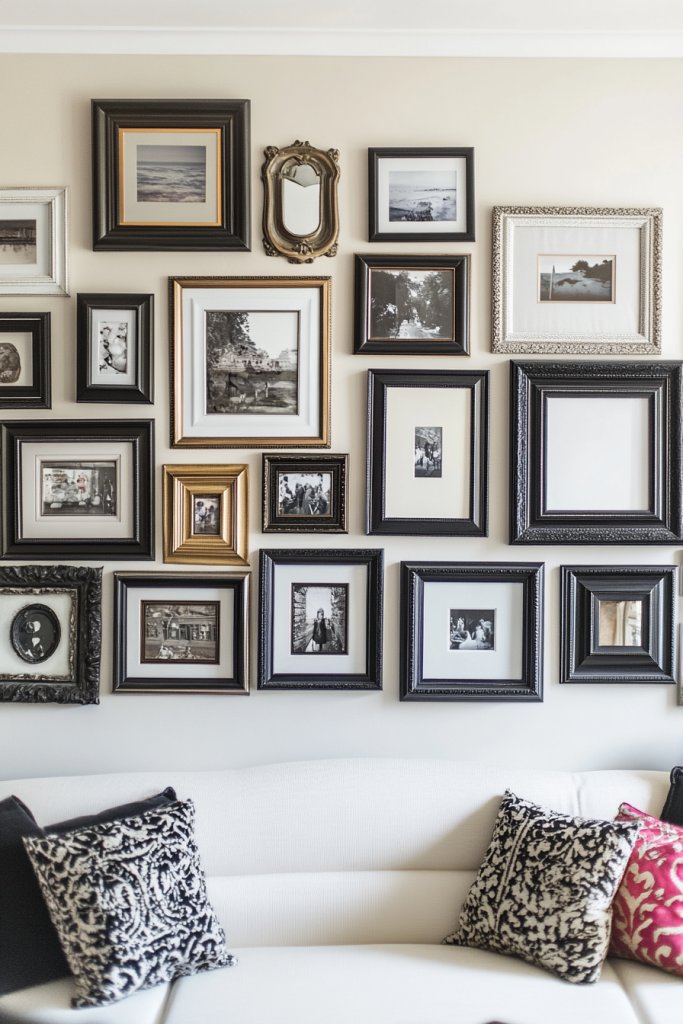
A collage of mixed-size frames brings energy and movement to any living room wall, layering large statement pieces with smaller accent frames. The varied proportions create a dynamic composition that draws the eye across the entire display.
Anchor the arrangement with your largest frame at the center or slightly off-center, then build outward with smaller frames. Lay the full arrangement on the floor first to test the composition before transferring it to the wall.
3. Floating Frames Suit Modern Rooms
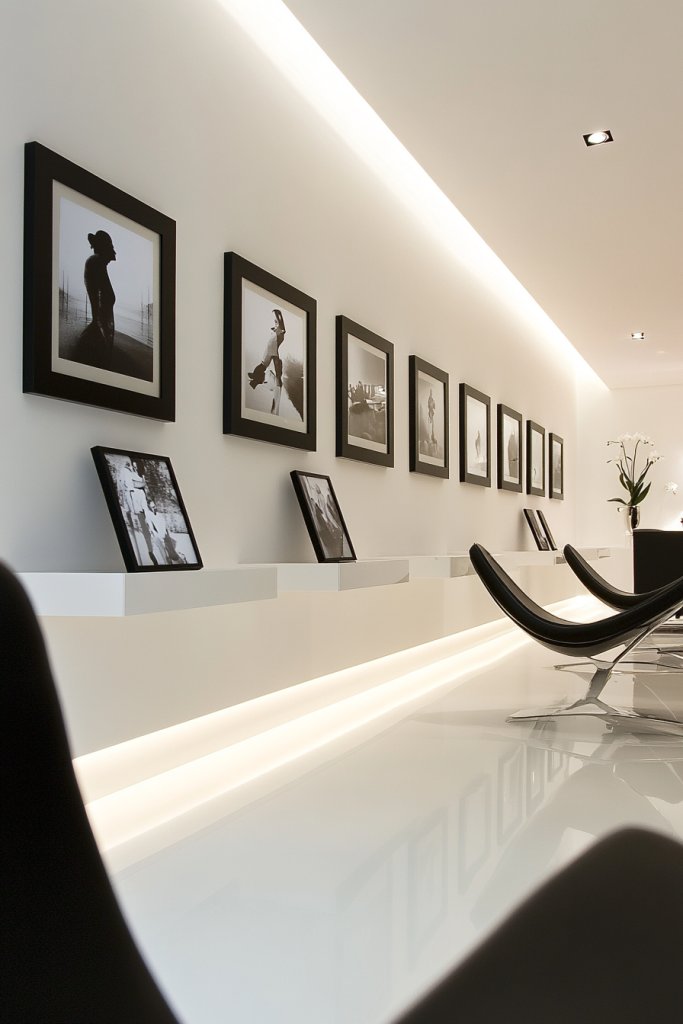
Floating frames suspend artwork between two panes of clear acrylic or glass, giving prints and photos a light, borderless appearance. This style suits contemporary living rooms because it keeps the wall feeling open and uncluttered.
Choose high-quality prints with strong contrast so the artwork reads clearly without a traditional frame border to define it. Space each floating frame generously to preserve the airy, minimalist feel that makes this style so effective.
4. Geometric Layouts Modernize Walls
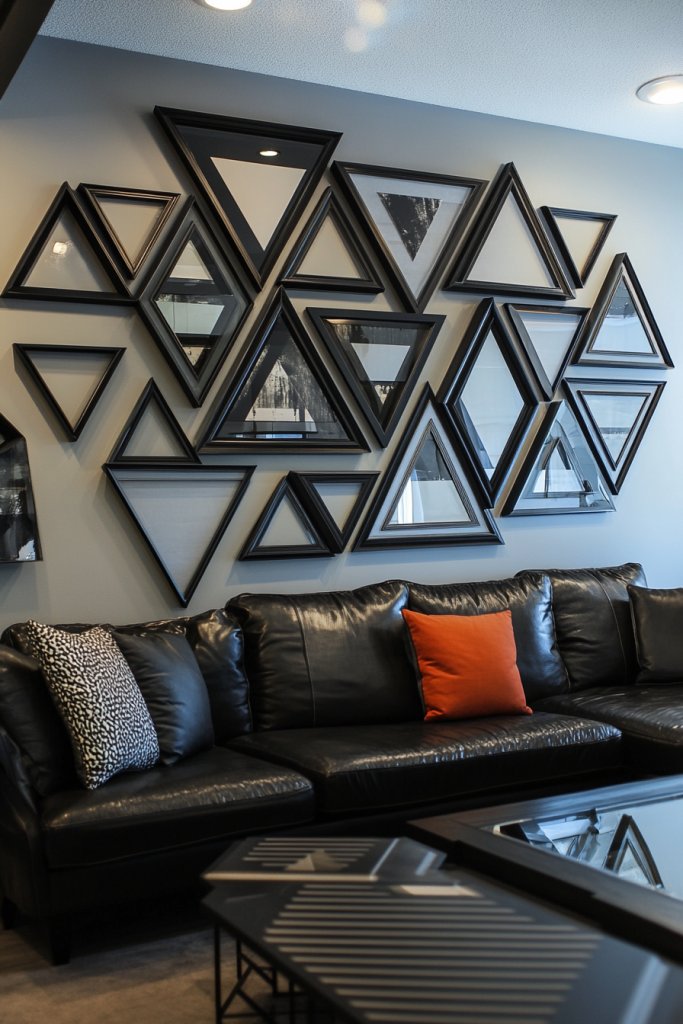
Geometric gallery walls arrange frames in bold shapes such as hexagons, diamonds, or triangles, turning the layout itself into a design element. The structured pattern adds a modern artistic quality that goes beyond a simple art display.
Use painter’s tape on the wall to outline your chosen geometric shape before hanging anything. Select frames in one consistent finish, such as matte black or brushed gold, so the shape remains the visual star of the arrangement.
5. Architectural Accents Elevate Displays
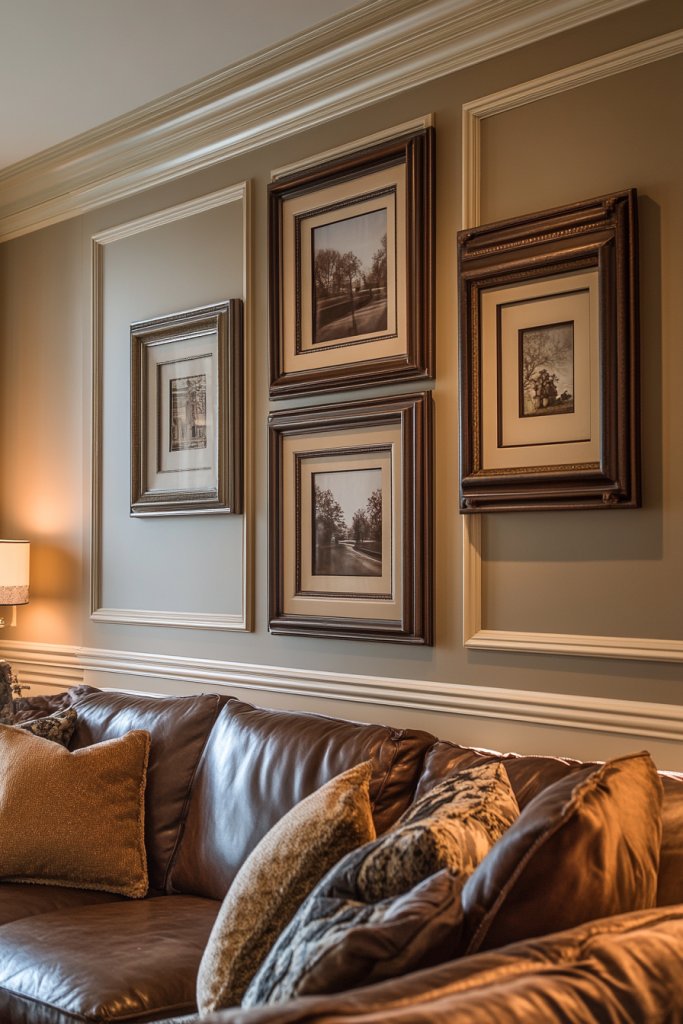
Mixing framed artwork with architectural elements such as wall molding, ledge shelves, or decorative brackets gives a gallery wall structure and depth. These accents frame the artwork in a broader architectural context that feels intentional and designed.
Install a simple picture rail or panel molding around your gallery area to create a built-in look without a full renovation. Paint the molding the same color as the wall to keep the focus on the art while still adding refined visual structure.
6. Monochrome Themes Unify Gallery Walls
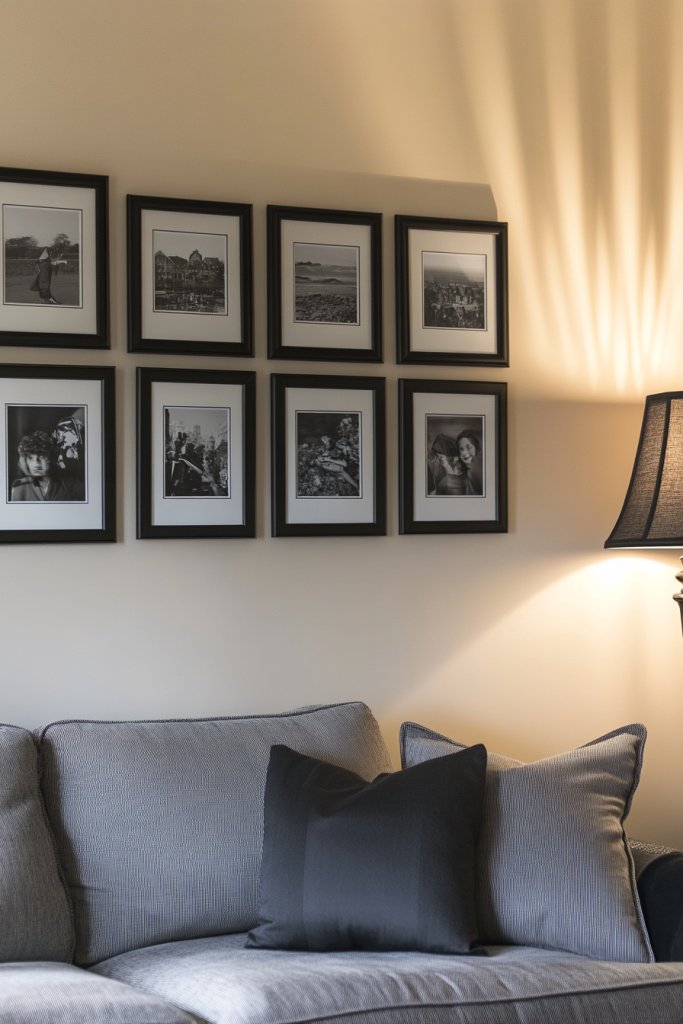
A monochrome gallery wall uses a single color family across all frames, mats, and prints to create a striking, unified display. Black-and-white photography or sepia-toned artwork works especially well within this restrained, sophisticated approach.
Choose frames in varying finishes within the same tone, such as matte black, glossy black, and dark charcoal, to add subtle texture. This tonal layering keeps the wall from feeling flat while maintaining the clean, cohesive monochrome theme.
7. Asymmetrical Layouts Spotlight Centerpiece Art
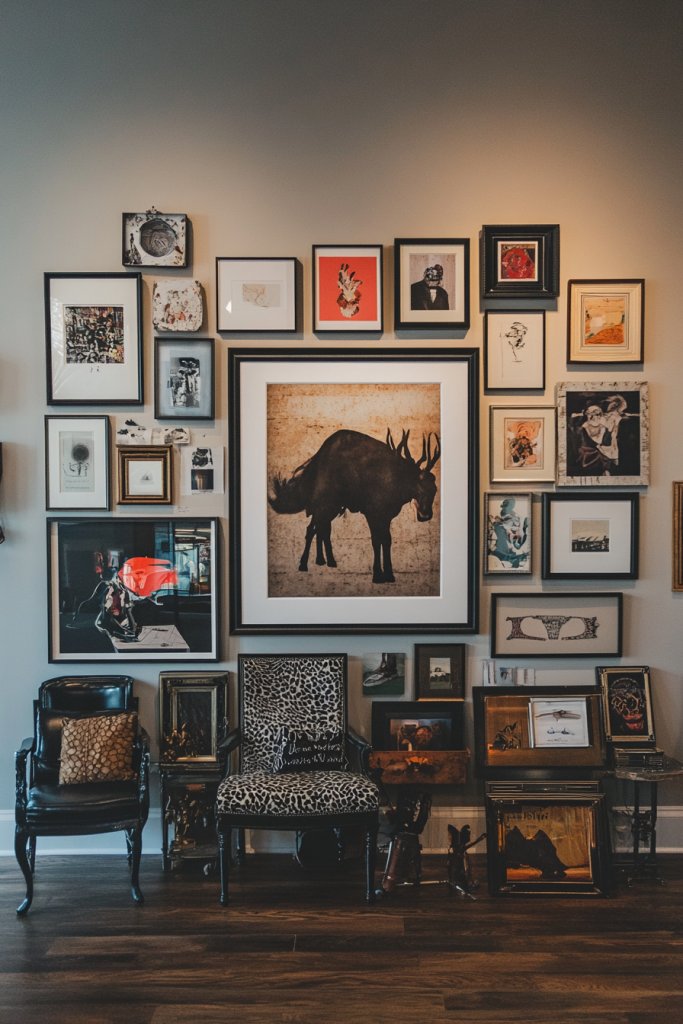
Asymmetrical gallery walls build outward from one large centerpiece artwork, surrounding it with smaller frames in an organic, uneven arrangement. The result feels curated and relaxed rather than rigid, giving the wall a lived-in, creative energy.
Choose a centerpiece that carries strong visual weight, whether through size, color, or subject matter, to anchor the entire composition. Build the surrounding frames loosely around it, varying sizes and orientations to keep the eye moving naturally.
8. Mirror Frames Boost Room Brightness
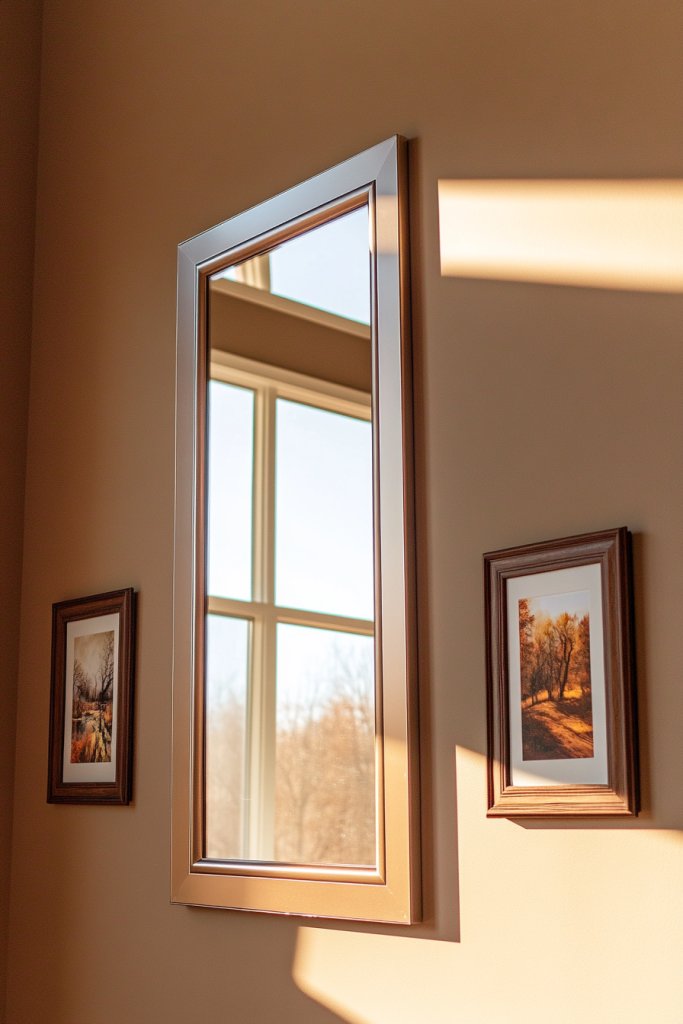
Incorporating decorative mirrors alongside framed artwork adds light and perceived depth to any living room gallery wall. Mirrors reflect natural light back into the room, making even smaller spaces feel brighter and more open.
Place mirrors strategically opposite a window or light source to maximize the reflective effect across the room. Mix ornate gilt-framed mirrors with simpler art frames to create contrast and add a touch of glamour to the overall display.
9. Rustic Wood Frames Add Cozy Charm
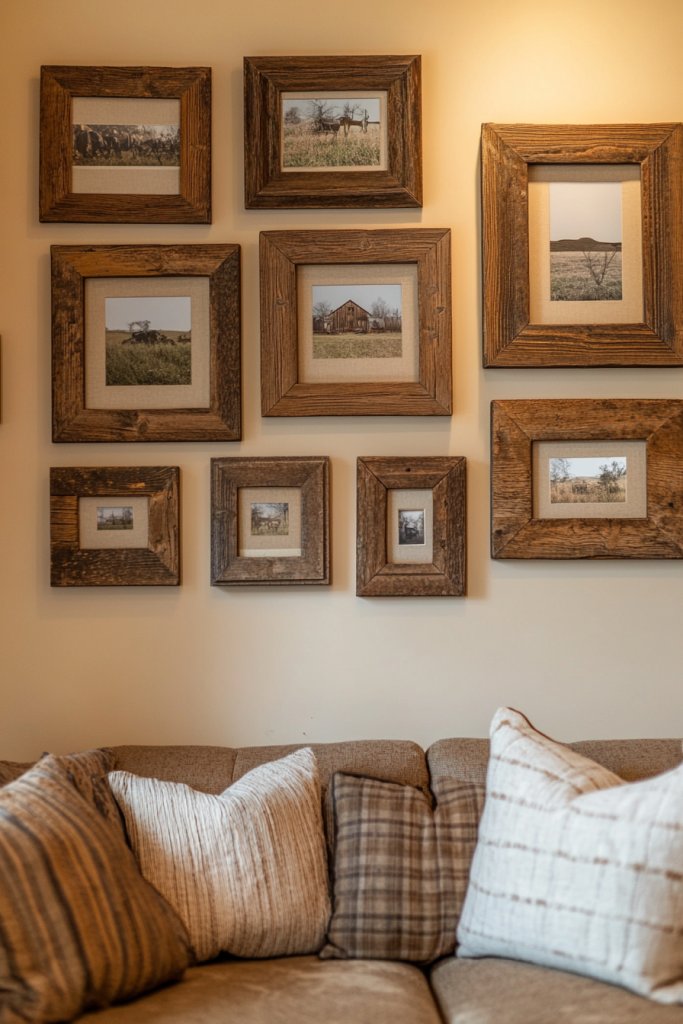
A gallery wall built around rustic wooden frames brings warmth and texture to a living room, creating an inviting, cottage-inspired aesthetic. Reclaimed timber frames, barnwood styles, and raw-edge wood all contribute to the cozy, organic feel.
Layer frames in varying wood tones from light pine to dark walnut to create visual depth without introducing color. Pair the wooden frames with nature-inspired prints, botanical illustrations, or landscape photography to reinforce the earthy, grounded mood.
10. Tiered Shelves Display Art Creatively
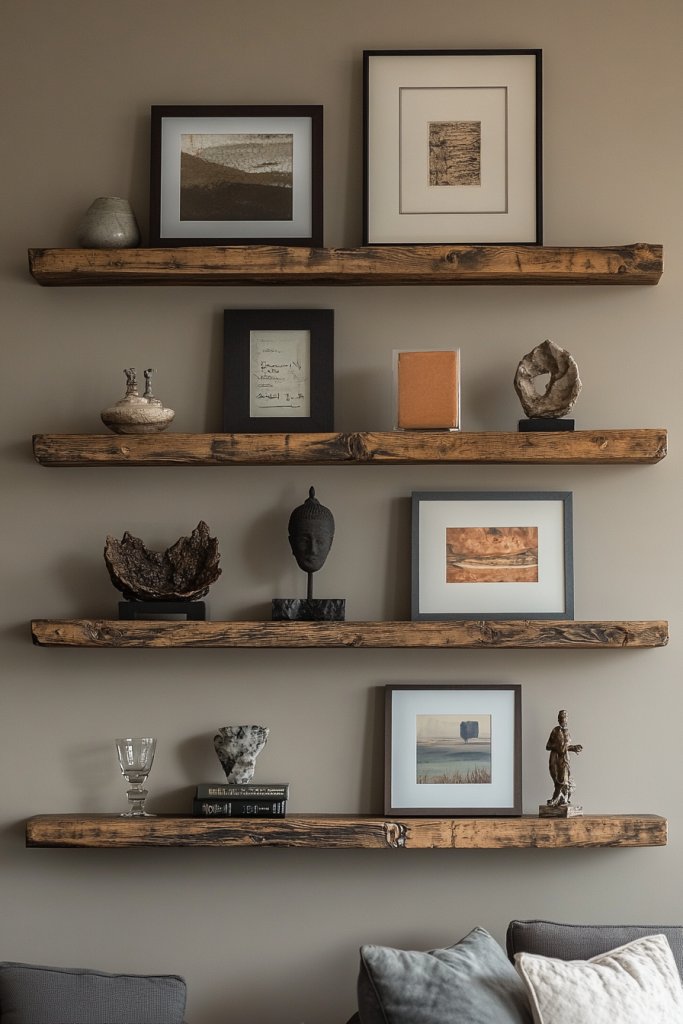
Tiered wall shelves let you lean frames against the wall rather than hang them, creating a relaxed and easily changeable gallery display. This approach mixes framed art with small decorative objects, plants, and candles for a styled, layered look.
Choose narrow floating shelves in wood or metal and space them at varying heights to create visual rhythm across the wall. Lean larger frames at the back of each shelf and place smaller decor items in front to build depth into the display.
11. Grid Frames Achieve Minimalist Elegance
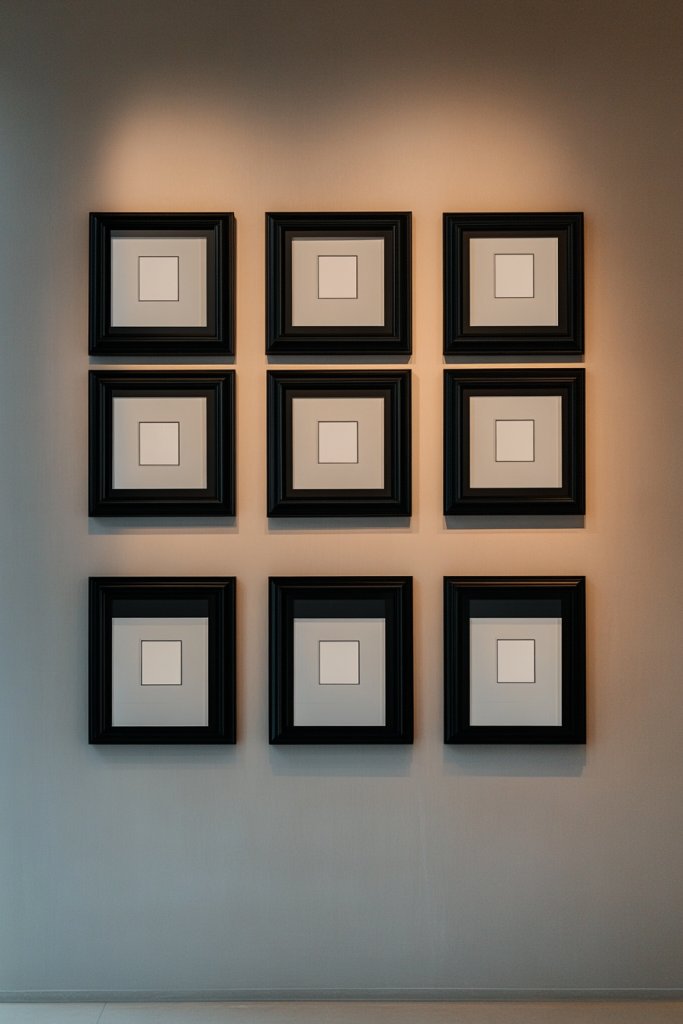
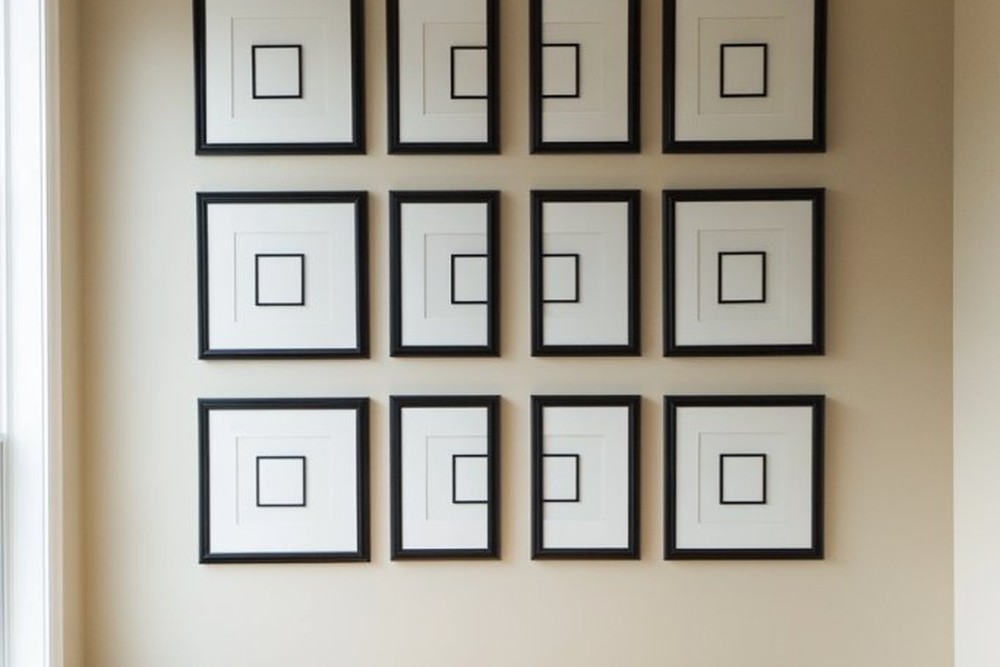
A uniform grid gallery wall arranges identical frames in neat rows and columns, delivering a clean and sophisticated minimalist statement. The disciplined repetition creates a calm, orderly display that suits modern and Scandinavian-inspired living rooms beautifully.
Use a laser level and measuring tape to ensure every frame hangs at precisely the same height and spacing for a flawless finish. Select a single print style throughout, such as botanical line drawings or abstract shapes, to reinforce the minimalist intention.
12. Textile Elements Add Wall Texture
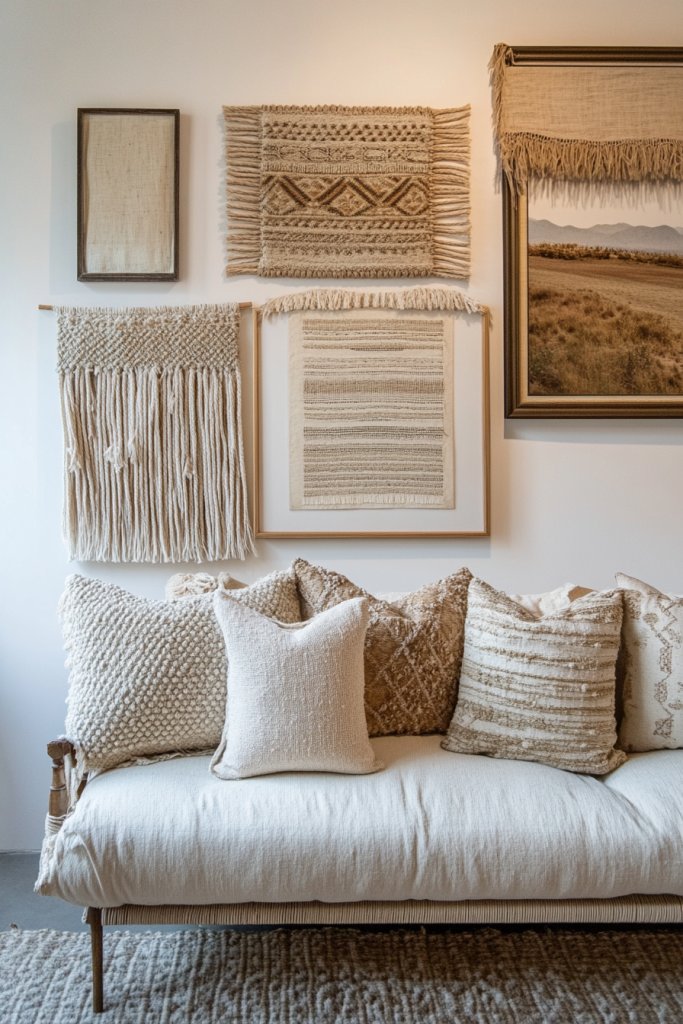
Weaving textile elements into a gallery wall introduces warmth, softness, and tactile contrast that framed prints alone cannot achieve. Macrame hangings, woven tapestries, and fabric art panels all integrate beautifully alongside traditional frames.
Hang a large woven textile as the anchor piece of your gallery wall, then build framed artwork around it at complementary heights. Choose textiles and prints that share a color story so the mixed materials feel intentional rather than mismatched.
13. Color-Themed Frames Strengthen Cohesion
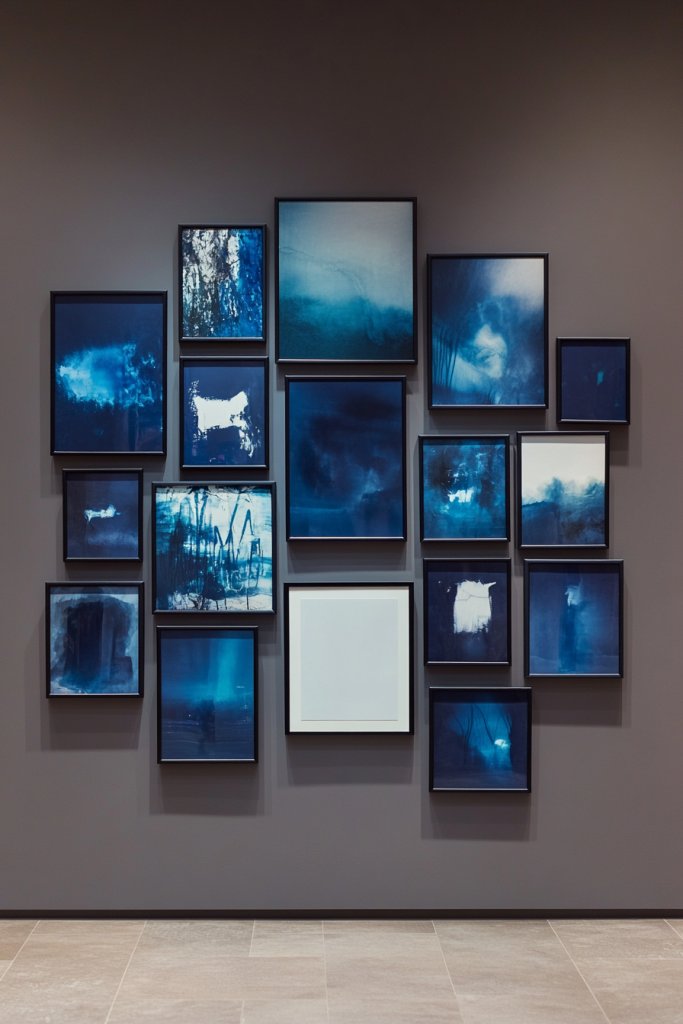
Choosing frames in a deliberate color palette across your gallery wall ties the entire display together into one visually cohesive arrangement. Warm terracotta, dusty sage, or rich navy frames all make strong color statements while keeping the wall unified.
Pull your frame colors directly from the artwork inside them or from existing furniture and accent pieces in the room. This approach connects the gallery wall to the broader room palette, making the display feel designed rather than assembled at random.
14. Non-Frame Art Adds Textural Contrast
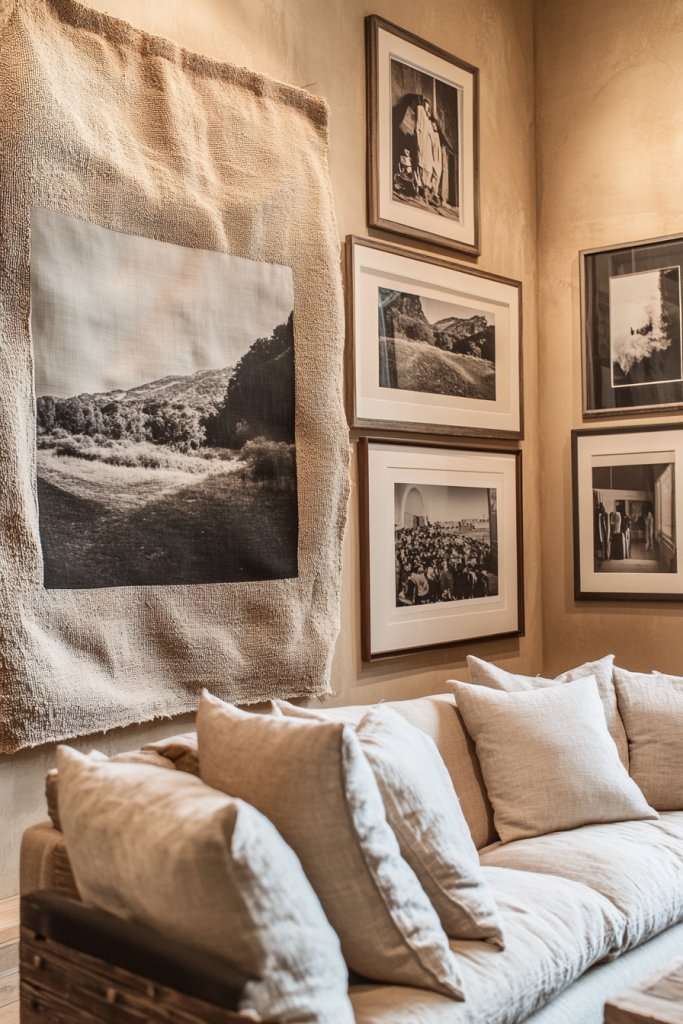
Incorporating non-frame wall art such as metal sculptures, ceramic wall plates, woven baskets, and canvas prints introduces textural variety to a gallery wall. These dimensional pieces break up the flatness of traditional frames and add an unexpected, artistic edge.
Mix one or two metal or ceramic wall pieces into an otherwise frame-heavy gallery for a subtle but impactful contrast. Ensure the non-frame elements share either a color or material quality with the surrounding frames so the display reads as intentional.
15. Vertical Galleries Maximize Narrow Walls
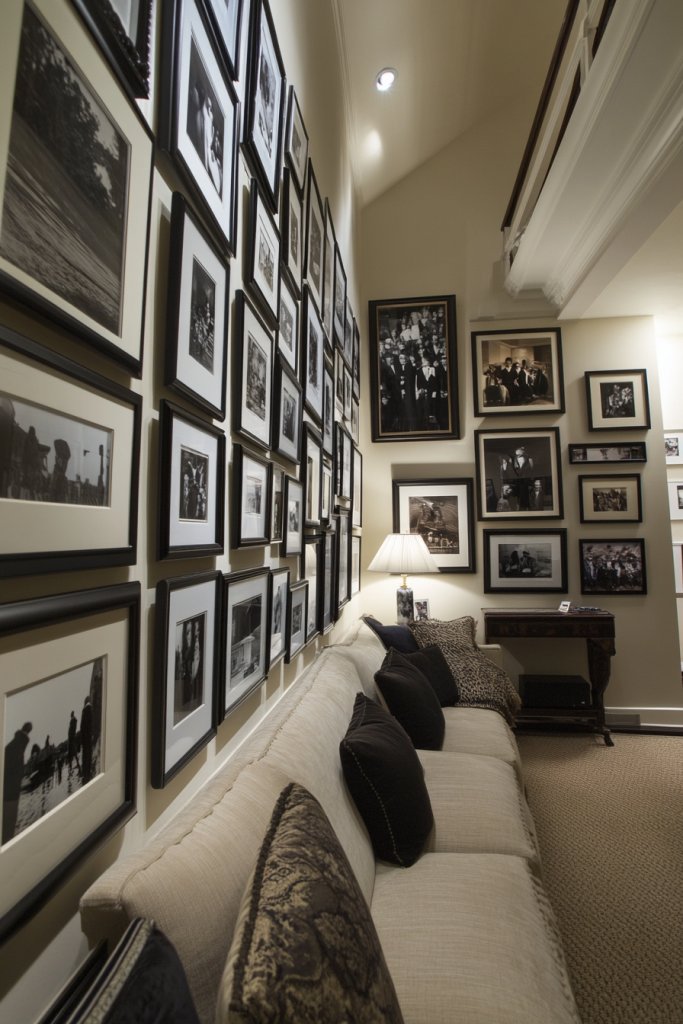
A vertical gallery wall stacks frames in a tall, narrow column, making smart use of limited horizontal wall space in compact living rooms. This upward arrangement draws the eye toward the ceiling, creating the illusion of greater room height.
Choose three to five frames in graduating sizes and stack them with consistent two-inch spacing along a narrow wall section. Place the largest frame at the bottom and the smallest at the top to create a natural upward visual flow that feels balanced.
16. Rotatable Galleries Allow Seasonal Updates
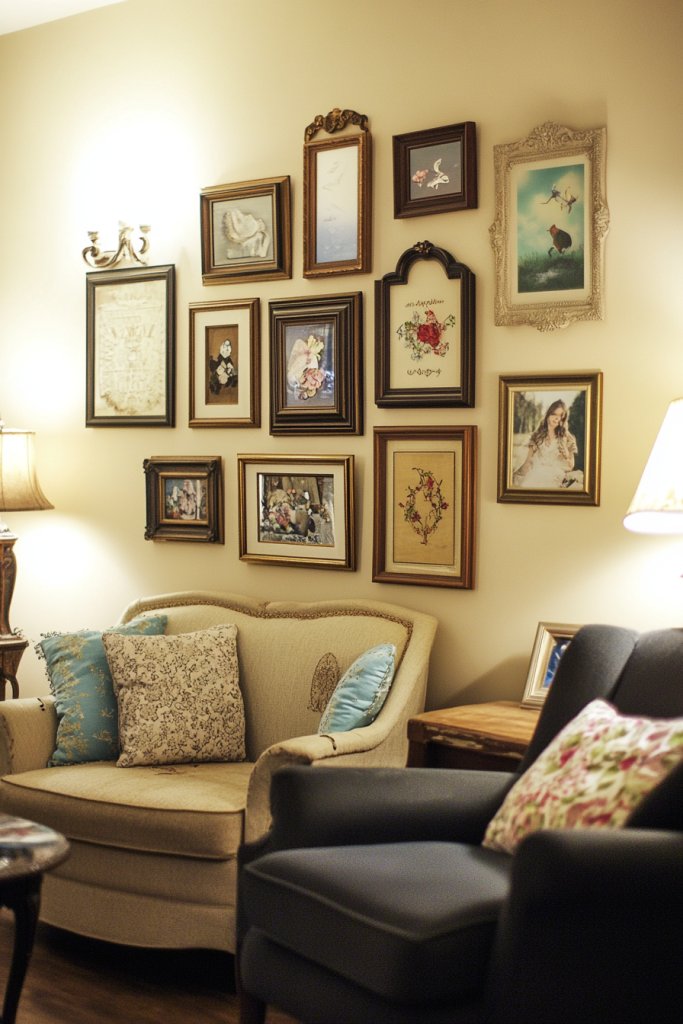
Designing a gallery wall with easy frame swaps lets you refresh the display with each season or occasion without repainting or rehanging. Picture ledges, clip frames, and rail hanging systems all make artwork changes quick and damage-free.
Install a simple gallery rail system along the top of your display area so frames hang on adjustable hooks rather than fixed nails. Curate two or three seasonal print sets in advance so you can rotate your gallery wall with minimal effort throughout the year.
Choose one or two of these gallery wall ideas that match your living room style and start planning your layout today. A well-styled gallery wall is one of the most rewarding and affordable ways to bring personality and warmth to your home.